
The practice of dehydrating kimchi represents a sophisticated intersection between ancient fermentation traditions and modern food preservation technology. As global interest in Korean cuisine continues to surge, fueled by the international popularity of K-culture and a growing awareness of gut health, the demand for versatile, shelf-stable versions of fermented staples has increased. Kimchi, a cornerstone of Korean gastronomy typically consisting of salted and fermented vegetables—most notably napa cabbage and Korean radishes—is traditionally kept in refrigerated or cool environments to maintain its active microbial culture. However, dehydration offers a secondary method of preservation that extends the shelf life of the product to several years while concentrating its complex flavor profile into a potent culinary tool.
The Evolution of Kimchi Preservation
Historically, kimchi was preserved in large earthenware pots known as onggi, which were buried in the ground to maintain a stable, cool temperature during the winter months. This process facilitated the growth of Lactobacillus and other beneficial lactic acid bacteria. In the modern era, while refrigeration has become the standard, the issue of food waste remains prevalent. Consumers often find themselves unable to finish large quantities of kimchi before the fermentation progresses to a level of sourness that may be unpalatable for raw consumption.
Dehydration serves as a strategic solution to this waste, transforming a perishable, high-moisture product into a stable pantry staple. By removing the water content, the enzymatic activity is slowed to a near-halt, effectively pausing the fermentation process and locking in the nutritional content. This technique is gaining traction not only among home preservationists but also within the backpacking and outdoor enthusiast communities, where lightweight, nutrient-dense, and flavorful food is at a premium.
The Microbiology of Temperature-Sensitive Dehydration
The primary challenge in dehydrating kimchi lies in the preservation of its probiotic integrity. Kimchi is a "living" food, populated by various strains of lactic acid bacteria (LAB) that contribute to its health benefits, including improved digestion and immune system support. These microorganisms are sensitive to thermal stress.
Research indicates that most beneficial bacteria begin to perish when exposed to temperatures exceeding 115°F (46°C). Consequently, the dehydration process must be carefully calibrated. For preservationists seeking to retain the "live" qualities of the kimchi, a low-temperature setting—ideally between 100°F and 110°F—is required. This slow-drying method mimics the natural evaporation process while keeping the internal temperature of the food below the lethal threshold for the microbial colonies.
Conversely, if the kimchi has been commercially heat-processed (shelf-stable jars found in unrefrigerated aisles) or home-canned using a pressure canner, the probiotics have already been neutralized. In such instances, the dehydration temperature can be increased to 140°F (60°C) to expedite the process without further nutritional loss, as the primary goal shifts from biological preservation to simple moisture removal.
Technical Methodology: The Dehydration Process
The transition from fresh fermented cabbage to a shelf-stable dried product involves a specific five-step protocol designed to ensure safety and quality.
Step 1: Preparation and Loading
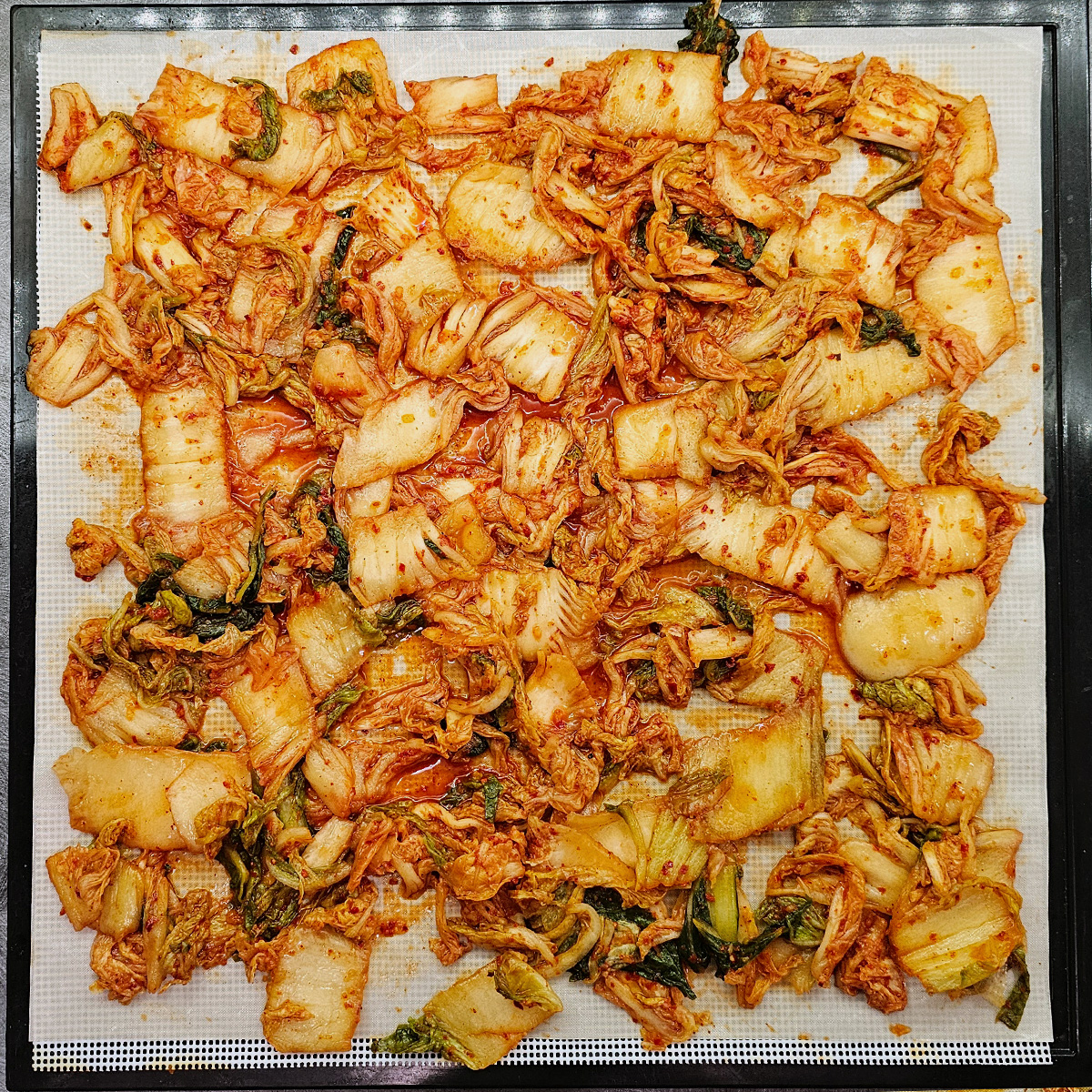
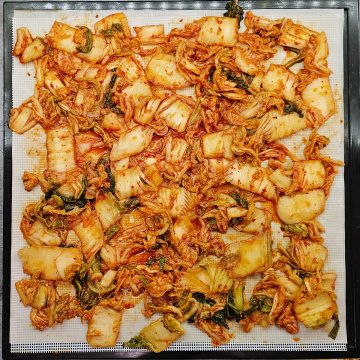
Kimchi is characterized by its high moisture content and vibrant pigments, such as those from gochugaru (Korean red chili flakes). To prevent permanent staining of dehydrator equipment, experts recommend the use of parchment paper or specialized silicone fruit leather sheets. The kimchi should be spread in a thin, even layer. While it is not necessary to separate every individual leaf of cabbage, density management is critical; overlapping pieces will significantly increase drying time and may lead to uneven moisture removal.
Step 2: Thermal Application
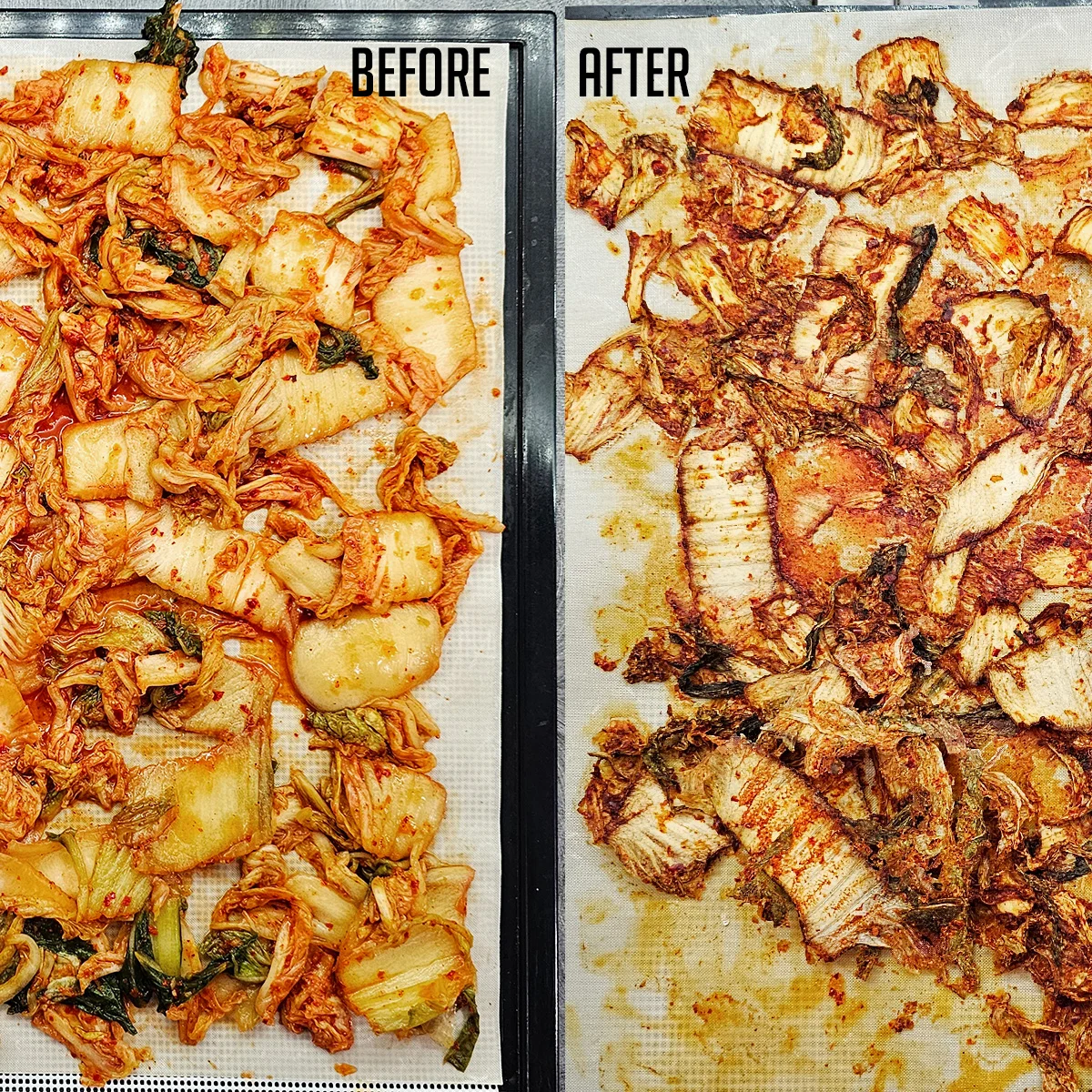
The duration of the drying cycle is largely dependent on the ambient humidity and the specific water content of the batch. At the recommended probiotic-safe temperature of 115°F or lower, the process typically spans 12 to 24 hours. During this phase, the cabbage leaves will shrink substantially as the water evaporates, leaving behind the concentrated fibers and seasoning pastes.
Step 3: Testing for Desiccation
The final product must reach a specific textural state to be considered shelf-stable. Thoroughly dried kimchi should be brittle or slightly pliable if the pieces are thick, but it should generally snap or break when bent. Any remaining "sponginess" indicates residual moisture, which could facilitate mold growth during storage.
Step 4: The Conditioning Phase
Conditioning is a vital, often overlooked step in the dehydration of high-moisture foods. After the kimchi is removed from the dehydrator, it is placed in a sealed glass jar for five to seven days. During this period, the jar is shaken daily. This allows any remaining internal moisture to redistribute evenly across all pieces. If condensation appears on the glass, the batch must be returned to the dehydrator for further processing.
Step 5: Long-Term Storage
Once conditioned, the kimchi should be stored in an airtight environment. Glass canning jars are preferred for home use, while Mylar bags with oxygen absorbers are the industry standard for long-term emergency food storage. When stored in a cool, dark, and dry location, dehydrated kimchi can maintain its quality for up to two years.
Nutritional Data and Concentration Ratios
The nutritional profile of dehydrated kimchi is remarkably dense. Because dehydration removes only water, the vitamins, minerals, and macronutrients remain concentrated in the remaining solids. Based on standard nutritional estimates, a single serving of kimchi contains approximately:
- Calories: 17 kcal
- Sodium: 573 mg
- Potassium: 174 mg
- Carbohydrates: 3 g
- Fiber: 2 g
- Protein: 1 g
It is important for consumers to recognize the concentration ratio. Typically, dehydrated vegetables follow a 4:1 or 5:1 ratio. This means that 1/4 cup of dried kimchi offers the same nutritional value—and the same sodium content—as one full cup of fresh kimchi. This concentration of sodium makes dehydrated kimchi an excellent electrolyte source for athletes and hikers, though it necessitates caution for individuals on sodium-restricted diets.
Culinary Innovation: The Rise of Kimchi Powder
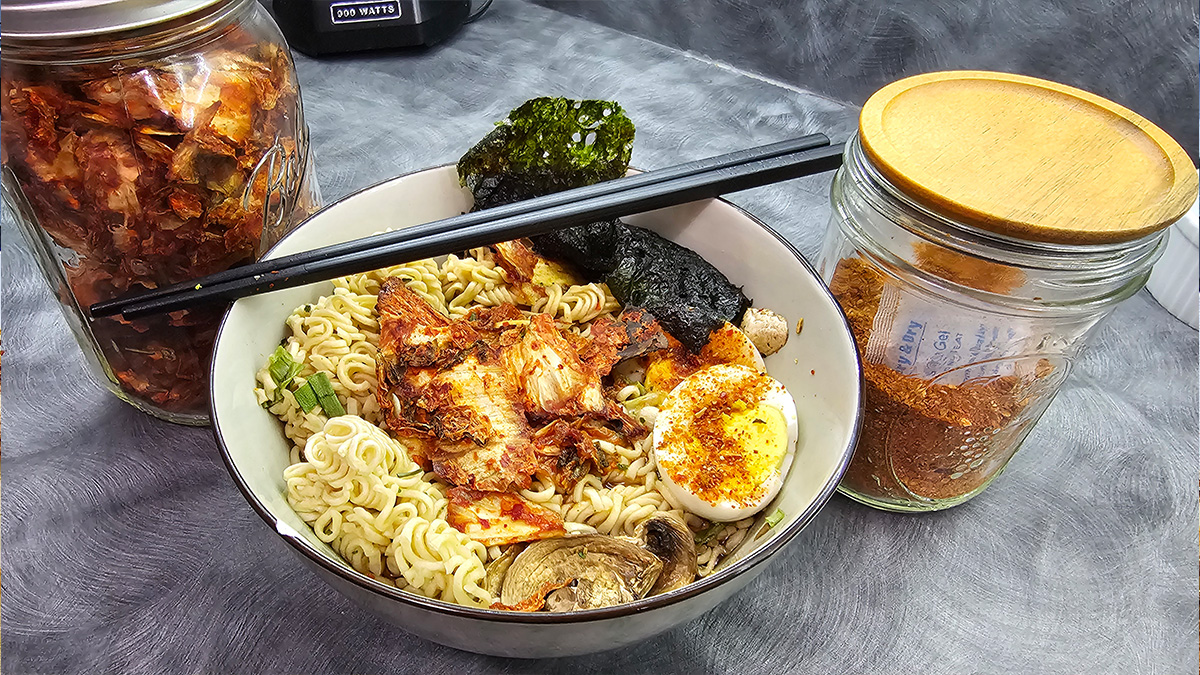
One of the most significant impacts of kimchi dehydration is the creation of "Kimchi Powder." By grinding the fully dried pieces in a high-speed blender, chefs and home cooks produce a potent umami seasoning. This powder has seen a rise in commercial availability, but DIY versions are increasingly popular due to their lack of additives and fillers.
Kimchi powder functions as a versatile "flavor bomb." It provides the spicy, acidic, and fermented notes characteristic of the dish without the textural challenges of wet cabbage. Emerging culinary trends show kimchi powder being utilized as:
- A popcorn seasoning.
- A dry rub for grilled meats and proteins.
- An additive to ramen and instant noodles to enhance broth complexity.
- A flavoring agent for homemade vegetable chips.
- A rimming salt for savory cocktails, such as the Bloody Mary.
Economic and Environmental Implications
The move toward dehydrating fermented foods like kimchi aligns with broader global efforts to improve food security and reduce environmental impact. Food waste is a major contributor to greenhouse gas emissions; by extending the life of a product that might otherwise be discarded, dehydration offers a micro-solution to a macro-problem.
Furthermore, the economic benefits for the household are notable. Buying kimchi in bulk is often significantly more cost-effective than purchasing small jars. Dehydration allows consumers to take advantage of bulk pricing and seasonal abundance without the risk of spoilage.
Conclusion: A Strategic Addition to the Modern Pantry
The dehydration of kimchi is more than a simple preservation hack; it is a sophisticated method of capturing the essence of a complex fermented food. By adhering to specific temperature controls to protect probiotic life and following rigorous conditioning protocols to ensure safety, preservationists can create a product that is both nutritionally dense and culinarily versatile. As the global palate continues to evolve toward bolder, fermented flavors, dehydrated kimchi and its powdered derivative are poised to become essential components of the modern, well-stocked pantry. Through this synthesis of old-world fermentation and new-world technology, the legacy of kimchi is preserved for a new generation of culinary application.


