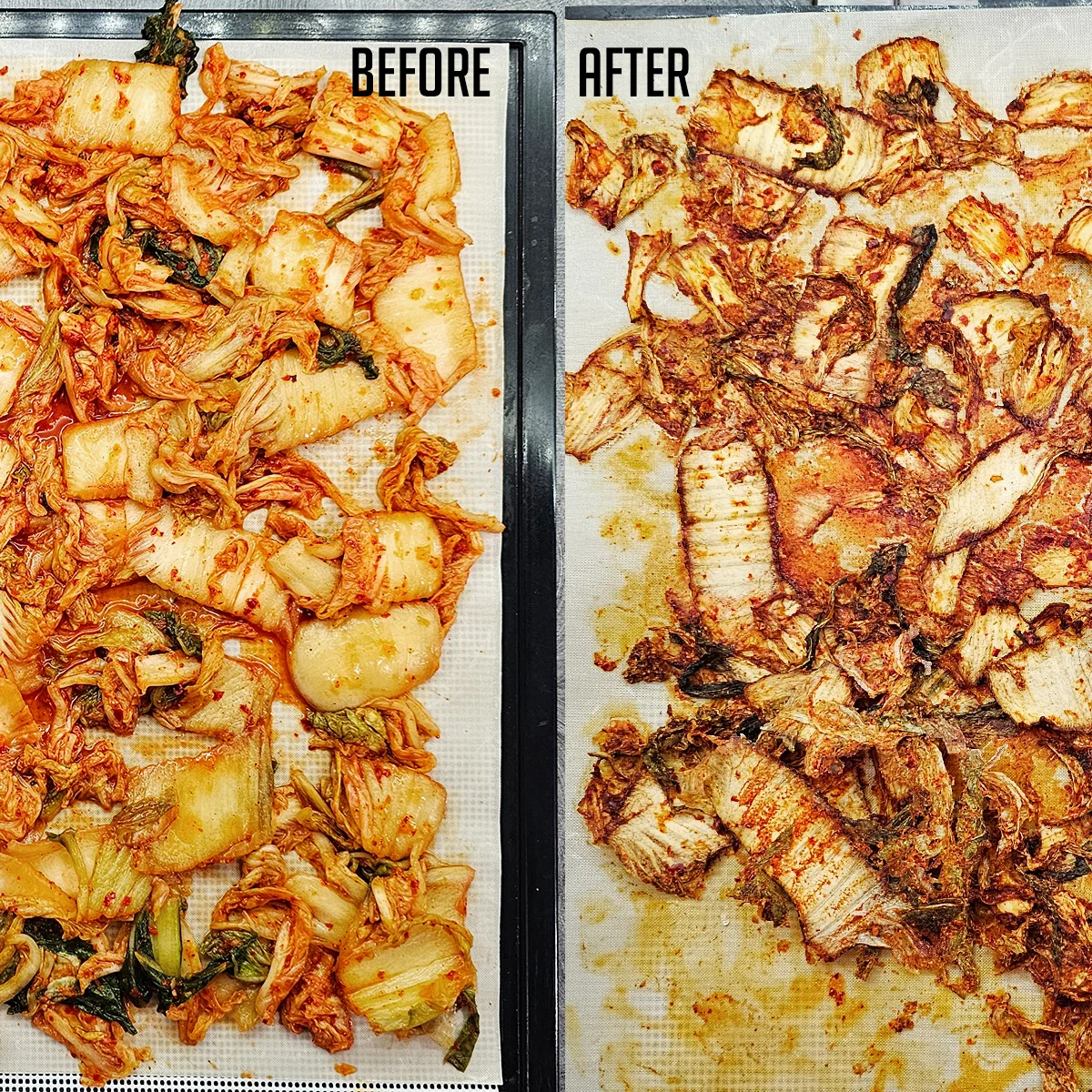
The practice of dehydrating kimchi represents a sophisticated intersection of ancient Korean fermentation traditions and modern food preservation technology, offering a solution for consumers seeking to extend the shelf life of this probiotic-rich staple while creating versatile new culinary ingredients. Kimchi, a cornerstone of Korean cuisine typically consisting of salted and fermented vegetables—most notably napa cabbage and radishes—is prized for its complex flavor profile and significant health benefits. However, the live nature of fermented kimchi means its flavor continues to evolve and sharpen over time, eventually reaching a level of acidity that some find overwhelming for raw consumption. Dehydration serves as a strategic intervention, arresting the fermentation process at its peak and transforming the moist, pungent vegetable dish into a shelf-stable, concentrated form that can be stored for up to two years.
The Science of Fermentation and Nutritional Retention
To understand the necessity of specific dehydration parameters, one must first examine the biological composition of kimchi. As a lacto-fermented product, kimchi is teeming with Lactobacillus bacteria, which are credited with improving gut health and boosting the immune system. The primary challenge in dehydrating fermented foods is the preservation of these delicate microorganisms. Research in food science indicates that most probiotic bacteria begin to denature and die when exposed to temperatures exceeding 115°F (46°C).
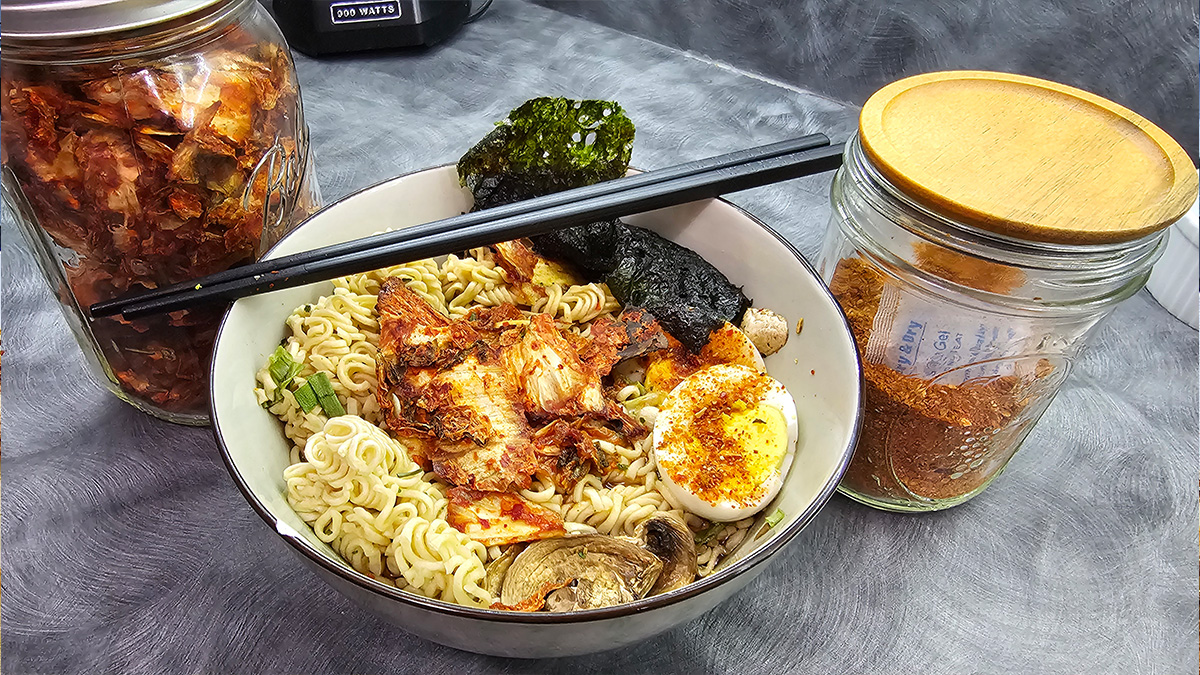
Consequently, the dehydration process must be strictly regulated. For practitioners aiming to maintain the "live" status of their kimchi, the dehydrator must be set to a temperature below 115°F, with many experts recommending a conservative 100°F (38°C) to ensure a safety margin. Conversely, if the kimchi being used is a commercially shelf-stable variety that has already been pasteurized or heat-treated for canning, the probiotic benefits have already been neutralized. In such cases, the temperature can be increased to 140°F (60°C) to expedite the drying process without further nutritional loss, as the primary goal shifts from biological preservation to simple moisture removal.
A Systematic Approach to Dehydration
The transition from a high-moisture fermented product to a dry, crisp ingredient requires a methodical five-step process designed to ensure safety, longevity, and flavor retention.
Step 1: Preparation and Tray Management
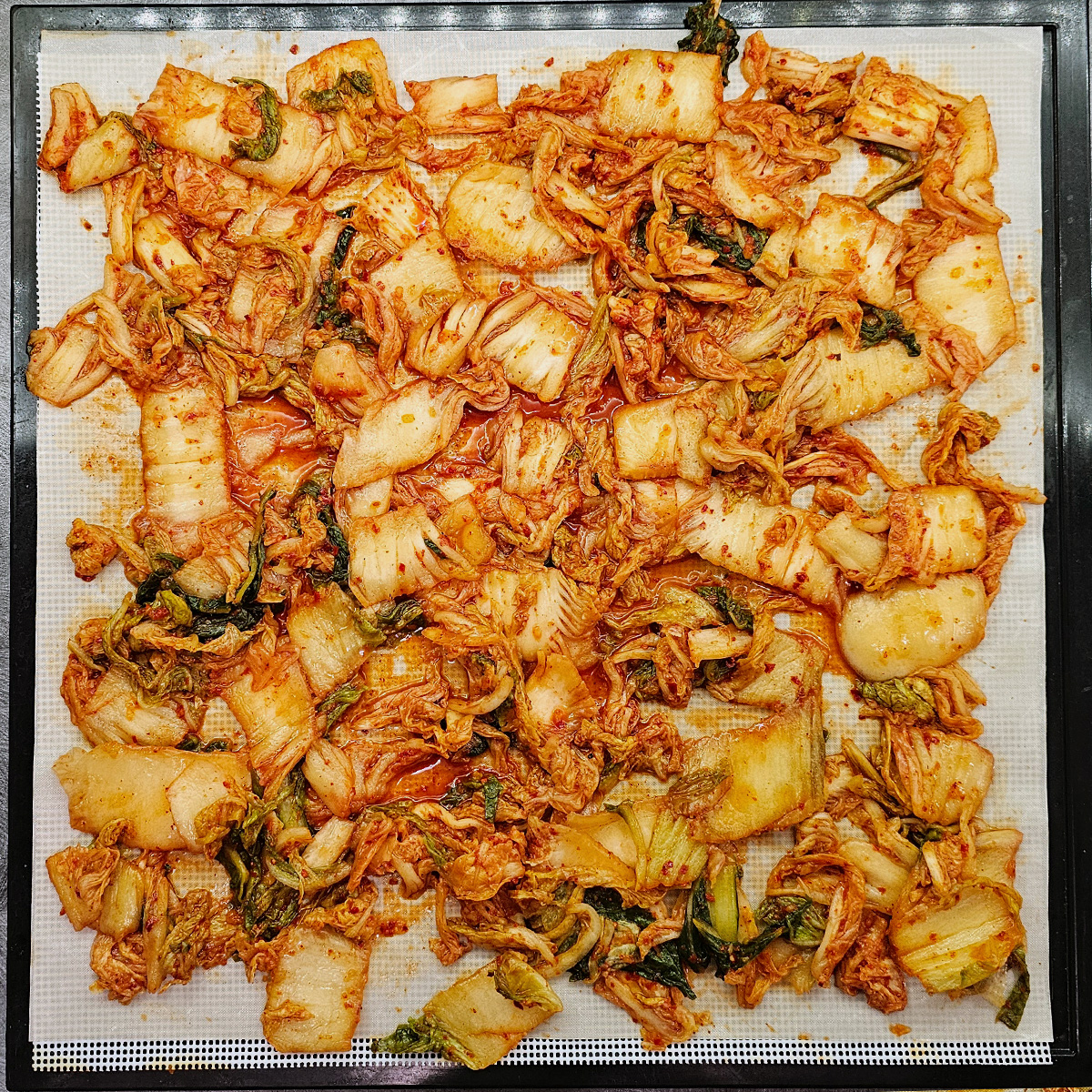
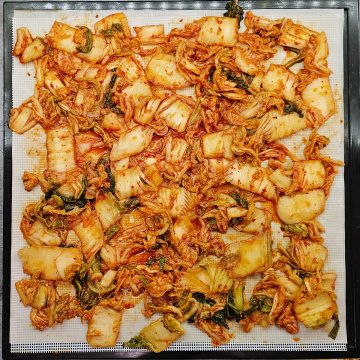
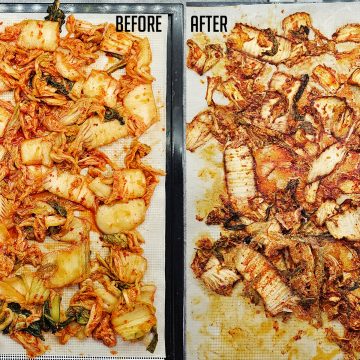
The physical properties of kimchi—specifically its high water content and the presence of pigments like gochugaru (Korean chili flakes)—necessitate specialized equipment preparation. It is highly recommended to use parchment paper or silicone fruit leather sheets to line dehydrator trays. Kimchi is inherently "wet," and its juices can seep through standard mesh liners, leading to uneven drying and permanent staining of the equipment. When spreading the kimchi, density is the primary concern. While the cabbage will shrink significantly as water evaporates, the leaves should be spread as thinly as possible to allow for maximum airflow. Overcrowding the trays can lead to "case hardening," where the exterior dries into a hard shell while the interior remains moist, creating an environment ripe for mold growth.
Step 2: The Thermal Phase
The duration of the drying process is highly variable, typically spanning between 12 and 24 hours. This timeline is influenced by several environmental factors, including the ambient humidity of the room, the specific water content of the cabbage, and the efficiency of the dehydrator’s fan system. Maintaining a consistent temperature below 115°F is essential for probiotic retention. During this phase, the pungent aroma of the kimchi will become concentrated; users are often advised to place the dehydrator in a well-ventilated area or a garage to manage the intense scent of garlic, ginger, and fermented seafood often found in traditional recipes.
Step 3: Assessing Dryness
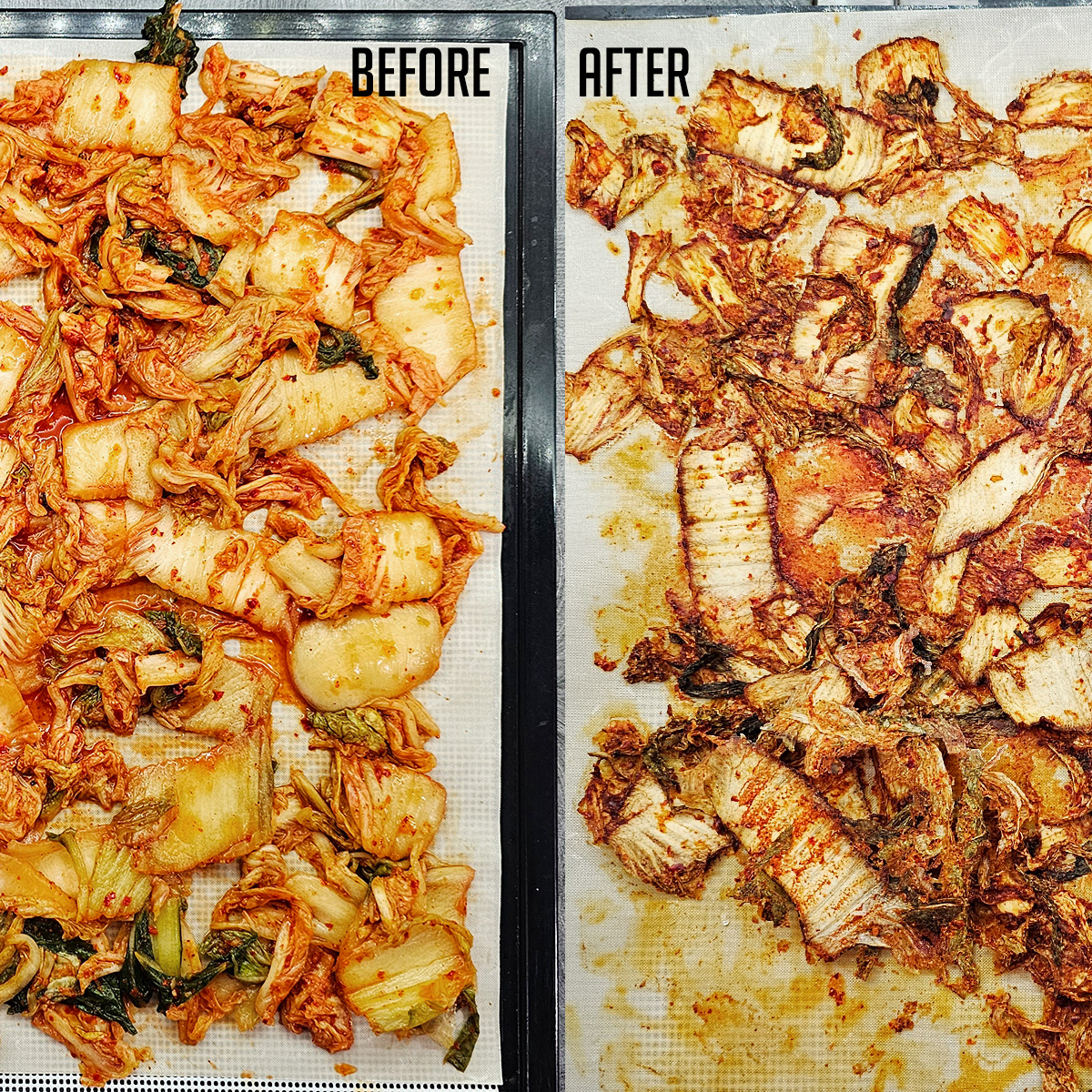
Testing for "doneness" in dehydrated kimchi requires tactile evaluation. Pieces should be completely dry to the touch. Larger pieces of cabbage may retain a slight pliability due to their fibrous structure, but they should generally break or snap when bent. If any part of the vegetable feels leathery or damp, it requires additional time in the dehydrator.
Step 4: The Conditioning Protocol
Conditioning is a critical safety step often overlooked by novice dehydrators. Even after a 24-hour cycle, internal moisture can remain trapped in thicker stalks. To condition the kimchi, the dried product is placed in a glass jar, which is sealed and shaken daily for approximately five days. This allows any residual moisture to redistribute evenly among the pieces. If condensation appears on the walls of the jar, the batch must be returned to the dehydrator immediately to prevent spoilage.
Step 5: Long-Term Storage
Once conditioned, the kimchi should be stored in an airtight environment. Glass canning jars with tight-fitting lids are the standard for home use, though vacuum-sealing in Mylar bags provides superior protection against oxygen and light for long-term emergency storage. When stored in a cool, dark, and dry location, dehydrated kimchi can maintain its quality for approximately 24 months.
Economic and Culinary Implications
The rise of home dehydration reflects broader economic trends toward food waste reduction. According to the Food and Agriculture Organization (FAO), nearly one-third of all food produced for human consumption is lost or wasted globally. For consumers who purchase large bulk containers of kimchi from wholesale retailers, dehydration offers a way to "rescue" the product before it becomes overly sour.
Beyond waste reduction, dehydrated kimchi introduces a new dimension to culinary applications. The most notable innovation is the creation of kimchi powder. By processing the dried vegetables in a high-speed blender, cooks can produce a potent, shelf-stable seasoning. This powder functions as a "flavor bomb," delivering acidity, heat, and umami to a variety of dishes.
Culinary Applications Include:
- Gourmet Seasoning: Dusting kimchi powder over popcorn, dehydrated vegetable chips, or roasted nuts.
- Protein Rubs: Incorporating the powder into dry rubs for steaks, pork, or tofu to add a fermented tang that mimics long-term aging.
- Instant Soup Enhancement: Adding dried kimchi pieces directly to ramen or miso soup, where they rehydrate in minutes, providing texture and a flavor boost.
- Trail Meals: For hikers and backpackers, dehydrated kimchi provides a lightweight, nutrient-dense way to add variety to monotonous outdoor diets without the weight of water-heavy jars.
Nutritional Analysis and Comparative Data
The nutritional profile of dehydrated kimchi is remarkably dense. Based on standard estimations, a single serving of fresh kimchi contains approximately 17 calories, 3 grams of carbohydrates, and 573 mg of sodium. Because dehydration removes water but leaves solids intact, the nutrient density increases relative to weight. A general rule of thumb for consumers is that 1/4 cup of dehydrated kimchi provides roughly the same nutritional value and sugar content as 1 cup of fresh kimchi.
| Nutrient | Amount (per fresh serving) | Dehydrated Equivalent (Approx.) |
|---|---|---|
| Calories | 17 kcal | 17 kcal (at 1/4 volume) |
| Sodium | 573 mg | 573 mg |
| Fiber | 2 g | 2 g |
| Potassium | 174 mg | 174 mg |
It is important to note that while minerals and fiber remain stable during dehydration, vitamin C levels may decrease slightly due to oxygen exposure. However, the retention of probiotics remains the primary metric of success for this preservation method.
Broader Impact on the Global Market
The interest in dehydrating kimchi is part of a larger global surge in the fermented foods market. Market analysts project that the global fermented food and ingredients market will continue to grow at a compound annual growth rate (CAGR) of over 5% through 2030. As consumers become more health-conscious and interested in "functional foods," the demand for portable, shelf-stable versions of traditional ferments is expected to rise.
Furthermore, the "kimchi powder" phenomenon has already begun to transition from home kitchens to commercial shelves, with several South Korean companies launching kimchi-based seasonings globally. By dehydrating kimchi at home, enthusiasts are participating in a DIY version of a major food industry trend, allowing for customization of heat levels and ingredients that commercial products may not offer.
Final Analysis
Dehydrating kimchi is more than a simple storage solution; it is a transformative process that honors the complexity of Korean culinary history while embracing the efficiency of modern technology. By adhering to strict temperature controls and conditioning protocols, individuals can preserve the vital probiotics that make kimchi a "superfood" while unlocking a new pantry of concentrated flavors. As food security and waste reduction become increasingly central to the global conversation, techniques like the dehydration of fermented staples offer a practical, delicious, and scientifically sound path forward for the modern kitchen.