The Skagit Valley in Washington State recently played host to a pivotal event for the world of grain and baking: the Grain Gathering. Hosted by the Washington State University (WSU) Breadlab and the Washington State Department of Agriculture (WSDA), the three-day conference, held from July 19-21, marked its return after an eight-year hiatus. Under the theme "Nourishing Communities," the gathering brought together an eclectic mix of farmers, millers, bakers, breeders, and enthusiasts, all united by a shared passion for transforming the grain supply chain. Far from a conventional industry conference, it functioned as a vibrant congregation, fostering dialogue and collaboration aimed at creating a more transparent, equitable, and flavor-driven grain economy.
A Convergence of Craft and Innovation
The event commenced with a palpable sense of anticipation, drawing attendees from various corners of the grain ecosystem. From seasoned agriculturalists and innovative wheat breeders to professional artisan bakers and dedicated home baking enthusiasts, the diversity of participants underscored the broad appeal and critical importance of the topics at hand. Throughout the three days, the Skagit Valley buzzed with activity, featuring a rich program of talks, masterclasses, and interactive demonstrations, often set against the backdrop of expansive wheat fields. This immersive environment allowed participants to experience the entire journey of grain, from seed to loaf, in a uniquely integrated fashion.
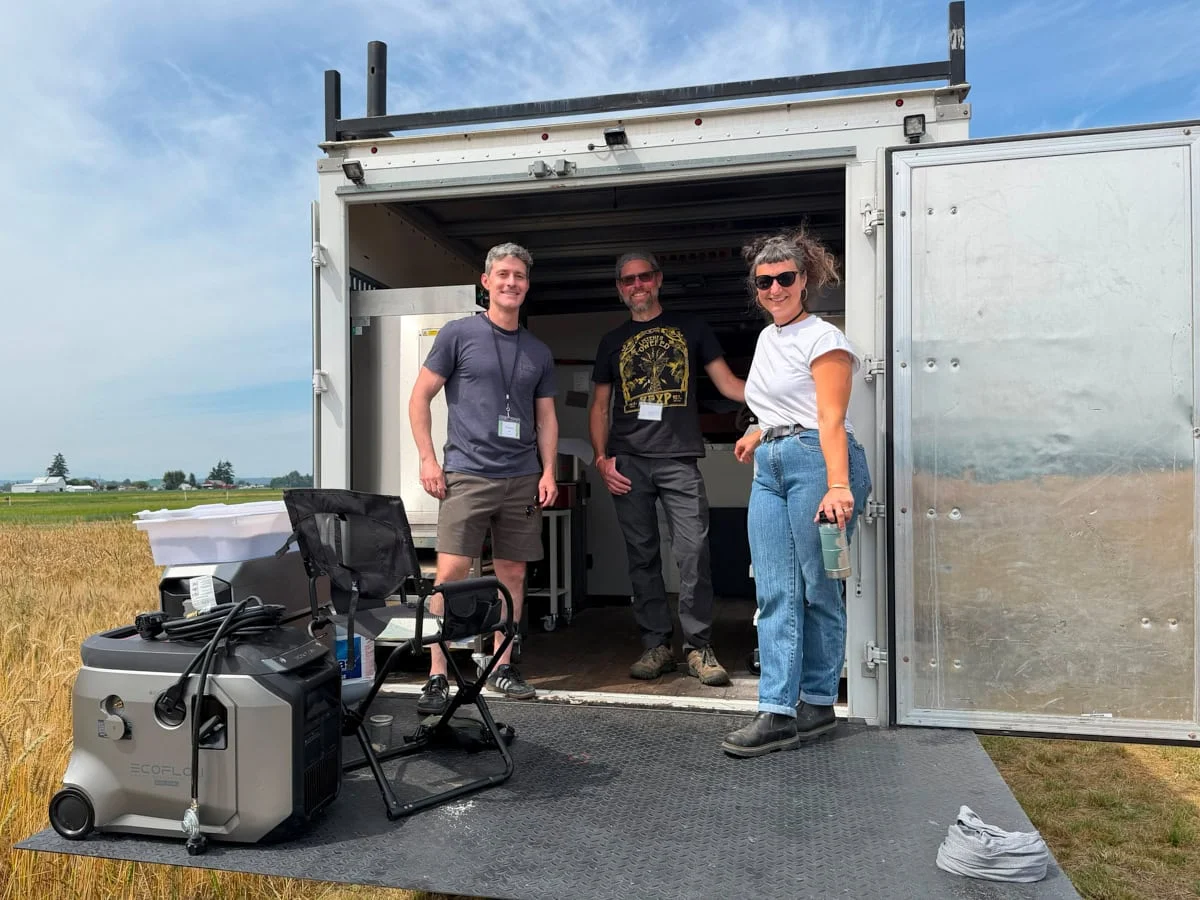
A standout feature that captured significant attention was the mobile mill and bakery concept, spearheaded by Marc Benoit of Reds Breads. This ingenious setup, built into the back of a truck, housed a complete bread oven, grain mill, mixer, and workbench, all powered by a rooftop solar array. It served as a living embodiment of the gathering’s core principles: shortening the supply chain, enhancing traceability, and ensuring fair compensation for farmers. Benoit, alongside his team, including Baylin Speidel and Thomas Vroom, demonstrated the potential of this localized model by milling and baking a remarkable array of products on-site. Using locally sourced grains such as Moon Family Farms’ Hollis, Chimacum Confluence, and Palouse Heritage Elwha River Spelt, they produced over twenty country loaves, three large-format focaccias, numerous baguettes, and sesame and roasted vegetable bialys. The RackMaster oven, a robust workhorse, maintained its temperature even after extensive use, highlighting the efficiency and capability of the mobile unit.
Redefining the Value Chain: Who Benefits from a Loaf of Bread?
One of the most significant discussions at the Grain Gathering revolved around the economic structure of bread production and the distribution of profits. In an era where an artisanal sourdough loaf can command prices ranging from $6 to $12, the question of who truly benefits from this value often arises. The prevailing commodity grain system, while efficient for mass production, tends to anonymize grain. Once wheat enters the vast supply chain, its unique identity, the specific farm it came from, the care invested in soil health, and the farmer’s expertise are often stripped away, leading to a standardized product with minimal price differentiation for the grower.
The mobile mill and bakery offered a powerful counter-narrative to this industrial model. By integrating milling and baking into a single, traceable unit, it creates an unbroken chain of custody. Grain enters the system with a farmer’s name attached and emerges as bread that can be directly linked back to its grower. This radical transparency ensures that the farmer receives deserved recognition and a more equitable share of the final product’s value. Estimates suggest that in traditional commodity systems, farmers might receive as little as 10-15% of the retail price of grain-based products. In contrast, direct-to-consumer or localized models like Benoit’s can dramatically increase the farmer’s margin, potentially allowing them to capture an additional 20-30% of the value that would typically be absorbed by middlemen, distributors, and retailers. This direct economic model empowers farmers to invest further in sustainable practices and high-quality grain varieties, fostering a healthier agricultural landscape.
Furthermore, the concept of a farmer-operated mobile bakery or mill presents a transformative revenue stream. By consolidating the roles of miller, distributor, and retailer, the farmer retains the margins typically dispersed across these various links in the chain. This not only bolsters the farmer’s income but also strengthens local food economies by keeping more value within the community. For home bakers, the lesson was clear: purchasing identity-preserved grain directly from farms or small mills, or even milling grain freshly at home, actively contributes to compressing the supply chain and supporting this more equitable system.
The Future of Wheat: Breeding for Flavor and Nutrition
Another central pillar of the gathering’s discourse was the critical role of wheat breeding and its impact on the quality of the final loaf. Historically, agricultural priorities for wheat varieties have focused predominantly on factors like yield, uniformity, disease resistance, baking performance (in industrial contexts), and ease of harvest. While these attributes are vital for large-scale food production, two crucial elements—flavor and nutrition—have often been relegated to secondary importance. This oversight has contributed to the somewhat bland and nutritionally diminished profile of many mass-produced flours available in grocery stores today.
The WSU Breadlab stands at the forefront of a movement to recalibrate these priorities. Their groundbreaking research and breeding programs actively integrate flavor and nutrition into their evaluation scorecard, alongside traditional performance metrics. Breeders at the Breadlab are developing new wheat varieties, such as Skagit 1109, Salish Blue, and Ruth, that are specifically adapted to thrive in particular growing conditions, rather than being universally applicable. This localized approach allows for the cultivation of grains that express unique flavor profiles and superior nutritional content. Crucially, the Breadlab doesn’t stop at agronomic evaluation; they meticulously mill and bake test batches of candidate varieties to assess their performance and characteristics in a finished loaf. This comprehensive approach ensures that the grains released for cultivation meet the high standards of both farmers and bakers.
The implications for consumers and home bakers are profound. This shift means the availability of flour labeled not merely as "wheat flour" but with specific variety names, each possessing distinct baking characteristics and flavor nuances. It transforms flour from an anonymous commodity into an ingredient with a clear identity, a named farmer, and a story. This move away from the homogenized "pile" of commodity grain allows bakers to experiment with a richer palette of flavors and textures, elevating the art and science of bread making.
From Gathering to Growth: Inspiring Change in the Home Kitchen
The immersive experience of the Grain Gathering left many attendees energized and inspired to re-evaluate their own baking practices. While the idea of completely overhauling one’s baking life might seem daunting, the prevailing message was one of incremental, impactful change. As numerous speakers and participants emphasized, making a difference doesn’t require a radical transformation. It can begin with small, deliberate choices.
Simple actions, such as swapping out a conventional grain for an identity-preserved variety like "Ruth," or sourcing grain directly from a local farmer and milling it fresh at home, can significantly contribute to supporting the evolving grain economy. These choices not only offer superior flavor and nutrition but also connect the baker more intimately with the origins of their ingredients. The trend observed among many experienced bakers, including those present at the gathering, is a gradual but consistent move towards incorporating more whole grains, exploring named varieties, and utilizing freshly milled flour. While high-quality sifted flour still holds its place, the broader evolution is towards a more conscious and connected approach to baking.
Ultimately, this evolution is driven not by obligation but by a relentless pursuit of the best possible flavor and the highest nutritional value. The Grain Gathering demonstrated that with the right grains, carefully cultivated and thoughtfully processed, bakers no longer have to choose between these two vital aspects. They can achieve both, creating bread that is not only delicious but also deeply nourishing, both physically and culturally.
Voices and Connections: The Human Fabric of the Grain World
The true essence of the Grain Gathering was found in the connections forged and the conversations shared among its diverse participants. The event brought together many talented, passionate, and accomplished individuals who collectively represent the vibrant future of grain. Marc Benoit, with his visionary mobile bakery, exemplified the entrepreneurial spirit driving innovation, ensuring that the labor of farmers, millers, and bakers is duly recognized. Crystie and Keith Kisler of Chimacum Valley Grainery served as inspiring figures, demonstrating the potential of integrated farming, milling, and even malting operations to produce exceptional grains.
The presence of milling pioneers like Kevin Morse, Meech Crowley, and Jon Feldman from Cairnspring Mills underscored the critical role of local mills in bridging the gap between farms and kitchens, making high-quality Skagit grain accessible to a broader audience. Esteemed figures such as Andrew Heyn and Blair Marvin of Elmore Mountain Bread, renowned for their long-standing dedication to community-focused baking and milling, offered invaluable insights into building sustainable grain ecosystems. Even legendary bakers like Jeffrey Hamelman, whose foundational texts have guided countless aspiring bakers, shared their wisdom, confirming the deep commitment and generosity of spirit within the community.
The gathering facilitated interactions among a new generation of grain enthusiasts and experts, including the insightful Baylin Speidel, Vashon Island’s dedicated baker Thomas Vroom, wheat and buckwheat expert Andrew Ross, wood-fired baking enthusiast Katie Phelan, and dedicated baking traveler Brandon Buza. Discussions ranged from the nuances of specific grain varieties and fermentation techniques to the broader philosophical implications of community building through bread, as highlighted by Cat Cox of Country Bird Bakery. These interactions, whether formal or serendipitous, underscored the collaborative spirit and shared mission of the grain-obsessed community.
The Lasting Imprint: Nourishing Communities from the Ground Up
The Grain Gathering 2026 was more than just a conference; it was a profound experience that nourished its attendees on multiple levels. The theme, "Nourishing Communities," resonated deeply, reflecting a collective commitment to feeding people not just with bread, but with purpose, connection, and understanding. By bringing together every link in the chain—from breeders to farmers, millers to bakers—under one tent, the event demystified the complex journey of grain and highlighted the interdependence of each role.
For many, the gathering provided a transformative perspective. What might have previously been viewed as isolated steps in a distant industrial process now became a tangible, interconnected web of dedicated individuals. The simple act of flipping a switch on a home mill, or selecting a bag of flour, takes on new meaning when one has met the farmers who grew the grain, baked alongside the millers who processed it, and walked through the very fields where it matured.
The Grain Gathering reinforced a powerful message: whether one bakes two loaves a week or a hundred loaves a day, a conscious approach to grain sourcing and preparation can foster a more resilient, equitable, and delicious food system. It underscored that the future of bread lies in recognizing the inherent value of every hand in the chain, celebrating the unique characteristics of each grain, and continually striving for practices that nourish both people and the planet. The Skagit Valley gathering was not merely an event; it was a catalyst, inspiring a renewed commitment to the craft and community of grain, ensuring that the journey from field to loaf is truly a journey of connection and sustenance.