
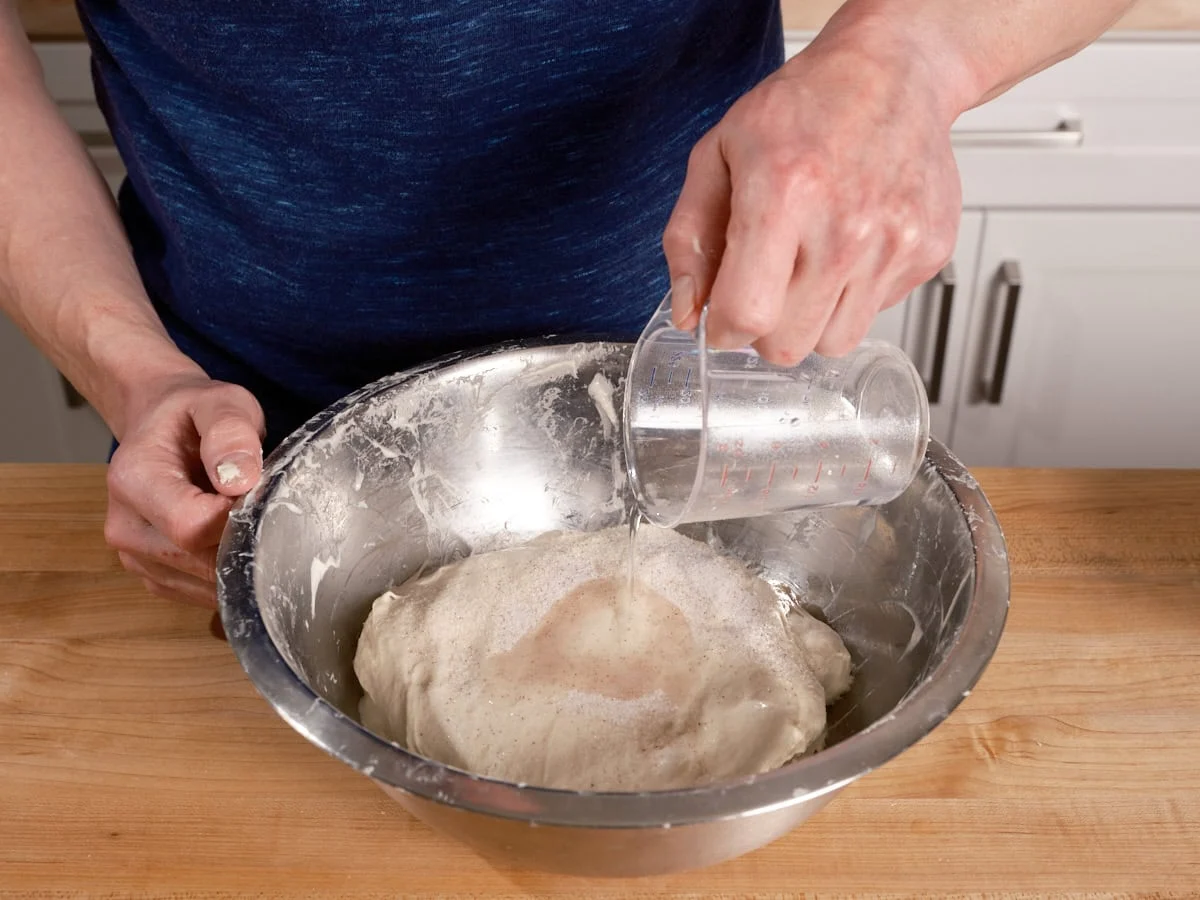
Dough hydration, a deceptively simple concept, stands as one of the most critical and nuanced variables in the complex art and science of sourdough bread baking. Far from being a mere numerical value in a recipe, it represents a dynamic interaction between flour, water, and environmental conditions, fundamentally shaping the final characteristics of the loaf. Mastering this aspect is often the pivotal point for bakers transitioning from inconsistent results to consistently exceptional bread.
Understanding the Core: What is Dough Hydration?
At its heart, dough hydration quantifies the total water content in a recipe as a percentage of the total flour weight. The calculation is straightforward: divide the weight of the water by the total weight of the flour, then multiply by 100. For instance, a recipe calling for 1,000 grams of flour and 700 grams of water results in a 70% hydration (700 ÷ 1,000 × 100 = 70%). This percentage provides bakers with an initial expectation of the dough’s consistency and handling properties before mixing even begins.
However, this numerical guideline serves as a starting point, not an immutable law. Baking professionals and seasoned home bakers universally acknowledge that flour is a variable ingredient, exhibiting differences across types, mills, and even individual bags. Furthermore, ambient conditions such as temperature and humidity introduce additional layers of complexity, subtly altering how much water flour can effectively absorb and how the dough behaves throughout the fermentation process. For example, a dough that achieves a desirable texture at 70% hydration on a cool, dry day might feel excessively slack and unmanageable on a warm, humid day, necessitating adjustments.
The Scientific Imperative: Why Hydration Matters
Water is the essential catalyst that transforms inert flour into a living, pliable dough matrix. Its presence facilitates several critical biochemical and physical processes:
-
Gluten Development: Water enables the hydration of gluten-forming proteins (glutenin and gliadin) present in flour. These proteins, when sufficiently hydrated and subjected to mechanical action (mixing, kneading), form a viscoelastic network known as gluten. This network is crucial for trapping the carbon dioxide gases produced during fermentation, allowing the dough to rise and develop an open crumb structure. Insufficient water impedes gluten formation, resulting in a tight, dense crumb, while excessive water can weaken the network, leading to collapse.
-
Starch Gelatinization: During baking, the starches in the flour absorb water and gelatinize, contributing to the bread’s internal structure and texture. Proper hydration ensures adequate starch gelatinization, which is vital for a tender, moist crumb.
-
Enzymatic Activity and Fermentation: Water is the medium for enzymatic reactions, including those from yeast and bacteria in a sourdough starter. These enzymes break down complex carbohydrates into simpler sugars, which fuel fermentation. Optimal hydration supports vigorous microbial activity, leading to better flavor development and gas production.
-
Heat Transfer: Water plays a significant role in heat transfer within the dough during baking, influencing crust development and the overall cooking process.
The Hydration Spectrum: From Rustic to Open Crumb
The hydration percentage profoundly influences the ultimate characteristics of the baked loaf, defining everything from crust texture to crumb structure and mouthfeel. Bakers typically categorize doughs into broad hydration ranges, each with distinct handling properties and final product attributes.
-
Lower-Hydration Breads (55-65%): These doughs are notably stiffer and easier to handle, making them ideal for beginners or for specific bread styles.
- Dough Characteristics: Firm, less sticky, holds shape well, easier to knead by hand or machine.
- Loaf Characteristics: Typically yields a denser, more uniform crumb, a thicker, chewier crust, and robust structure.
- Applications: Common in traditional European breads like some baguettes, pretzels, bagels, pizza doughs, and certain pan loaves where a structured, less airy interior is desired.
- Advantages: Excellent structural integrity, easier to shape and score, good for developing foundational baking skills.
-
Moderate-Hydration Breads (65-75%): This range represents a balanced approach, offering a good compromise between workability and desirable bread characteristics.
- Dough Characteristics: Pliable, somewhat sticky but manageable, develops good elasticity.
- Loaf Characteristics: Produces a well-structured loaf with a moderately open crumb, a satisfyingly crisp yet yielding crust, and a tender interior.
- Applications: Classic country loaves, many everyday sourdough recipes, and artisan breads that aim for a balance of texture and flavor.
- Advantages: Versatile, forgiving for intermediate bakers, allows for good oven spring and a pleasant eating experience.
-
Higher-Hydration Breads (75-90%+): These doughs push the boundaries of workability, demanding greater skill and experience but rewarding the baker with unique textures.
- Dough Characteristics: Very wet, sticky, slack, challenging to handle and shape, requires advanced techniques for gluten development (e.g., stretch and folds).
- Loaf Characteristics: Characterized by a very open, airy, and irregular crumb (often described as "custardy" or "gelatinous"), a thin, brittle, and exceptionally crisp crust.
- Applications: Ciabatta, focaccia, very open-crumb artisan sourdoughs, and specific sandwich loaves where a light, tender interior is paramount.
- Challenges: Risk of gummy crumb if under-fermented or improperly handled, potential for poor oven spring or collapse if the gluten network is not sufficiently strong to support the high water content. The bread may also stale faster if not stored correctly due to its higher moisture content.
While there’s a prevailing trend in artisan baking towards higher hydration for its perceived markers of skill and the coveted open crumb, it’s crucial to understand that "higher" does not automatically equate to "better." The ideal hydration is intrinsically linked to the specific flour used, the desired final product, and the baker’s proficiency. Pushing hydration beyond the flour’s capacity or the baker’s handling ability can lead to an unstable dough, a gummy crumb, or a loaf that collapses post-baking, ultimately compromising eating quality.
Dynamic Variables: Beyond the Recipe Number
The journey to mastering hydration involves recognizing and adapting to several dynamic factors:
-
Flour Type and Protein Content: This is arguably the most significant variable. Flours with higher protein content (e.g., strong bread flour, 12-14% protein) generally possess a greater capacity to absorb and hold water, forming a robust gluten network. Conversely, lower-protein or "softer" flours (common in many European countries) require less water to achieve the same consistency. American bread flour, known for its high protein, often necessitates increased hydration to prevent a dense or gummy texture. Whole grain flours, such as whole wheat or rye, demand substantially more water due to the presence of bran and germ particles, which are highly absorbent. For example, a 50% whole wheat sourdough might comfortably handle 82% hydration, a level that would render a 100% white flour dough unmanageable. Freshly milled flour also typically requires more hydration than aged flour, even if sifted, due to its unique absorption properties.
-
Climate and Environment: Ambient conditions play a subtle yet impactful role. In arid, high-altitude environments (like New Mexico, as noted by some bakers), higher hydration percentages are often necessary to compensate for faster evaporation. Conversely, in humid climates, flour may already have absorbed moisture from the air, requiring bakers to hold back a portion of the recipe’s water to achieve the desired dough consistency. Dramatic shifts in weather, such as a sudden downpour, can visibly alter dough behavior.
-
Mixing Technique and Gluten Development: The efficiency of gluten development directly impacts a dough’s ability to hold water. Well-developed gluten can support higher hydration, whereas a poorly mixed or under-developed dough will feel stickier and slacker even at moderate hydration levels.
The Baker’s Intuition: Reading the Dough and Bassinage
Professional bakers emphasize developing "baker’s intuition"—the ability to "read the dough" through sight and touch, rather than blindly adhering to numerical percentages. What feels like a wet, soupy dough at 70% hydration with one flour might feel stiff with another. This intuitive understanding is cultivated through consistent practice and meticulous observation.
One technique that empowers bakers to manage hydration dynamically is bassinage, or "double hydration." Instead of incorporating all the water at the outset, a portion (typically 10-20% of the total water) is reserved and added incrementally during the later stages of mixing, after the flour’s starches have begun to hydrate and the initial gluten network has formed.
Benefits of Bassinage:
- Facilitates Gluten Development: Adding a majority of the water first allows for easier initial gluten development. Trying to strengthen an overly wet dough from the start can be incredibly difficult due to insufficient friction. Bassinage enables bakers to achieve higher hydration without excessively long mixing times or the risk of under-developing the gluten.
- Real-time Dough Assessment: Holding back water provides a crucial opportunity to assess the dough’s strength and consistency during mixing. If the dough feels slack and overly wet after the initial water addition, the reserved portion can be reduced or omitted. Conversely, if the dough feels strong and capable of absorbing more, the additional water can be slowly incorporated. This adaptability is invaluable, especially when working with unfamiliar flours or varying environmental conditions. Many advanced recipes incorporate "Water 1" (for initial hydration and autolyse) and "Water 2" (for bassinage) to guide this process.
Addressing Common Challenges: Sticky Dough and Beyond
Sticky dough is a perennial source of frustration for many bakers. While often attributed solely to high hydration, it frequently stems from a combination of factors:
- Under-Developed Gluten: The most common culprit. If the gluten network is not adequately developed, the dough lacks the structure to hold its water, resulting in a sticky, unmanageable mass. Proper mixing and gentle folding techniques are crucial.
- Excessive Water for Flour Type: Attempting to force a high hydration on a flour with low protein content or limited absorption capacity will inevitably lead to stickiness.
- Insufficient Handling or Shaping Technique: High-hydration doughs require specific handling—gentle stretching, folding, and careful shaping—to build tension and manage stickiness. Inexperience can exacerbate the problem.
- Too Much Whole Grain: While whole grains demand more water, their sharp bran particles can interfere with gluten development, sometimes leading to a perceived stickiness that requires a different handling approach.
Tips for Mastering High-Hydration Doughs:
- Prioritize Gluten Development: Ensure the dough achieves sufficient strength through effective mixing and a series of stretch and folds during bulk fermentation.
- Use Cold Water: Slightly cooler water can slow down initial fermentation, allowing more time for gluten development before the dough becomes too extensible.
- Gentle Handling: Minimize tearing the gluten network. Use wet hands or a dough scraper to prevent sticking.
- Develop Shaping Skills: High-hydration doughs require swift, confident shaping techniques to build surface tension without degasing the loaf.
- Consider a Stronger Flour: Incorporating a percentage of high-protein bread flour can help stabilize a very wet dough.
Expert Perspectives and Broader Implications
Leading culinary institutions and artisan bakeries universally underscore the importance of hydration. Baking science literature often details rheological studies of dough, demonstrating how water content directly impacts viscosity, elasticity, and extensibility. While a decade ago, there was a noticeable trend towards pushing hydration percentages to extreme levels in artisan baking, largely driven by a desire for open crumbs, contemporary wisdom emphasizes a more balanced approach. Bakers are increasingly advised to prioritize the overall health and strength of the dough rather than a high hydration number for its own sake.
The implications of hydration extend beyond the individual loaf. For commercial bakeries, consistent hydration management impacts product uniformity, production efficiency, and shelf life. For home bakers, understanding hydration empowers them to adapt recipes, troubleshoot issues, and unlock a wider repertoire of bread styles. The ability to adjust hydration based on flour and environment is a hallmark of an advanced baker, transforming recipe following into true culinary craftsmanship.
Ultimately, mastering dough hydration is about cultivating a deep sensitivity to the ingredients and the process. It’s an ongoing conversation with the dough, where observation and adaptation are paramount. By meticulously tracking hydration levels, dough feel, environmental conditions, and final loaf outcomes through detailed baking notes, bakers can progressively refine their intuition and consistently produce bread that meets their desired aesthetic and textural standards. This journey from rigid adherence to intuitive understanding is where the true joy and artistry of sourdough baking reside.


