
San Diego, CA – In an incident highlighting both the unpredictable nature of artisanal baking and the resourcefulness of experienced culinary practitioners, Austin Durant, founder of the Fermenters Club and author of "Fearless Fermenting," recently transformed a failed sourdough bread attempt into a successful and "unabashedly sour" batch of sourdough pancakes. The unexpected pivot underscores a broader message within the fermentation community: that perceived setbacks can often lead to innovative and delicious culinary solutions, while also providing valuable learning opportunities.
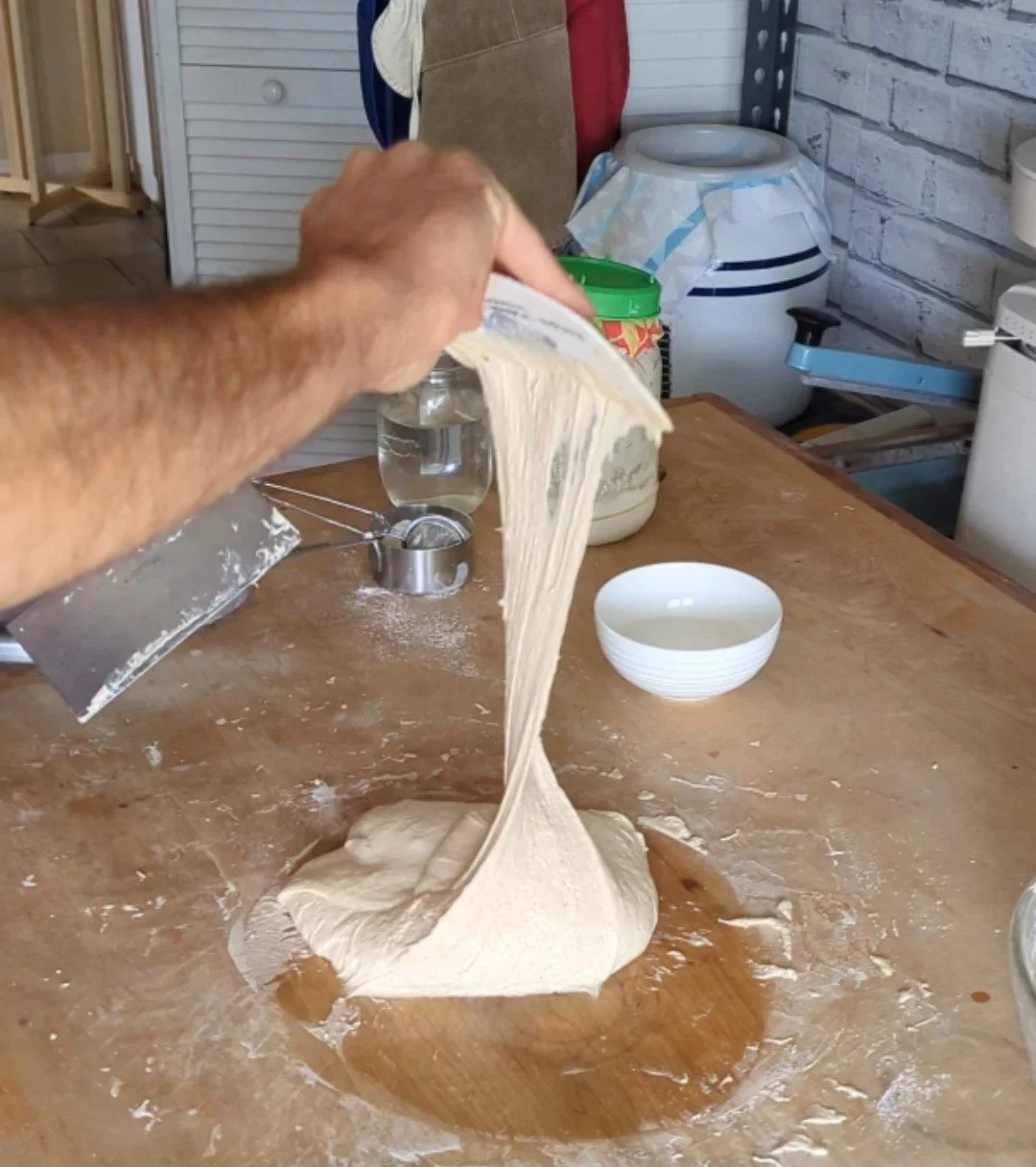
The incident occurred during an attempt to bake sourdough bread using Durant’s recently developed "Lazy Loaf Sourdough bread technique." This method, designed for efficiency and accessibility, aims to simplify the often-complex sourdough process for home bakers. However, environmental factors intervened, leading to an undesirable outcome during the critical proofing stage. Durant reported that his home’s ambient temperature, likely around 80 degrees Fahrenheit overnight, combined with what he believes was an extended proofing period, caused the dough to over-ferment.
A Detailed Account of the Sourdough Setback
The journey to a flawed loaf began with the standard initial steps of sourdough preparation, involving the careful feeding of the sourdough starter, followed by mixing the dough according to the "Lazy Loaf" specifications. The initial bulk fermentation proceeded as expected, building a foundation for the bread’s structure and flavor. The critical phase, however, proved to be the overnight proofing. Sourdough baking relies heavily on precise temperature control and timing to allow the yeast and lactic acid bacteria in the starter to develop gluten structure and gas, which are essential for the bread’s characteristic airy crumb.
Durant’s observation points to a classic pitfall in sourdough baking: overproofing. When dough is exposed to excessively warm temperatures for too long, the yeast exhausts its food supply rapidly, leading to a breakdown of the gluten network. Instead of trapping gas and creating a robust structure, the gluten strands weaken and collapse, resulting in a dense, gummy, or "soupy" texture that is notoriously difficult to shape.
"It happens to the best of us," Durant stated, reflecting on the experience. "Your sourdough bread just doesn’t rise properly while proofing. I believe it was too warm overnight, probably 80 in the house, and/or I waited too long to proof it." This candid admission resonates with countless home bakers who have faced similar challenges, particularly when external variables like fluctuating indoor temperatures are difficult to control.
Upon attempting to shape the dough, Durant immediately recognized the extent of the issue. "After pouring it onto the bench, I added a bit of flour, but realized that it just was never going to shape properly," he recounted. The dough lacked the necessary elasticity and tension, presenting as an unmanageable, sticky mass rather than a cohesive form suitable for a proofing basket and subsequent oven bake.
The Strategic Pivot: From Loaf to Pancake
Faced with a quantity of dough that would not yield a satisfactory loaf, Durant made a decisive and pragmatic choice: to repurpose the entire batch into sourdough pancakes. This decision not only prevented food waste but also showcased the versatility of sourdough discard – the portion of active starter that is typically removed before feeding. In this instance, the "failed" bread dough effectively became a large volume of enriched sourdough discard, primed for a different culinary application.
The original bread recipe, intended for a single loaf, was effectively a "triple batch" in terms of raw ingredients for pancakes. Durant adjusted supplementary ingredients to accommodate the larger volume, ultimately producing approximately two dozen pancakes. A crucial modification in his pancake recipe was the initial omission of baking soda, an alkaline leavening agent often added to sourdough pancakes to counteract the acidity and provide an extra lift. Durant’s rationale was that the bread dough already possessed "a little lift" from its initial fermentation. However, in hindsight, he acknowledged, "I should have added it anyway." The resulting pancakes, while delicious, were described as "a bit flat," confirming the benefit of baking soda for optimal pancake texture, even with already fermented dough.
Despite their flatter profile, the pancakes were "unabashedly sour," a characteristic prized by sourdough enthusiasts. This pronounced tang is a hallmark of extended fermentation, indicating a robust population of lactic acid bacteria that produce organic acids. Durant prepared three variations of the pancakes, serving them alongside unconventional yet complementary accompaniments: strawberry sauerkraut, rich grass-fed butter, and classic maple syrup. The strawberry sauerkraut, another testament to Durant’s expertise in fermentation, would have provided a contrasting sweet-tart note, balancing the sourness of the pancakes.
The Science Behind Sourdough’s Sensitivity
The incident highlights the delicate biochemical balance inherent in sourdough baking. Sourdough starters are complex ecosystems of wild yeasts and various lactic acid bacteria (LAB). These microorganisms work synergistically to ferment the flour, producing carbon dioxide gas (leavening), organic acids (flavor), and breaking down complex carbohydrates.
Temperature plays a paramount role in this process. While optimal temperatures for bulk fermentation typically range from 70-78°F (21-26°C), extended exposure to higher temperatures, such as the reported 80°F (27°C) in Durant’s home, significantly accelerates microbial activity. At elevated temperatures, yeast activity peaks, rapidly consuming sugars and producing gas. Simultaneously, LAB also thrive, producing more lactic and acetic acids.
The combination of rapid gas production and increased acidity, especially over an extended period, can overwhelm the developing gluten network. Gluten, formed by the interaction of glutenin and gliadin proteins in flour with water, provides the dough’s elasticity and structure. As the dough ferments, the gluten network stretches to accommodate the trapped gases. However, excessive enzymatic activity, often spurred by over-fermentation and high temperatures, can begin to degrade the gluten, turning it from an elastic, robust structure into a weak, soupy mass incapable of holding its shape or retaining gas. This breakdown is precisely what Durant observed when his dough became unmanageable.
The Sourdough Renaissance: Context and Community
Durant’s experience is not an isolated event but rather a common narrative within the booming community of home sourdough bakers. The global pandemic of 2020 ignited a massive resurgence in home baking, with sourdough leading the charge. Confined to their homes, many individuals sought comfort, connection, and a sense of self-sufficiency through the ancient art of bread making. This surge in interest has sustained itself, with millions now regularly maintaining sourdough starters and experimenting with various techniques.
Online forums, social media groups, and dedicated platforms like Fermenters Club have become vibrant hubs for sharing recipes, troubleshooting problems, and celebrating successes. It is in this context that Durant’s open sharing of his "failed" loaf becomes particularly impactful. It normalizes the learning process, demonstrating that even seasoned experts encounter challenges and that adaptability is a key trait of a successful baker.
Austin Durant, through Fermenters Club, has been a leading voice in this movement for over 16 years. His mission extends beyond mere recipes, advocating for a deeper understanding of fermentation science and its benefits. His book, "Fearless Fermenting," further solidifies his commitment to demystifying complex processes and empowering individuals to explore the world of fermented foods with confidence. His "Lazy Loaf" technique is another manifestation of this philosophy, aiming to make sourdough baking more approachable for busy individuals.
Implications: Resilience, Resourcefulness, and Reducing Waste
The transformation of a problematic dough into perfectly edible pancakes carries several broader implications:
- Culinary Resilience: Durant’s quick thinking demonstrates invaluable culinary resilience. Instead of discarding the dough – a common response to a perceived failure – he recognized its potential for another application. This mindset encourages experimentation and problem-solving in the kitchen.
- Food Waste Reduction: Globally, food waste is a significant environmental and economic issue. Home bakers like Durant exemplify how individual actions, such as repurposing ingredients, can contribute to reducing waste. A large batch of dough, otherwise destined for the bin, was successfully converted into a nourishing meal.
- The Value of Sourdough Discard: The incident highlights the often-underestimated value of sourdough discard. While many bakers maintain their starter by discarding a portion before feeding, this "discard" is a highly active, flavor-rich ingredient that can be used in a myriad of recipes beyond just bread, including pancakes, waffles, crackers, muffins, and even savory dishes.
- Learning from "Failures": Every "failure" in baking presents a learning opportunity. Durant’s self-analysis of the temperature and proofing time provides crucial insights that will inform his future baking endeavors and those of his community. It reinforces the scientific principles at play and encourages a more attentive approach to environmental variables.
- Community Support and Education: By openly sharing his experience, Durant fosters a sense of camaraderie among bakers. It reassures newcomers that mistakes are part of the learning curve and provides practical advice on how to recover from them. This educational aspect is central to the mission of organizations like Fermenters Club.
The Broader Landscape of Fermented Foods
Durant’s incident, while focused on sourdough, is also reflective of a wider trend in fermented foods. Beyond bread, there’s a growing appreciation for the health benefits and complex flavors offered by fermented vegetables (like sauerkraut), kombucha, kefir, and more. Fermentation, as a practice, connects individuals to ancient traditions of food preservation and flavor development, promoting gut health and culinary creativity. The inclusion of strawberry sauerkraut as a pancake accompaniment further illustrates this broader embrace of diverse fermented products.
In conclusion, Austin Durant’s recent sourdough experience, though initially a setback, serves as a powerful testament to the principles of adaptability, resourcefulness, and continuous learning that define the modern fermentation movement. His ability to transform a "soupy mess" into a delightful breakfast not only prevented waste but also provided an invaluable lesson for the vast community of home bakers navigating the nuanced world of sourdough. It underscores that even in the face of unexpected challenges, culinary innovation and a spirit of experimentation can lead to truly delicious outcomes.


