
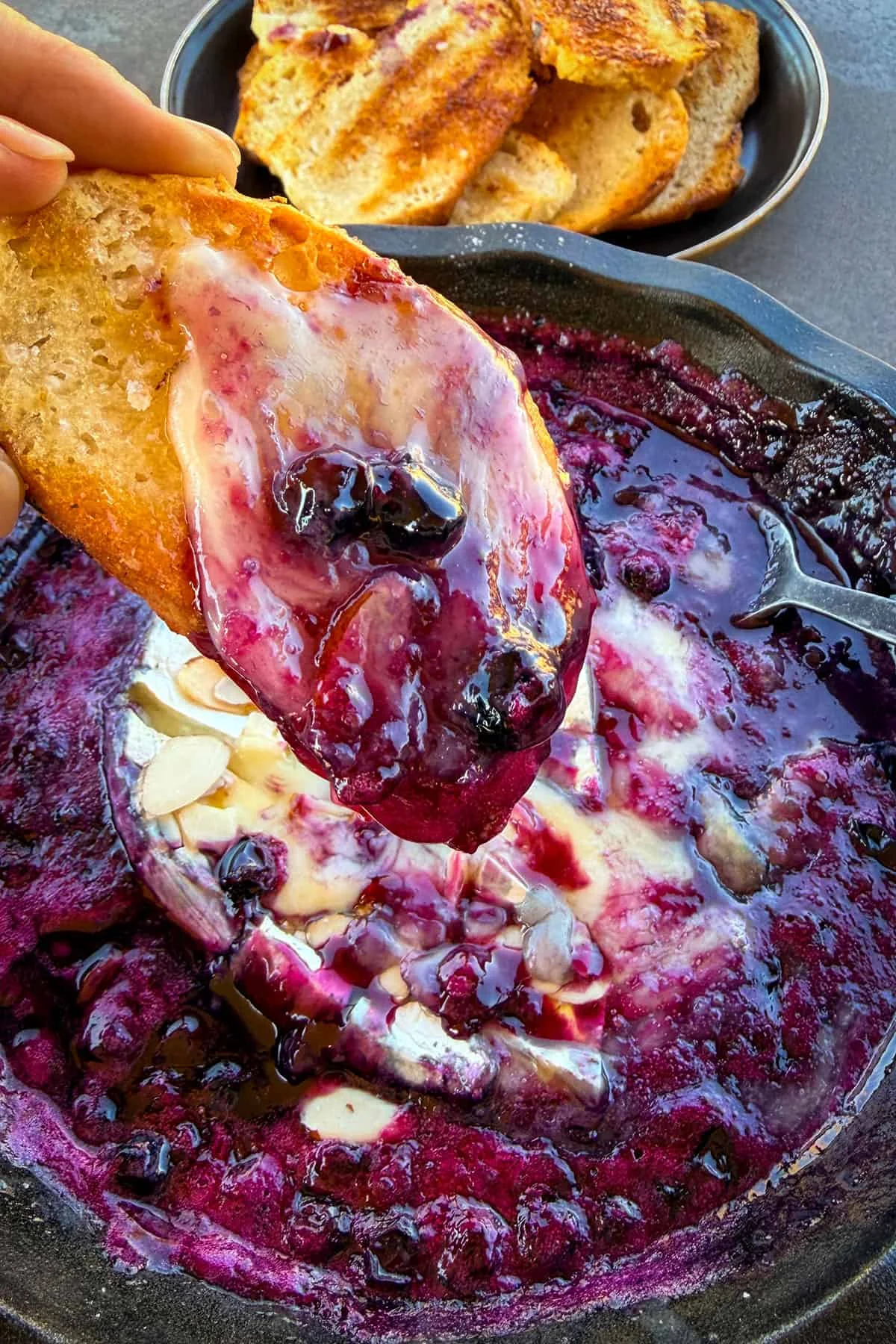
While Brie often garners the spotlight for its creamy, melt-in-your-mouth appeal in warm cheese dips, Camembert emerges as a compelling contender, particularly when paired with the nuanced sweetness of fruit and honey. Its inherently earthier flavor profile provides a more robust foundation that can stand up to, rather than be overpowered by, delicate accompaniments such as lemon curd, fresh blueberries, and a drizzle of honey. This dynamic allows for a more complex and satisfying taste experience, transforming a simple appetizer into a culinary revelation.
The preparation of this unique dip centers around a whole wheel of Camembert, expertly scored to facilitate its glorious ooze when exposed to the gentle heat of a live fire. As the scored wheel begins to soften and melt within a cast-iron skillet, it artfully integrates with the warm berries and zesty lemon curd. The result is a harmonious blend of creamy, tangy, and sweet notes, best served immediately alongside crusty bread or a specially prepared accompaniment like buttercream bread for optimal scooping. This method of preparation elevates the humble cheese dip into a sophisticated dish, perfect for gatherings and culinary explorations.
At a Glance: Mastering the Live-Fire Camembert Dip
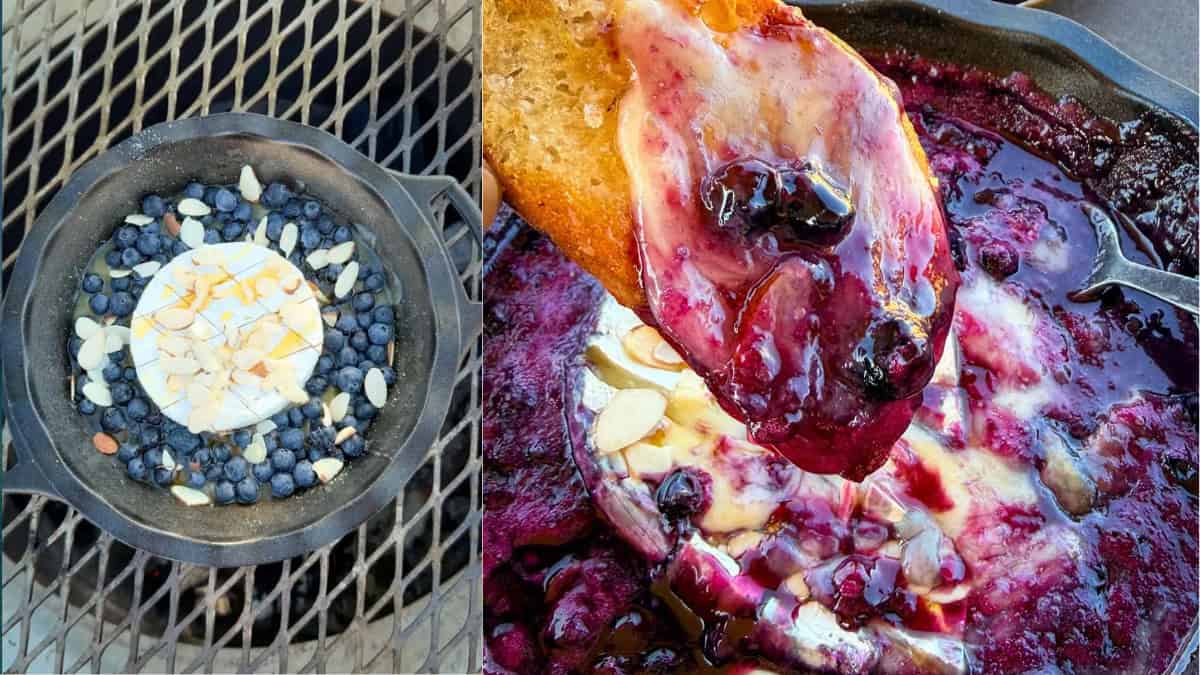
For those looking to recreate this delightful dish, understanding the fundamentals is key. The process involves carefully scoring a wheel of Camembert cheese, placing it in a cast-iron skillet, and surrounding it with sweet toppings. This skillet is then placed over a medium-heat live fire. The heat allows the cheese to soften and ooze, mingling with the toppings to create a luscious dip. The entire process, from preparation to serving, typically takes between 15 to 20 minutes, making it an efficient yet impressive culinary endeavor.
The foundational element of this recipe lies in the strategic scoring of the Camembert rind. This technique is crucial, allowing the cheese to expand and flow outwards as it melts, rather than remaining contained within its rind. This controlled release is what enables the cheese to meld seamlessly with the surrounding ingredients. The accompanying toppings, a vibrant medley of lemon curd and fresh blueberries, are carefully arranged around the cheese wheel. A delicate drizzle of honey adds a touch of sweetness, while a scattering of sliced almonds introduces a welcome textural contrast and nutty undertone.
The Nuances of Camembert: A Superior Choice for Sweet Pairings
The choice of Camembert over its more widely recognized cousin, Brie, for sweet applications is rooted in their distinct flavor profiles. Brie, while delicious, possesses a milder, more delicate taste that can sometimes be lost when juxtaposed with intensely sweet or tart ingredients. Camembert, on the other hand, offers a more pronounced, earthy, and sometimes slightly mushroomy character. This inherent depth allows it to act as a more resilient base, providing a savory counterpoint that balances the sweetness of the toppings, preventing the dip from becoming cloying.

This particular recipe is part of a broader exploration into skillet cheese dips prepared over a live fire. This series aims to showcase how different cheeses and topping combinations can be transformed through the unique cooking environment of an open flame. The goal is to move beyond conventional oven-baked or stovetop methods, leveraging the subtle smoky notes and direct heat of grilling to impart an unparalleled depth of flavor and texture to the cheese.
Crafting the Lemon Blueberry Camembert Skillet Dip: A Step-by-Step Guide
The preparation of this exquisite dip begins with preparing the heat source. Lighting charcoal in a chimney starter or directly on the grill and allowing it to reach a medium heat, indicated by a layer of ash, is the first crucial step. Once the coals are ready, the grill grate is positioned, creating the platform for the culinary magic to unfold.
Step 1: Preparing the Camembert Wheel
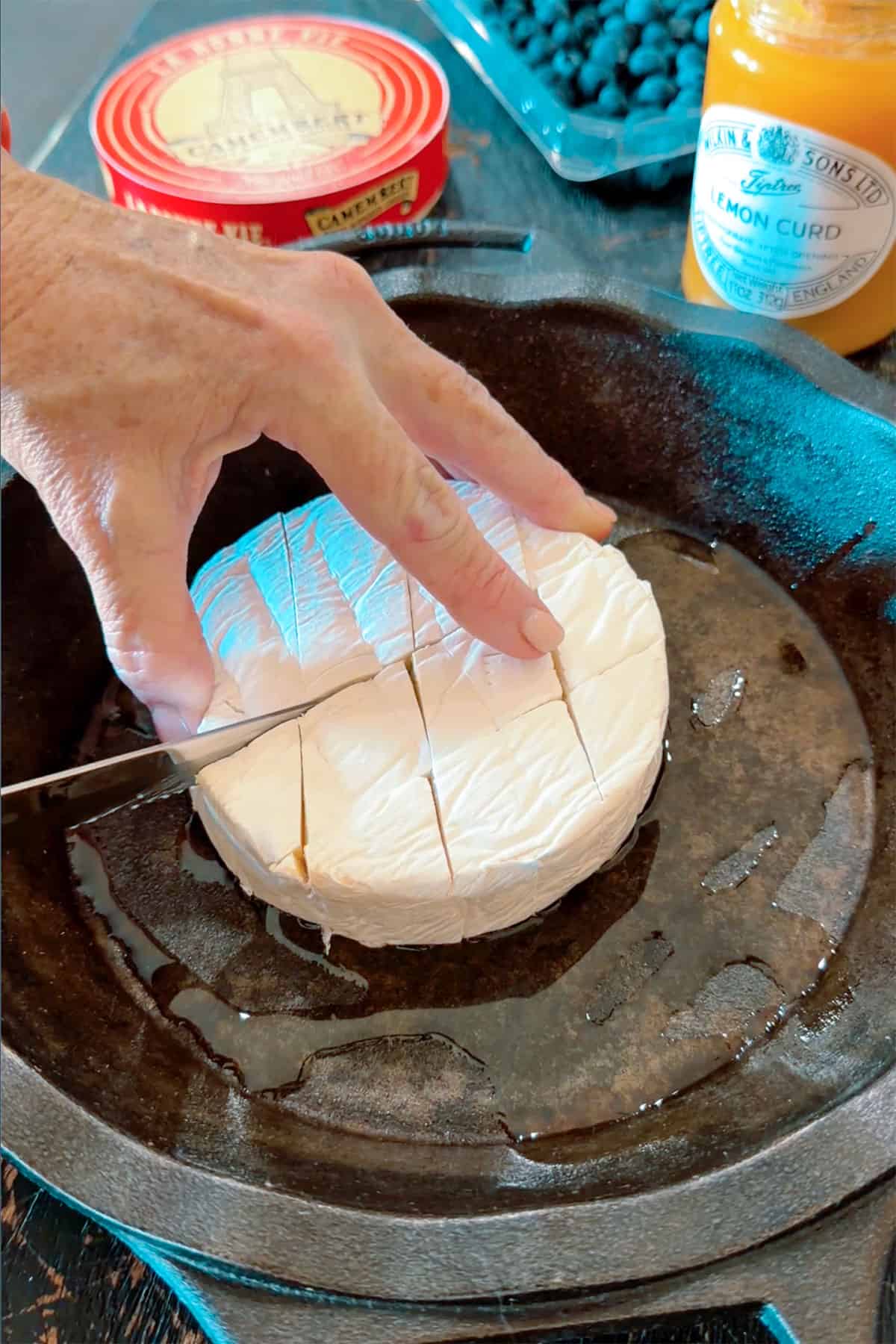
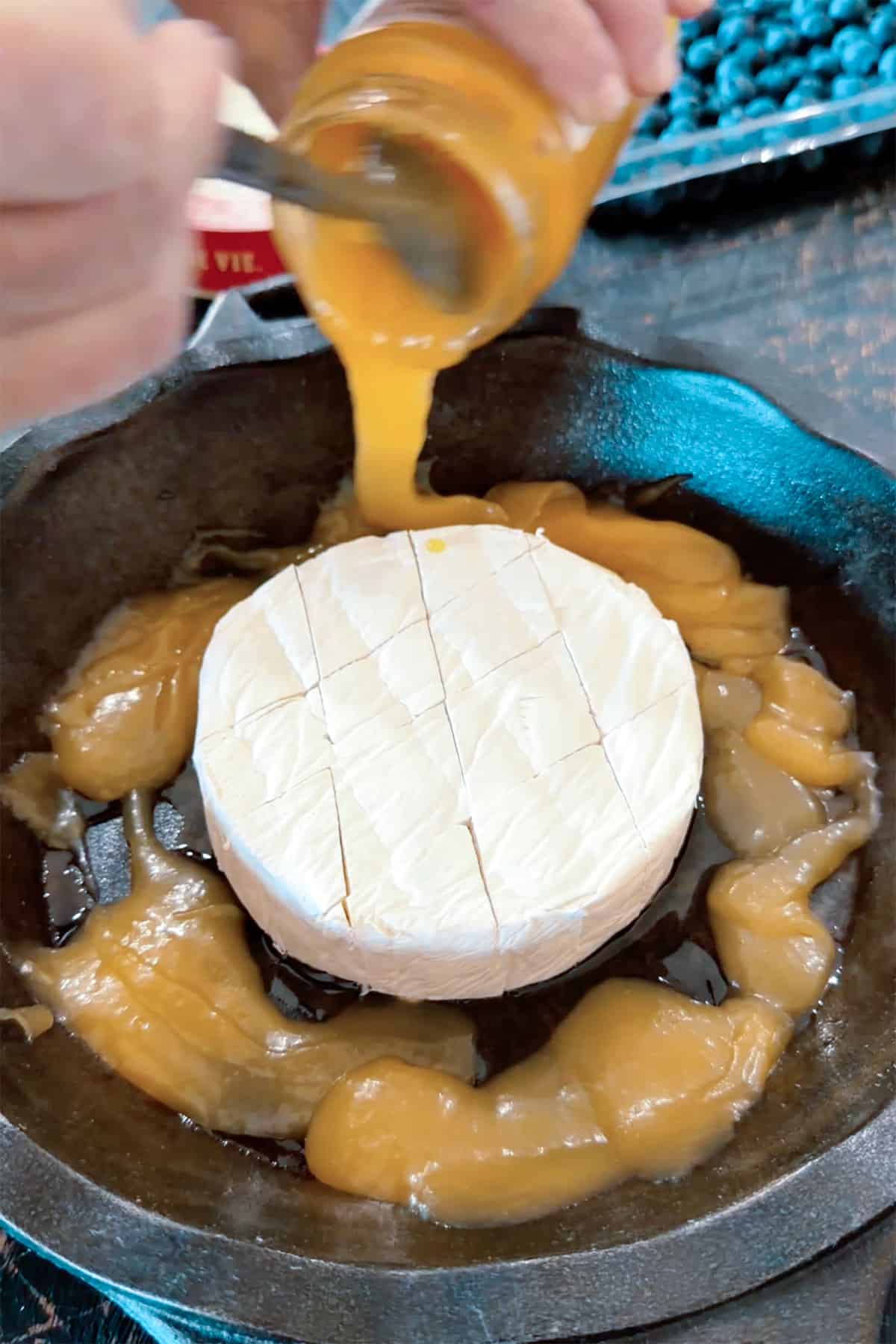
The process commences by lightly oiling a 9 or 10-inch cast-iron skillet. A Lodge Cast Iron Pie Pan is often recommended for its even heat distribution and suitability for sweeter skillet cheese dips. The whole wheel of Camembert is then placed centrally within the skillet. The key to unlocking the cheese’s potential lies in scoring its surface. Deep diamond patterns are cut through the rind, ensuring the cuts penetrate all the way to the cheese itself. This deliberate scoring is what enables the cheese to gracefully ooze out as it heats, transforming its structure and texture.
Step 2: Assembling the Flavor Profile
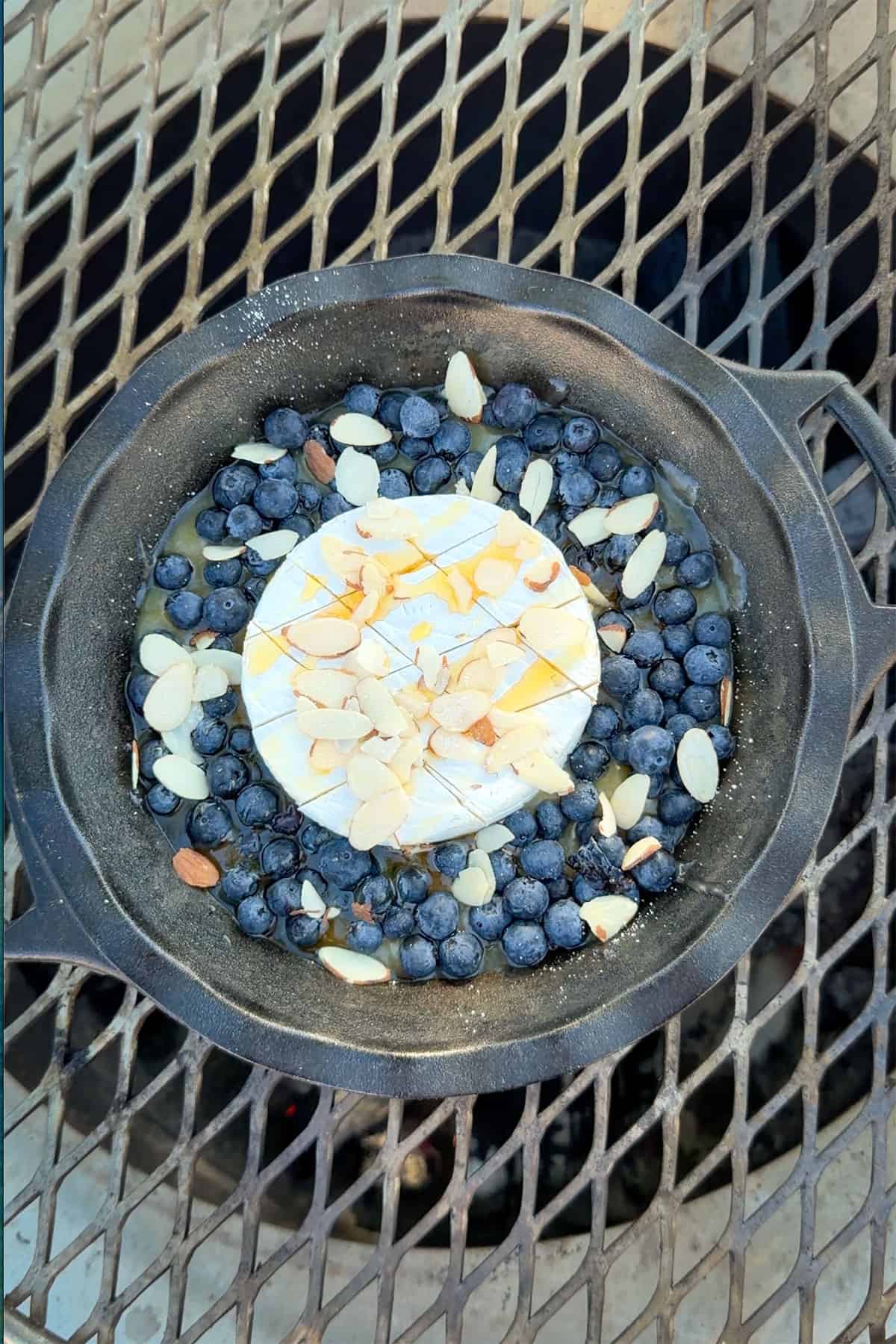
With the Camembert wheel scored and positioned, the surrounding area of the skillet becomes a canvas for complementary flavors. Lemon curd is carefully spooned around the cheese, filling the space between the wheel and the skillet’s edge. Fresh blueberries are then generously scattered over the lemon curd, their vibrant color and tartness promising a delightful burst of flavor. A drizzle of honey is applied across the entire ensemble, its golden sweetness destined to caramelize slightly during the grilling process. Finally, a handful of thinly sliced almonds is sprinkled over the top, adding a subtle crunch and nutty aroma that will enhance the overall sensory experience.
Step 3: The Live-Fire Transformation
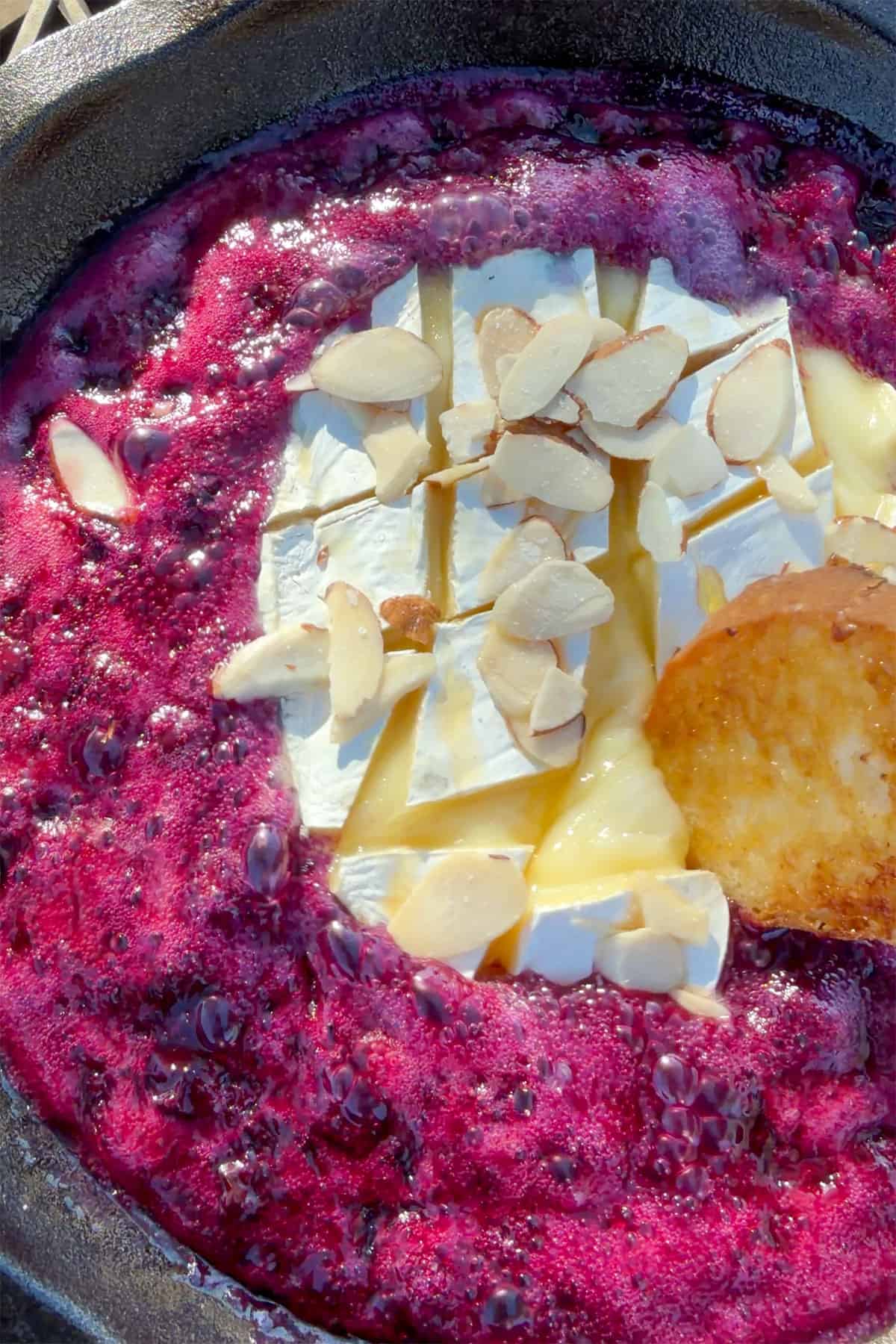
The assembled skillet is then placed directly onto the grill grate, positioned over the glowing coals. Crucially, the skillet is left uncovered, allowing the heat to circulate freely and directly impact the cheese and toppings. The grilling process typically lasts between 15 to 20 minutes. During this time, vigilant observation is key. The scored diamond patterns on the Camembert will begin to pull apart, signaling that the cheese is melting. The center of the cheese wheel will become visibly glossy and exquisitely soft, indicating it has reached its optimal consistency for dipping.
Serving the Lemon Blueberry Camembert Skillet Dip: An Immediate Delight
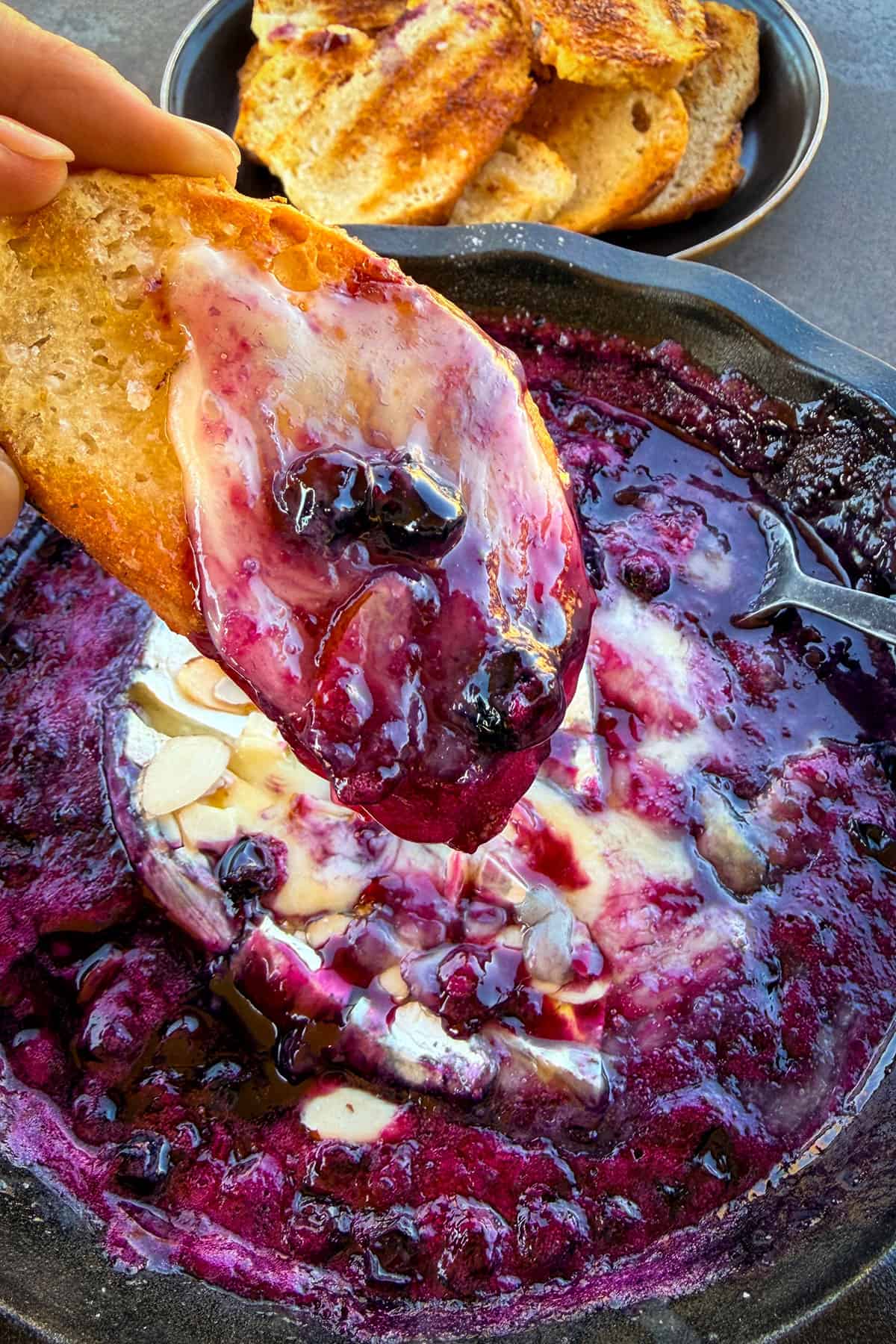
The pinnacle of this culinary creation is its immediate presentation. The cast-iron skillet, brimming with molten cheese and warm fruit, is brought directly to the table while still hot. This ensures the dip retains its desirable oozy texture, which can firm up as it cools. The ideal accompaniments for scooping up this delectable mixture are hearty and absorbent. Crusty bread, slices of baguette, or the specifically recommended buttercream bread provide the perfect vehicles for conveying the rich, creamy cheese and sweet fruit medley to the palate. Enjoying this dip promptly is paramount to experiencing its full, luxurious appeal.
Storage and Reheating: Preserving the Flavor
While this dish is best enjoyed fresh, any potential leftovers can be carefully stored. Spoon any remaining dip into an airtight container and refrigerate for up to four days. To reheat, a gentle approach is recommended. The dip can be warmed slowly in a low oven or briefly in the microwave, ensuring the cheese melts without becoming oily or overcooked.
GCG Pro Pitmaster Tips for Enhanced Flavor
Expert pitmasters often emphasize certain techniques to elevate grilled dishes. For this skillet dip, considerations might include the type of wood used in the charcoal for a subtle smoky infusion, or ensuring the skillet is preheated to avoid any initial sticking. Fine-tuning the grilling time based on ambient temperature and wind conditions can also be crucial for achieving the perfect melt.
Frequently Asked Questions: Addressing Common Queries
Can I use brie instead of camembert?
Absolutely. While Brie offers a milder and creamier profile, the technique remains identical. The flavor of the final dip will be gentler, making it a suitable alternative for those who prefer a less pronounced cheese taste.
Can I make this in the oven?
Yes, this recipe is adaptable to an oven. Bake at 375°F (190°C) for approximately 15-18 minutes, or until the rind cracks and the cheese appears visibly melted and molten.
Why isn’t my cheese oozing through the scores?
This often indicates that the scores were not deep enough to penetrate the rind completely, or that the cheese requires a few more minutes of heat exposure. Ensuring the cuts go all the way through the rind is essential for achieving the desired ooze.
Can I prep this ahead of time?
Certainly. The ingredients can be assembled in the skillet and refrigerated. Before grilling, remove the skillet from the refrigerator while the coals are being prepared. This allows the ingredients to come closer to room temperature, ensuring more even cooking.
Broader Culinary Implications and Context
The trend of elevated cheese dips, particularly those prepared using live-fire techniques, reflects a growing interest in interactive and flavorful entertaining. This Lemon Blueberry Camembert Skillet Dip exemplifies how familiar ingredients can be transformed through innovative cooking methods. The use of Camembert highlights a growing appreciation for the diverse characteristics of artisanal cheeses and their potential beyond traditional applications. This approach to cooking not only satisfies the palate but also engages the senses, making the act of dining a more immersive experience. The popularity of such dishes can be seen as a testament to the evolving landscape of home entertaining, where visual appeal and unique flavor profiles are increasingly prioritized. The integration of grilling into appetizer preparation also speaks to the broader resurgence of outdoor cooking as a central element of social gatherings.
The inclusion of a video component, demonstrating the scoring and grilling process, further enhances the accessibility of this recipe. Such visual guides are invaluable for home cooks, demystifying techniques and building confidence. The detailed nutritional information provided also caters to a health-conscious audience, offering transparency about the caloric and macronutrient content of the dish. This comprehensive approach, from recipe development to detailed guidance, positions the dish as a well-rounded and approachable culinary option.


