Overcooked brisket, a culinary mishap dreaded by pitmasters and home cooks alike, arises when this prized cut of beef spends too much time on the heat or continues its transformation beyond its optimal tender point due to carryover cooking and resting. This common pitfall can lead to a drastic alteration in texture, transforming what should be a succulent, sliceable masterpiece into a dish that crumbles or shreds with minimal provocation. While the irreversible nature of overcooking means a complete restoration is impossible, strategic adjustments in preparation, presentation, and even subsequent reheating can salvage the meal and ensure it remains enjoyable.
The hallmark of an overcooked brisket is a loss of structural integrity. Instead of yielding clean, distinct slices, the meat becomes so tender that its muscle fibers break down excessively. This results in a texture that is either mushy, crumbly, or shreds with the slightest touch. This occurs when the connective tissues, primarily collagen, have fully rendered into gelatin, but the muscle fibers themselves have begun to dehydrate and disintegrate. Unlike undercooked brisket, where a lack of tenderness can sometimes be remedied by further cooking, overcooked brisket signifies a point of no return for its texture. The key to managing this situation lies not in reversing the overcooking, but in mitigating its effects and maximizing the remaining flavor and moisture.
Understanding the precise moment brisket transitions from perfectly tender to overcooked is crucial for prevention. This delicate balance is often a narrow window, particularly after the brisket has reached the probe-tender stage. Probe tender is that point where a temperature probe or skewer slides into the thickest part of the brisket with little to no resistance, indicating that the collagen has broken down sufficiently. However, this is precisely when the risk of overcooking escalates. The continued application of heat, even after the brisket is technically done, allows for carryover cooking – the internal temperature continues to rise due to the residual heat within the meat. Furthermore, the resting period, while essential for moisture redistribution, can also contribute to overcooking if the brisket remains too hot for too long.
Several factors commonly contribute to brisket succumbing to the overcooking fate. One primary culprit is a lack of precise temperature monitoring. Relying on time alone rather than internal temperature can lead to prolonged cooking. Another significant factor is the "stall," a phenomenon where the brisket’s internal temperature plateaus for hours during smoking. While this is a natural part of the process, misinterpreting the end of the stall or the subsequent rapid temperature rise can lead to overshooting the target. Impatience, especially after a long cook, can also play a role, leading pitmasters to pull the brisket prematurely before it has fully rested, only to find it has cooked too far. Finally, an inaccurate thermometer or a failure to calibrate it regularly can lead to misjudgments in temperature, pushing the brisket past its prime.
While the muscle fibers themselves cannot be rehydrated once they have dried out from overcooking, the goal of salvaging an overcooked brisket shifts to optimizing its palatability. This involves two primary objectives: enhancing moisture and maximizing flavor. By incorporating additional moisture and focusing on how the meat is presented, the crumbly texture can be masked, and the rich, smoky flavor of the brisket can still be enjoyed. The strategy here is to work with the meat’s current state rather than fighting it.

The method of slicing plays a pivotal role in managing the texture of an overcooked brisket. When brisket is past its prime, thin slices are prone to disintegrating completely, becoming difficult to handle and serve. Opting for thicker slices, on the other hand, provides more structural integrity. This allows the meat to hold together better on the plate, retaining any residual moisture and offering a more satisfying bite. If the brisket’s flat, a leaner section prone to drying, is particularly fragile, slicing it slightly thicker can significantly improve its presentation and mouthfeel. While these slicing adjustments will not magically restore the brisket to perfectly formed slices, they can be the critical difference between a pile of dry, crumbly beef and a dish that is still worth savoring.
For briskets that have already fallen apart or become excessively shredded, the most effective approach is to embrace this texture. Instead of attempting to slice it, lean into the idea of a "pulled" or "shredded" brisket. This allows the meat to be repurposed into dishes where its texture is not only acceptable but desirable. Excellent options include incorporating it into hearty stews, rich chili, flavorful tacos, or even savory barbecue sandwiches. In these applications, the focus shifts from the aesthetic of perfect slices to the depth of flavor and the overall satisfaction of the dish. When the brisket has reached this stage, the sliced presentation is no longer viable, and the priority becomes maximizing its inherent flavor and any remaining moisture.
Reheating overcooked brisket requires a delicate approach to avoid exacerbating its dryness. High heat or uncovered reheating methods will accelerate moisture loss, rendering the meat even more unpalatable. The most effective reheating strategy involves gentle, moist heat. This can be achieved by placing the brisket in a covered dish, perhaps with a splash of beef broth or its own rendered juices, and heating it in a low oven (around 250-300°F or 120-150°C). Alternatively, vacuum-sealing the brisket with a bit of liquid and using a sous vide bath at a low temperature (around 140-150°F or 60-65°C) can also help reintroduce moisture. The key is to avoid direct, dry heat and to allow the meat to warm through slowly and evenly.
Preventing overcooked brisket in the first place is the ultimate goal for any pitmaster. This involves meticulous attention to detail throughout the cooking process. Firstly, investing in and consistently using a reliable digital meat thermometer is paramount. This tool provides accurate temperature readings, allowing for precise monitoring of the brisket’s internal temperature. Secondly, understanding the concept of "probe tender" is essential. This tactile test, combined with temperature, is the most reliable indicator of doneness. Thirdly, allowing adequate resting time is critical. Brisket should rest for a minimum of one to four hours, or even longer for larger cuts, allowing the juices to redistribute throughout the meat. Finally, patience is a virtue in barbecue. Rushing the process or pulling the brisket too early, only to realize it has overcooked, is a common regret. Once the brisket reaches probe tender, the window for error narrows considerably, making vigilance during this final stage indispensable.
Christie’s Pitmaster Take
Overcooked brisket is not a lost cause, but it certainly signals a departure from the ideal slicing brisket. When I find myself in this situation, my immediate instinct is to cease fighting the meat’s natural inclination. Instead, I pivot my strategy to enhance its moisture content, adjust my serving method, and prioritize the robust flavor profile that remains, rather than dwelling on its diminished visual appeal.

Brisket Guides
This exploration into the nuances of brisket cooking is part of an extensive series dedicated to mastering the art of barbecue. For a comprehensive understanding, consult the Ultimate Brisket Guide, which delves into every facet of brisket preparation, from understanding its anatomy and mastering trimming techniques to achieving perfect cooking results.
Explore further insights into brisket fundamentals:
- Brisket Anatomy: Understanding the cuts and their characteristics.
- Brisket Trimming: Techniques for optimal fat rendering and smoke penetration.
- Brisket Injection: Methods for adding internal moisture and flavor.
- Brisket Wrapping: The art of the Texas Crutch for moisture and bark control.
- Brisket Resting: The critical post-cook period for moisture redistribution.
- Brisket Slicing: Techniques for presenting perfectly cooked brisket.
For a complete overview of the barbecue journey, refer to the comprehensive guides available.
My Go-To Brisket Rub for Building Flavor and Bark
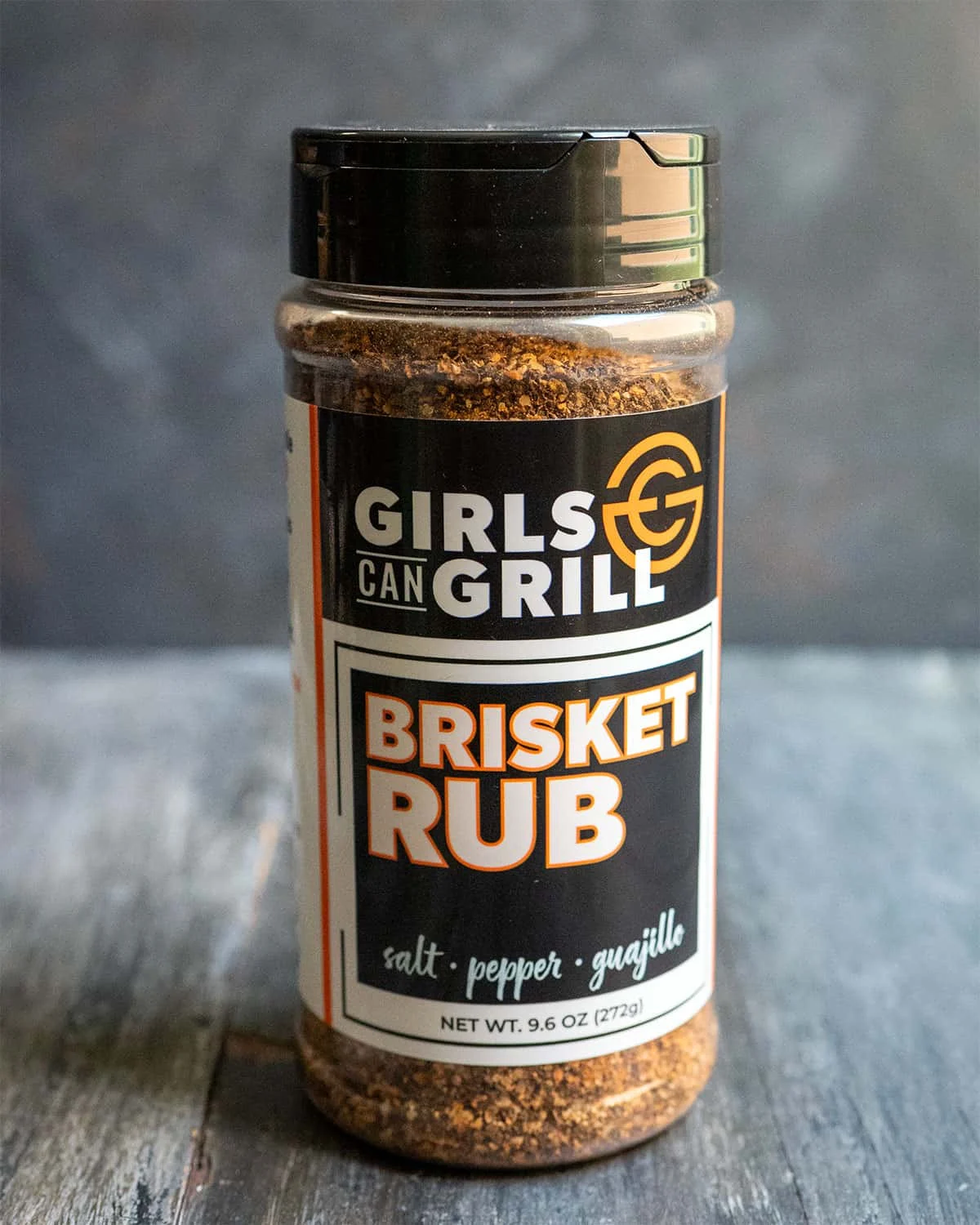
A cornerstone of exceptional brisket lies in its seasoning. The Girls Can Grill Brisket Rub is my preferred blend, meticulously crafted to enhance the natural beef flavor while promoting the development of a deep, even bark. This expertly balanced mix of salt, pepper, garlic, and savory spices creates layers of flavor that complement the rich, smoky essence of slow-cooked brisket.

Brisket Recipes
What’s HOT
Christie Vanover: A Pitmaster’s Journey
Greetings, BBQ Family. I am Christie Vanover, the driving force behind Team Girls Can Grill and an award-winning competitive pitmaster. My culinary journey has been marked by numerous grand championships and top-tier category finishes in barbecue competitions. As an esteemed expert grill reviewer for BBQ Guys and a featured personality on national television, including appearances on the Food Network and Ninja Woodfire Grill infomercials, I established this platform in 2015. My mission is to share my extensive barbecue knowledge, including tried-and-true tips and signature recipes, with enthusiasts worldwide.