
The global effort to mitigate the environmental impact of food production has found a significant ally in digital technology, specifically through the expansion of the Too Good To Go platform. As food waste continues to be a primary driver of climate change, contributing to an estimated 10% of all global greenhouse gas emissions, the partnership between sustainability advocates and retail technology is shifting consumer behavior toward a more circular economy. Recent initiatives demonstrate that surplus food from gourmet grocery stores and specialized retailers can be effectively repurposed, offering a dual benefit of environmental conservation and consumer cost savings. By utilizing an application-based interface to connect consumers with surplus inventory, the platform facilitates the distribution of "surprise bags" containing high-quality food items at approximately one-third of their original retail value, thereby preventing perfectly edible goods from entering landfills.

The Global Context of Food Waste and Environmental Degradation
To understand the necessity of platforms like Too Good To Go, one must examine the staggering scale of the global food waste crisis. According to data from the United Nations Environment Programme (UNEP) and the Food and Agriculture Organization (FAO), approximately one-third of all food produced for human consumption is lost or wasted globally. This inefficiency represents not only a humanitarian concern but also a catastrophic environmental one. When food is discarded, the resources used in its production—including water, land, energy, and labor—are also wasted.
Furthermore, food that ends up in landfills decomposes anaerobically, releasing methane, a greenhouse gas that is significantly more potent than carbon dioxide in the short term. The 10% of global emissions attributed to food waste places the issue on a scale larger than the entire aviation industry. In response, international bodies have set ambitious targets, such as the UN Sustainable Development Goal 12.3, which aims to halve per capita global food waste at the retail and consumer levels by 2030. Digital interventions that bridge the gap between retail surplus and consumer demand are considered essential to meeting these benchmarks.

The Operational Mechanics of the Surplus Redistribution Model
The Too Good To Go model operates on a Business-to-Consumer (B2C) framework that prioritizes flexibility for the retailer and discovery for the consumer. Unlike traditional grocery shopping, where consumers select specific items, the "Surprise Bag" concept allows businesses to bundle whatever surplus remains at the end of a shift or business day. This approach is particularly effective for businesses with fluctuating daily inventory, such as bakeries, juice bars, and gourmet grocers.
In a recent practical application of the service, participants utilized the app to secure surplus inventory from two distinct local entities: a high-end gourmet grocery store and a specialized juice boutique. The process involves a streamlined digital chronology:

- Identification: The consumer opens the app to view real-time availability at nearby partner locations.
- Reservation: A "Surprise Bag" is reserved and paid for directly through the interface at a steep discount.
- Collection: The consumer visits the establishment during a designated pick-up window, typically near closing time, to collect the items.
This system effectively monetizes inventory that would otherwise represent a total loss for the business while providing the consumer with high-quality ingredients that may have been previously cost-prohibitive.
Case Study: Implementing a Zero-Waste Social Gathering
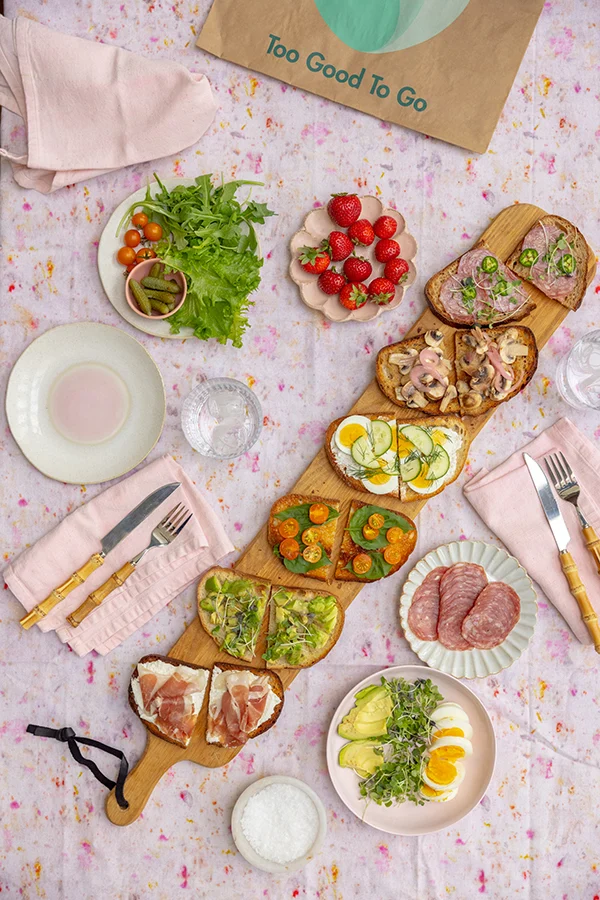
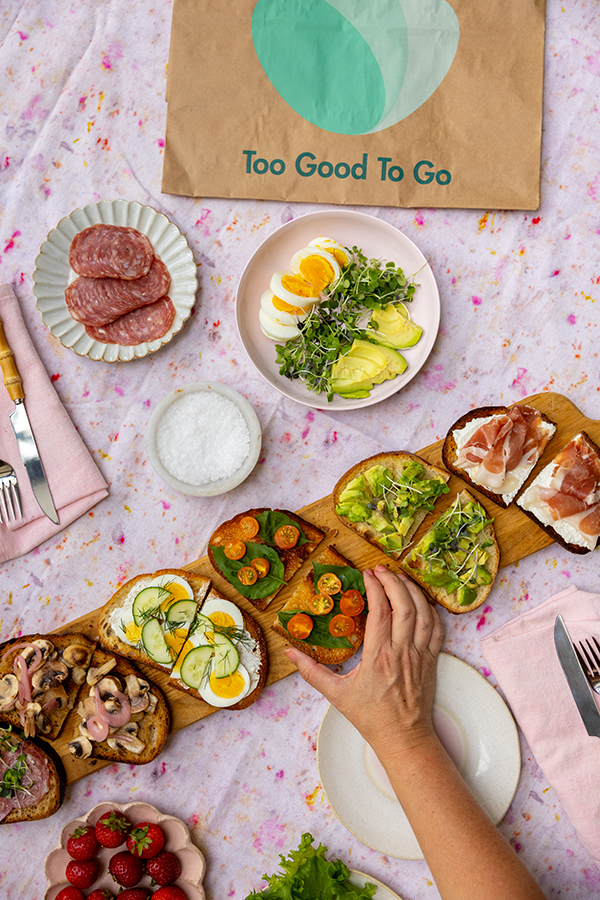
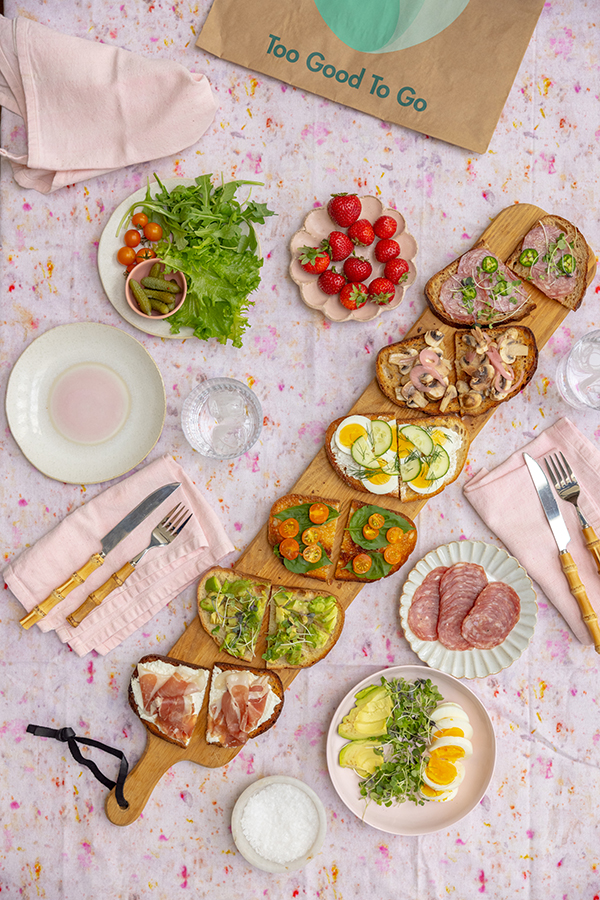
The utility of surplus food redistribution was recently highlighted through a curated "zero-waste gathering" concept. By leveraging the contents of surprise bags, organizers demonstrated that high-end social hosting is possible without the traditional reliance on excessive, new-purchase inventory. The core of this demonstration centered on a "gourmet toast bar," a culinary strategy designed to utilize various breads and miscellaneous toppings common in surplus bundles.
Culinary Methodology and Resourcefulness
The strategy employed for the gathering focused on bulk preparation and garden integration. A variety of breads obtained from the surplus bags were toasted simultaneously in an oven to ensure efficiency and uniform texture. These served as the canvas for a diverse array of toppings, many of which were supplemented by "fridge foraging"—the practice of using existing condiments and leftovers—and home-grown produce such as basil and tomatoes.
The resulting menu showcased the versatility of surplus ingredients:

- Dairy and Charcuterie: Ricotta paired with prosciutto and a drizzle of hot honey.
- Plant-Based Options: Smashed avocado with lemon, sea salt, and micro-sprouts.
- Garden Fresh: Classic bruschetta-style tomatoes with basil and olive oil.
- Continental Style: Sliced hard-boiled eggs with mayonnaise, cucumber, and fresh dill.
- Salty and Savory: Melted artisanal cheeses with sautéed mushrooms or spicy soppressata with jalapeños.
By presenting these as a self-service station, the hosts minimized preparation waste and allowed guests to customize their portions, further reducing the likelihood of plate waste.
Economic and Social Implications for Stakeholders
The adoption of food-saving technology yields measurable benefits across the socio-economic spectrum. For the retailer, the benefits include:

- Waste Reduction Costs: Lowering the volume of waste destined for disposal can reduce waste management fees.
- Revenue Recovery: Recouping the cost of ingredients and labor on items that would otherwise be discarded.
- New Customer Acquisition: The app serves as a marketing tool, introducing "deal-seeking" consumers to premium brands they might not otherwise visit.
For the consumer, the primary driver is the "value proposition." Accessing gourmet goods at 33% of the retail price addresses growing concerns regarding food inflation and the cost of living. Socially, the "surprise" element of the bags encourages culinary creativity, as consumers are forced to cook with ingredients they did not specifically choose, leading to a broader appreciation for seasonal and diverse food groups.
Official Responses and Industry Sentiment
While specific corporate statements from the involved grocery and juice stores were not released, industry analysts note a growing trend of "corporate social responsibility" (CSR) driving these partnerships. A spokesperson for the sustainability sector might observe that "The integration of surplus-reduction technology into standard retail operations is no longer a niche trend but a commercial necessity."
Retailers who participate in these programs often report a boost in employee morale, as staff members generally prefer seeing products they prepared find a home rather than being discarded. Furthermore, environmental advocacy groups have praised the transparency of the app-based model, which provides tangible data on how many "meals" have been saved from the waste stream, allowing both businesses and consumers to track their carbon footprint reduction.
Strategic Guidelines for Sustainable Hosting
To further the mission of zero-waste living, experts suggest several "best practices" for individuals looking to host gatherings with a minimal environmental footprint:

- Inventory Assessment: Before purchasing new items, hosts should conduct a thorough audit of their pantry and refrigerator to identify ingredients that can be repurposed.
- Surplus Integration: Utilizing apps like Too Good To Go to source the bulk of the menu can reduce the demand for "new" production and save significant costs.
- Portion Control and Preservation: Providing guests with containers to take home leftovers ensures that the food prepared for the event is fully consumed.
- Composting and Recycling: For the small amount of unavoidable waste (such as eggshells or vegetable peels), maintaining a robust composting system ensures that nutrients return to the soil rather than producing methane in a landfill.
Conclusion: The Path Forward for Food Sustainability
The collaboration between consumers, retailers, and technology platforms represents a critical frontier in the fight against climate change. By reframing "surplus" as an "opportunity" rather than "waste," society can begin to address the 10% of global emissions tied to discarded food. The success of the "surprise bag" model and the ease with which it can be integrated into social traditions, such as dinner parties and gatherings, suggests a scalable path forward. As more businesses join the movement and more consumers adopt a "waste-first" mindset in their shopping habits, the goal of a sustainable, zero-waste food system becomes increasingly attainable. The transition toward this model is not merely a matter of convenience or frugality; it is a fundamental requirement for the long-term health of the global environment.


