

The Regulatory Landscape and Consumer Awareness
The modern skincare market is characterized by a significant discrepancy between international regulatory standards. In the European Union, the Cosmetics Regulation (EC) No. 1223/2009 bans or restricts more than 1,300 chemicals from use in personal care products. In contrast, the United States Food and Drug Administration (FDA), under the Federal Food, Drug, and Cosmetic Act, has historically exercised far less oversight, banning or restricting fewer than 20 substances. This regulatory gap has placed the burden of safety verification largely on the consumer, leading to the rise of independent certification bodies and the widespread adoption of "non-toxic" as a marketing and safety standard.
Skin, the human body’s largest organ, serves as a primary interface between the internal biological systems and the external environment. Scientific studies have demonstrated that the skin is semi-permeable, meaning that various topically applied chemicals can be absorbed into the bloodstream. This physiological reality has fueled concerns regarding the long-term cumulative exposure to synthetic preservatives, plasticizers, and artificial fragrances.
Identifying Ingredients of Concern in Conventional Formulations
To understand the necessity of non-toxic alternatives, one must examine the chemical profile of conventional lotions. Several categories of ingredients have come under intense scrutiny from toxicologists and environmental scientists:
Parabens and Endocrine Disruption
Parabens, such as methylparaben and propylparaben, are widely used as inexpensive preservatives to prevent the growth of mold and bacteria. However, they are known xenoestrogens, meaning they can mimic the hormone estrogen in the body. Research published in the Journal of Applied Toxicology has detected parabens in human breast tumor tissue, sparking ongoing debates regarding their role in hormone-dependent cancers and reproductive toxicity.
Phthalates and Plasticizers
Phthalates are often used to increase the flexibility of plastics or as solvents in fragrances. Like parabens, they are identified as endocrine-disrupting chemicals (EDCs). Exposure to phthalates has been linked to developmental issues, reduced fertility, and metabolic disorders. Because they are often hidden under the umbrella term "fragrance," they frequently go undisclosed on ingredient labels.

Synthetic Fragrances and Allergens
The term "fragrance" on a product label can represent a proprietary blend of hundreds of undisclosed chemicals. This lack of transparency poses significant risks for individuals with sensitivities or allergies. According to the American Academy of Dermatology, fragrances are among the leading causes of cosmetic contact dermatitis.
Mineral Oil and Petroleum Derivatives
While mineral oil is an effective occlusive agent, its sourcing from the petroleum industry raises environmental sustainability concerns. Furthermore, if not highly refined, petroleum-based ingredients can be contaminated with polycyclic aromatic hydrocarbons (PAHs), which are classified as potential carcinogens.
A Chronology of the Clean Beauty Movement
The transition toward non-toxic skincare has evolved through several distinct phases over the last two decades:
- 2000–2005: The Early Advocates. Independent brands began emerging in response to the first major studies on parabens. This era saw the birth of the Environmental Working Group’s (EWG) "Skin Deep" database in 2004, which provided consumers with the first comprehensive tool for ingredient safety ratings.
- 2006–2012: Mainstream Awareness. Major retailers began to face pressure to remove phthalates and formaldehyde-releasing preservatives. The "Paraben-Free" label became a powerful marketing tool.
- 2013–2019: The Rise of Certification. Third-party certifications like MADE SAFE and EWG Verified became the gold standard for transparency. Consumers began demanding not just "natural" ingredients, but those that were organic and ethically sourced.
- 2020–Present: The Circular Beauty Era. The focus has expanded beyond the formula to include the packaging. The current market prioritizes zero-waste initiatives, refillable systems, and the elimination of microplastics.
Top-Tier Non-Toxic Lotion Recommendations
Industry analysis and consumer advocacy groups have identified several brands that lead the market in both ingredient safety and environmental stewardship. The following eight options represent the pinnacle of current non-toxic skincare technology.
1. Osea
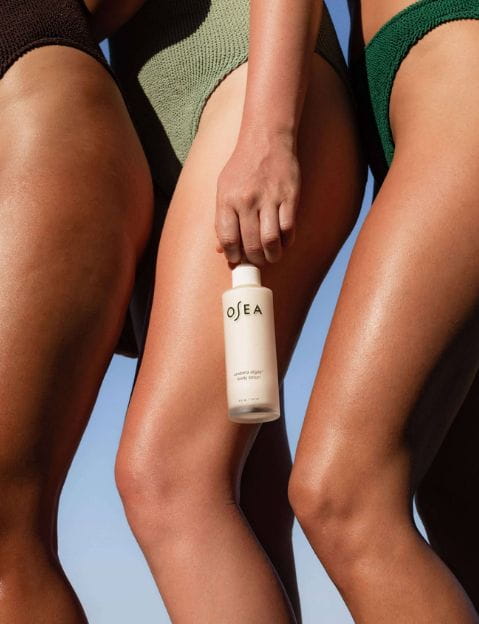
Based in Malibu, California, Osea has been a pioneer in vegan, seaweed-based skincare since 1996. The brand’s lotions are characterized by their use of bioavailable minerals and organic algae. Osea was the first company to sign The Compact for Safe Cosmetics and remains a leader in glass-packaged, luxury skincare that avoids all synthetic fragrances and dyes.
2. Attitude
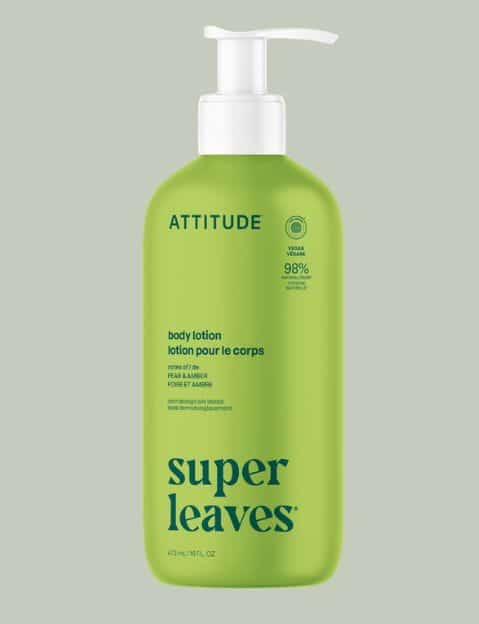
This Canadian brand has gained significant market share by offering EWG Verified products at an accessible price point. Attitude focuses on "living consciously," utilizing plant-based and mineral-based ingredients. Their innovative plastic-free lines, which use biodegradable cardboard packaging, address the dual concerns of chemical toxicity and plastic pollution.
3. Ecoroots
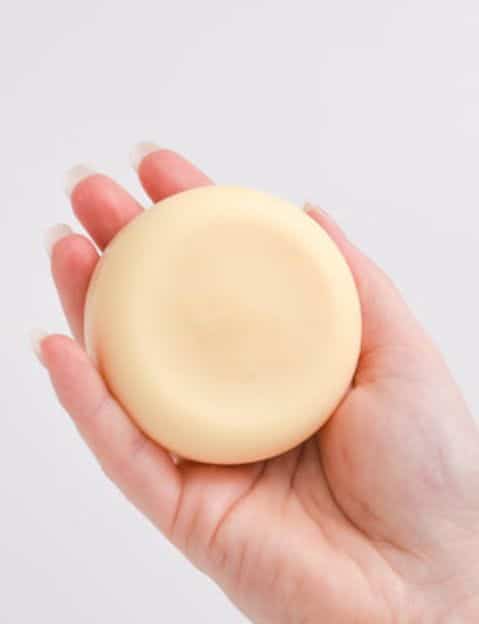
Ecoroots caters to the zero-waste demographic, offering body creams and lotions in glass jars with metal lids. Their formulations prioritize simplicity, using high concentrations of organic shea butter and essential oils. By eliminating plastic entirely from their supply chain, they provide a solution for consumers looking to reduce their carbon footprint.
4. Public Goods
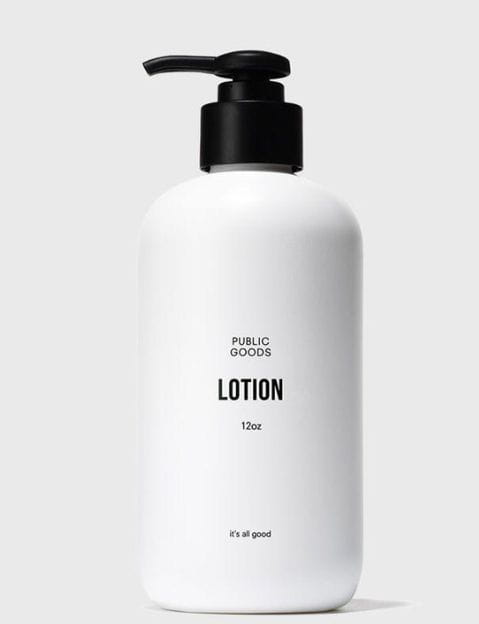
Operating on a membership-based model, Public Goods emphasizes minimalism and affordability. Their lotions are formulated without parabens, synthetic fragrances, or sodium lauryl sulfates. The brand utilizes "bio-plastic" bottles derived from sugarcane, providing a more sustainable alternative to traditional petroleum-based plastic.
5. Plaine Products
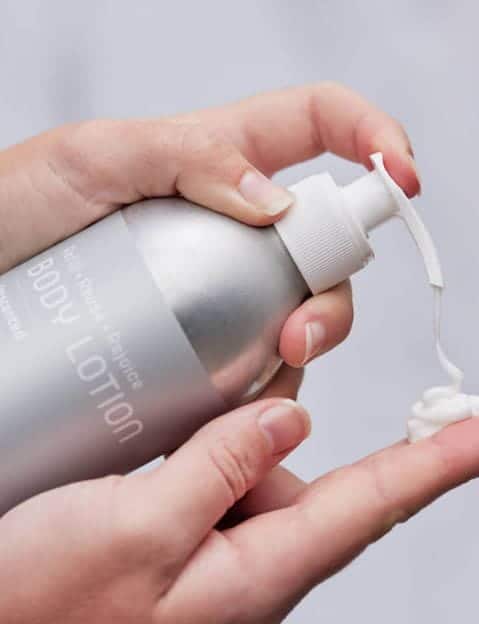
Plaine Products has revolutionized the industry with its circular "refill and return" model. Lotions are delivered in aluminum bottles; once empty, consumers return the bottles to the company for cleaning and reuse. This closed-loop system virtually eliminates packaging waste while providing high-quality, vegan, and non-toxic formulas.
6. The Good Fill
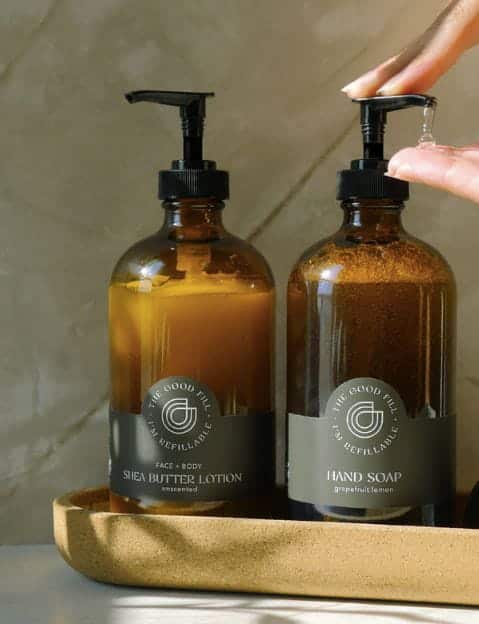
A leader in the bulk-refill movement, The Good Fill provides unscented and lightly scented lotions that can be purchased in reusable containers. Their focus is on high-performance, plant-derived ingredients like aloe vera and jojoba oil, catering to consumers who prioritize a low-waste lifestyle.
7. Meow Meow Tweet
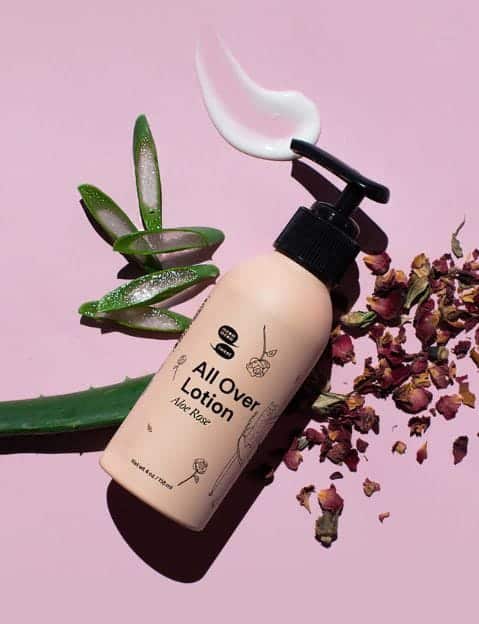
This small-batch apothecary is known for its commitment to ethical sourcing and whimsical, artist-designed packaging. Meow Meow Tweet offers lotions in glass bottles and compostable tubes. Their formulas are strictly vegan and rely on fair-trade oils and butters, ensuring that the product is as ethical as it is effective.
8. Upcircle
Upcircle represents the cutting edge of "upcycled beauty." The brand sources residual ingredients from other industries—such as discarded coffee grounds, fruit stones, and flower petals—to create nutrient-rich skincare. Their body lotions emphasize circularity and have won numerous awards for their innovative approach to sustainability.
Environmental Impact: The Crisis of Microplastics and EDCs
The push for non-toxic lotions is inextricably linked to the global crisis of plastic pollution. Research by the Plastic Pollution Coalition has highlighted the prevalence of Endocrine Disrupting Chemicals (EDCs) in plastic packaging, which can leach into the product itself. Furthermore, the degradation of plastic lotion bottles contributes to the accumulation of microplastics in the global water supply.
Recent biological studies have detected microplastics in human blood, lung tissue, and even placentas. By opting for lotions with glass, aluminum, or compostable packaging, consumers are not only protecting their personal health but also mitigating the systemic environmental damage caused by the personal care industry.
Data-Driven Analysis of Implications
The transition to non-toxic skincare has broader implications for public health and the global economy.
- Public Health: Reducing exposure to EDCs in personal care products could lead to a decrease in the incidence of hormone-related disorders. A study by the Silent Spring Institute found that when consumers switched to products labeled "paraben-free" and "phthalate-free" for just three days, the levels of these chemicals in their bodies dropped by up to 45%.
- Economic Shift: The growth of the non-toxic sector is forcing traditional beauty conglomerates to reformulate their legacy products. This "green chemistry" revolution is driving innovation in sustainable agriculture and biodegradable synthetics.
- Consumer Advocacy: The success of these brands demonstrates the power of consumer data. The EWG’s Skin Deep database now contains ratings for over 100,000 products, indicating a permanent shift in how consumers interact with the beauty market.
Conclusion
The selection of a body lotion is no longer merely a cosmetic choice but a health and environmental decision. The brands highlighted in this analysis—Osea, Attitude, Ecoroots, Public Goods, Plaine Products, The Good Fill, Meow Meow Tweet, and Upcircle—represent a new standard of excellence in the industry. By prioritizing ingredient transparency, avoiding known toxins, and innovating in sustainable packaging, these companies are leading the way toward a safer and more ecological future for personal care. As scientific understanding of chemical exposure continues to evolve, the movement toward non-toxic alternatives is expected to accelerate, eventually redefining the global standard for what constitutes a safe and effective skincare product.


