
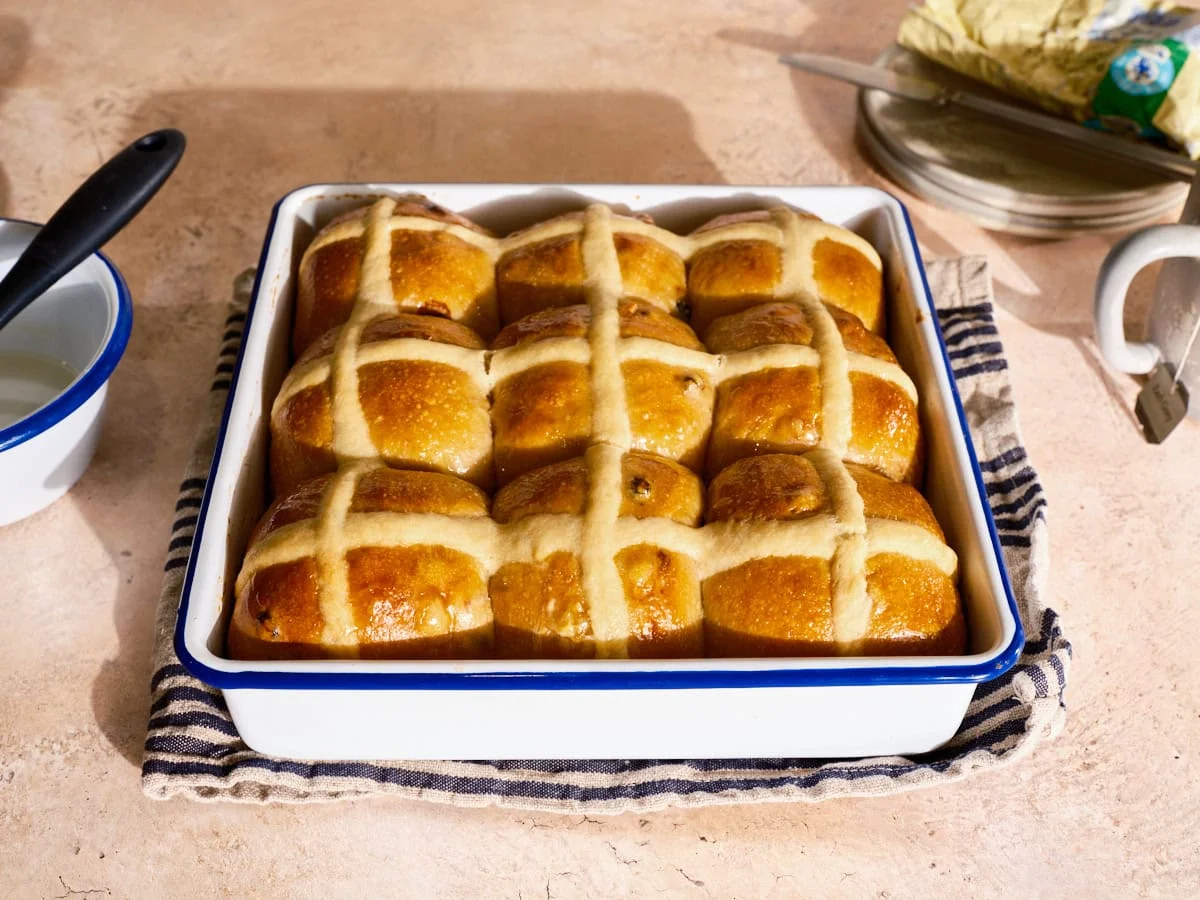
The arrival of warmer weather and the anticipation of Easter traditionally signal the time for hot cross buns, a staple of Good Friday observances. This year, however, a new culinary interpretation is gaining traction among baking enthusiasts: the sourdough hot cross bun, meticulously enhanced with a technique known as tangzhong. This innovative approach promises a bun that transcends the ordinary, offering an unparalleled combination of warm spices, vibrant citrus zest, and plump dried fruits encased in a remarkably soft, enriched dough. It represents a sophisticated bridge between the hearty baking of winter and the fresh flavors of spring, elevating a cherished tradition through modern baking science.
Hot cross buns boast a rich history, tracing their origins back to pagan rituals, eventually adopted and integrated into Christian Easter traditions. Historically, these spiced sweet buns, marked with a distinctive cross on top, were consumed on Good Friday, symbolizing the crucifixion. The spices within the bun were often thought to represent the spices used to embalm Christ, while the dried fruits alluded to the richness and bounty of the season. Over centuries, various recipes emerged, primarily relying on commercial yeast for leavening, which allowed for quick preparation. However, while efficient, commercial yeast often sacrifices the depth and complexity of flavor that can be achieved through slower, more natural fermentation processes. The contemporary sourdough iteration seeks to recapture and enhance this traditional pastry with a nuanced flavor profile and superior texture.
The resurgence of sourdough baking, particularly prominent in recent years, has fostered a deeper appreciation for artisanal bread-making at home. Beyond its rustic appeal, sourdough fermentation, driven by a symbiotic culture of wild yeasts and lactobacilli, imparts several distinct advantages. It yields a more complex, layered flavor, characterized by a subtle tang that beautifully complements the sweetness and spice in enriched doughs. Furthermore, the enzymatic activity during the long fermentation process can improve the digestibility of grains, making sourdough products a preferred choice for many. When applied to hot cross buns, sourdough transforms the typically straightforward sweet roll into a deeply flavorful, nuanced pastry. The gentle acidity derived from a carefully cultivated sweet levain acts as a counterpoint to the sweetness of the sugar, fruit, and glaze, creating a more balanced and intriguing taste experience that commercial yeast simply cannot replicate.
A pivotal innovation in achieving the exceptional tenderness of these sourdough hot cross buns is the incorporation of tangzhong, a cooked flour paste. Originating from Asian baking, particularly in recipes for milk bread, tangzhong involves cooking a small portion of flour with liquid (water or milk) until it forms a thick, pudding-like paste. The scientific principle behind tangzhong is straightforward yet profound: heating flour in liquid causes the starch molecules to gelatinize and absorb a significant amount of moisture. This gelatinized starch, when added to the main dough, traps extra water, preventing it from evaporating during baking. The result is a dough with a higher hydration level without being sticky, leading to an incredibly soft, moist, and pillowy crumb. Buns made with tangzhong exhibit a superior pull-apart texture and remain fresh and soft for a considerably longer period than those made using traditional methods. This technique, when combined with sourdough, creates an enriched dough that is both robust in flavor and extraordinarily delicate in texture, representing a significant advancement in the pursuit of the perfect hot cross bun.
The composition of these enriched sourdough hot cross buns is carefully balanced to maximize both flavor and texture. High-protein white flour, typically containing 12-14% protein, forms the structural backbone, providing the necessary gluten development for a chewy yet tender crumb. The enriched elements – whole milk, beaten egg, unsalted butter, and superfine sugar – contribute to the dough’s richness, tenderness, and golden hue. Milk adds moisture and lactose, which aids in browning; egg provides structure, color, and emulsification; butter imparts flavor and tenderness; and sugar not only sweetens but also tenderizes the dough and assists yeast activity in the sweet levain. The spice blend is traditional yet potent, featuring ground cinnamon, allspice, and freshly ground nutmeg, which evoke the quintessential warmth of Easter baking. Freshly grated lemon and orange zest infuse the buns with bright, aromatic notes that cut through the richness. For inclusions, Thompson raisins and candied orange peel offer traditional sweetness and chew, while dried currants or even chocolate chips provide versatile alternatives, catering to varied preferences. Fine sea salt is crucial for balancing flavors and regulating fermentation. The precise ratio of these ingredients, often expressed in baker’s percentages, ensures consistency and allows for controlled modification, a principle central to advanced baking.
The baking schedule for these sourdough hot cross buns is a testament to the patient craft required for naturally leavened, enriched doughs, typically spanning two days for optimal results. The process begins on the evening prior to baking with the preparation of a sweet levain. This involves feeding a ripe sourdough starter with high-protein flour, water, and a higher proportion of sugar than a typical levain. The sugar in this pre-ferment is critical, as it encourages efficient yeast activity within the subsequent enriched dough, which tends to ferment more slowly due to fats and sugars, and also helps to mitigate excessive sourness in the final product. Concurrently, an optional fruit soaker can be prepared if the dried fruits are overly dry, ensuring they become plump and tender within the baked bun. The next morning, the tangzhong is prepared by gently cooking flour and milk until a thick, cohesive paste forms, which is then cooled. This allows ample time for the butter to soften to room temperature, an essential step for its proper incorporation into the dough.
The main mixing phase, ideally performed using a stand mixer due to the dough’s enrichment and hydration, commences with the thorough incorporation of the tangzhong, flour, egg, sugar, spices, zest, water, salt, and the ripe sweet levain. An initial low-speed mix ensures homogeneity, followed by a medium-speed phase to develop gluten strength, confirmed by the ‘windowpane test’ where a small piece of dough can be stretched thin enough to be translucent. The softened butter is then gradually added, enriching the dough further until it becomes silky smooth, elastic, and shiny. Finally, the pre-soaked and drained fruits are gently folded in, ensuring even distribution without tearing the delicate dough structure.
Following mixing, the dough undergoes bulk fermentation for approximately four hours at a warm room temperature. This crucial stage allows the sourdough to develop flavor and strength, punctuated by two sets of gentle stretches and folds at 30-minute intervals. These folds help to build structure and evenly distribute fermentation activity. Visual cues, such as increased volume and a puffy, elastic feel when poked, indicate readiness for the next stage. The dough is then divided into uniform pieces, typically 115 grams each, and meticulously shaped into tight rounds before being arranged in a liberally buttered 9-inch square baking pan. This specific pan choice is known to produce exceptionally soft, pull-apart buns, though a sheet pan can be used for buns with a firmer, more uniformly colored crust. For added convenience, the shaped buns can be cold-proofed in the refrigerator overnight, allowing bakers to fresh-bake them on Easter morning with minimal effort.
The final proofing stage, lasting four to five hours at warm room temperature, is paramount. The enriched nature of the dough dictates a slower rise, requiring patience until the buns are visibly puffed, soft to the touch, and nearly reaching the rim of the pan. Rushing this stage will result in dense buns. Before baking, an egg wash (egg whisked with milk) is applied for a golden finish, and the iconic crosses are piped onto each bun. The cross mixture, a simple paste of white flour, water, orange juice (or more water), oil, and a pinch of salt, must be of a specific consistency – flowing like a thick cream – to ensure clean lines. The buns are baked in a preheated oven, starting at a higher temperature to encourage oven spring, then reducing it to ensure even cooking and a golden-brown crust, reaching an internal temperature of 195°F (90°C). Immediately after baking, a simple syrup glaze, made from equal parts sugar and water, is brushed over the hot buns, adding a final layer of sweetness and a characteristic shine.
Culinary experts increasingly emphasize the growing demand for artisanal quality and transparency in home baking, a trend perfectly encapsulated by these sourdough hot cross buns. Food historians note that while traditional recipes are often steeped in heritage, their adaptability to modern techniques like tangzhong showcases the dynamic evolution of food culture. Baking communities across digital platforms have widely embraced these methods, sharing successes and fostering a collective pursuit of superior results. This fusion of traditional Western holiday baking with sophisticated Asian dough techniques represents a fascinating cross-cultural exchange that enriches the global culinary landscape.
The broader implications of such recipes extend beyond the individual kitchen. They encourage home bakers to explore more adventurous and technically challenging projects, pushing the boundaries of traditional recipes. This elevated approach to a classic treat underscores the intersection of scientific understanding and culinary artistry, demonstrating how precise techniques can profoundly enhance sensory experiences. It also highlights the continued relevance and adaptability of sourdough in diverse baking applications, from rustic loaves to delicate pastries. As such, these sourdough hot cross buns are not merely a seasonal delicacy but a symbol of culinary innovation meeting cherished tradition, offering a superior sensory experience that redefines Easter celebrations for the modern palate.


