San Diego, CA – In an illustrative display of culinary adaptability, Austin Durant, founder of Fermenters Club and author of Fearless Fermenting, recently transformed a compromised sourdough bread dough into a substantial batch of sourdough pancakes, underscoring the resilience and versatility inherent in fermentation practices. The incident, which occurred during an attempt to execute his newly developed "Lazy Loaf Sourdough bread technique," highlights common challenges faced by home bakers, particularly those sensitive to environmental variables like temperature.
The sequence of events began with Durant preparing a sourdough loaf using his simplified "Lazy Loaf" method, designed to streamline the traditional, often labor-intensive sourdough process. This technique, aimed at making sourdough baking more accessible, typically involves minimal kneading and a longer, cooler fermentation period. However, the overnight proofing stage encountered an unforeseen challenge: ambient temperatures in Durant’s home soared, estimated to be around 80 degrees Fahrenheit (approximately 26.7 degrees Celsius). This elevated temperature significantly accelerated the fermentation process, leading to an over-proofed dough by morning.
The Anatomy of a Sourdough Setback
Sourdough baking is a delicate balance of microbiology and environmental control. The yeast and lactic acid bacteria within a sourdough starter thrive within specific temperature ranges, influencing both the rate of fermentation and the production of gases that give bread its characteristic rise and open crumb structure. Optimal bulk fermentation and proofing temperatures for sourdough typically fall between 70-78°F (21-25.5°C). When temperatures rise significantly above this range, as was the case in Durant’s scenario, the yeast becomes hyperactive.
"It happens to the best of us," Durant remarked, acknowledging the universality of baking mishaps. "I believe it was too warm overnight, probably 80 in the house, and or I waited too long to proof it." This statement encapsulates the two critical factors: excessive heat and extended proofing time, both of which contribute to an over-fermented dough. Over-proofing occurs when the yeast consumes too much of the available sugars, producing an abundance of carbon dioxide too rapidly. This initial surge of gas production often leads to a weakening of the gluten structure, which is essential for trapping gas and allowing the dough to rise effectively in the oven.
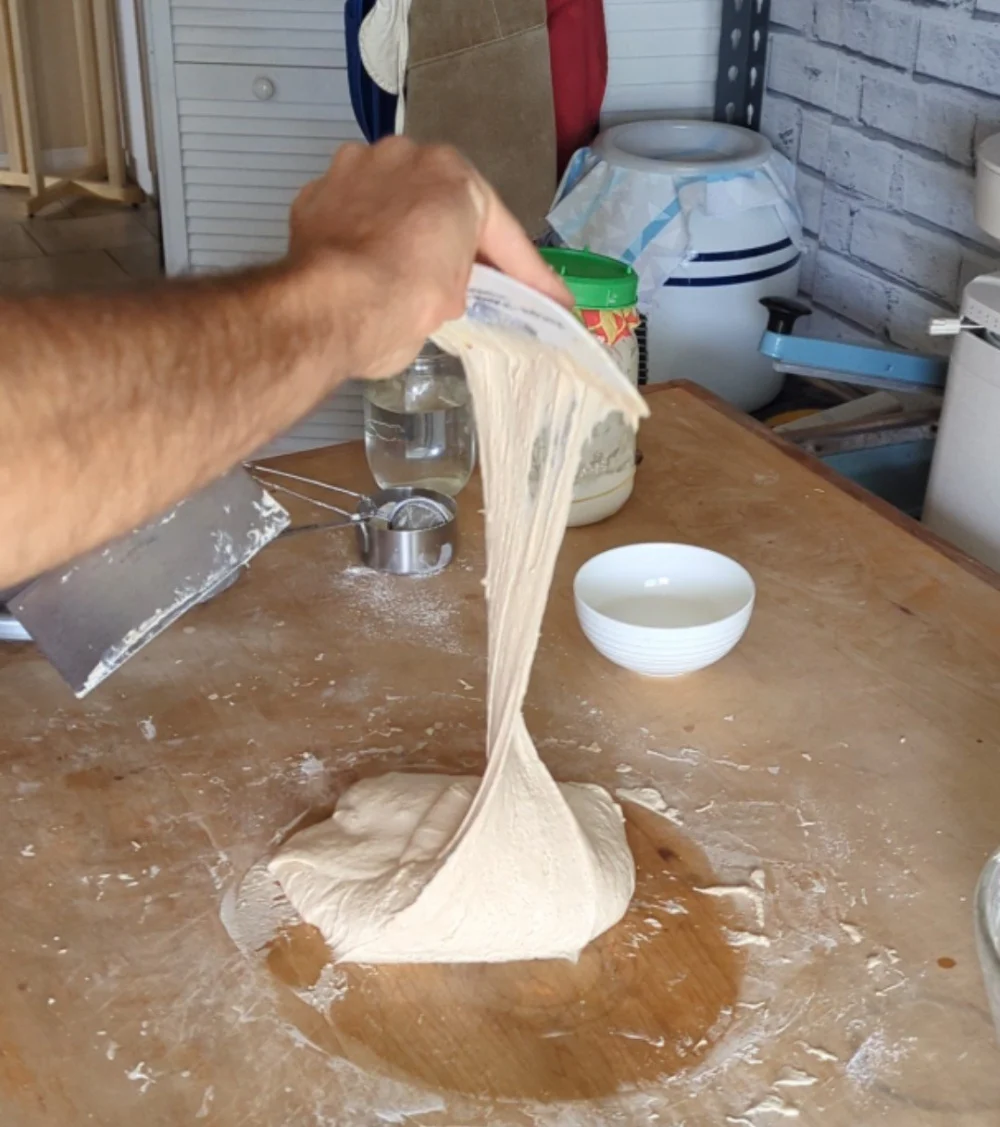
Upon inspecting the dough, Durant observed that it lacked the characteristic elasticity and structure required for a well-formed loaf. After transferring the soupy mass onto a workbench and attempting to incorporate additional flour to salvage its shape, it became evident that the dough’s structural integrity was too compromised. The gluten network, crucial for providing the "scaffolding" that holds the bread’s shape, had likely broken down due to over-fermentation, resulting in a sticky, unmanageable consistency. Attempting to force such a dough into a proofing basket and then into an oven would likely have yielded a dense, flat, or collapsed loaf.
From Loaf to Legacy: The Pancake Transformation
Faced with a challenging situation, Durant made a pragmatic decision: to repurpose the failed bread dough into sourdough pancakes. This choice not only prevented food waste but also demonstrated a creative application of fermented dough. The substantial quantity of dough, roughly a triple batch of his standard sourdough recipe, was adjusted with additional ingredients to suit a pancake consistency.
The process involved incorporating the over-proofed dough, which, despite its structural issues for bread, still possessed a vibrant sourdough flavor profile and a degree of inherent leavening from the active starter. Durant omitted baking soda from the pancake recipe, reasoning that the dough already had "a little lift in it." In retrospect, he noted, "in hindsight, I should have added it anyway," suggesting that the additional leavening agent would have contributed to a fluffier texture. Baking soda, when combined with the acidic nature of sourdough, produces carbon dioxide, aiding in leavening and counteracting some of the inherent flatness of over-proofed dough.
The resulting pancakes, numbering around two dozen, were characterized by their "unabashedly sour" flavor and a somewhat flatter profile, yet were ultimately deemed "delicious." This outcome is typical for pancakes made with a high proportion of sourdough discard or over-proofed dough, where the dominant flavor is the tangy lactic acid produced during fermentation. The slightly denser texture is also common when traditional chemical leaveners like baking soda are reduced or omitted.
Durant prepared three variations of the pancakes, although the specific types were not detailed in the initial report. They were served with a classic accompaniment of grass-fed butter and maple syrup, alongside a unique side of strawberry sauerkraut. The inclusion of strawberry sauerkraut, another fermented food, highlights Fermenters Club’s broader commitment to integrating diverse fermented products into daily meals, showcasing their versatility and nutritional benefits.
The Science of Sourdough Discard and Pancakes
Sourdough discard, which is essentially unfed sourdough starter or, in this case, over-proofed dough, is a valuable ingredient in the fermented food community. It is rich in active cultures and offers a distinct tangy flavor that can enhance various recipes. When incorporated into pancakes, the acidity of the sourdough reacts with baking soda (if used) to create carbon dioxide, resulting in a light and airy texture. Even without additional leavening, the inherent gasses produced during fermentation contribute to some lift.
The "sour" flavor is a hallmark of true sourdough, resulting from the metabolic activity of lactic acid bacteria (LAB) within the starter. These bacteria convert sugars into lactic acid and acetic acid, which impart the characteristic tang. The intensity of this sourness can vary based on factors such as fermentation time, temperature, and the hydration level of the starter. In an over-proofed scenario, extended fermentation at higher temperatures would naturally lead to a more pronounced sour flavor, as the LAB have more time and optimal conditions to produce these acids.
Implications for Home Bakers and Culinary Education
This incident serves as a valuable lesson for home bakers, illustrating several key points:
- Temperature Control is Paramount: Sourdough fermentation is highly sensitive to temperature. Understanding and controlling ambient conditions is crucial for consistent results. For many, this might mean using a proofing box, a cooler with a warm water bottle, or simply finding a stable spot in the house away from drafts or direct heat.
- Timing is Everything: Over-proofing is a common pitfall. Learning to "read" the dough – observing its texture, elasticity, and volume increase – is more important than rigidly adhering to a clock, especially when environmental factors are variable.
- Embrace Adaptability: Not every bake will be perfect. The ability to pivot and repurpose ingredients, as Durant demonstrated, not only prevents waste but also fosters creativity and problem-solving skills in the kitchen. This ethos aligns perfectly with the principles of sustainable cooking.
- The Versatility of Sourdough: Sourdough starter and dough are incredibly versatile. Even a "failed" bread dough can be transformed into delicious alternatives like pancakes, waffles, crackers, or flatbreads, extending its utility beyond its primary purpose.
According to Dr. Elena Petrova, a hypothetical food scientist specializing in fermentation, "Durant’s experience perfectly encapsulates the dynamic nature of sourdough baking. It’s a living system, constantly reacting to its environment. While ideal conditions are sought, true mastery comes from understanding how to troubleshoot and creatively adapt when conditions are less than ideal. Repurposing over-proofed dough into something like pancakes is not just a practical solution; it’s a testament to the baker’s ingenuity and a core tenet of mindful cooking."
The Fermenters Club Mission
Austin Durant, through Fermenters Club, has dedicated over 14 years to promoting fermentation, sharing knowledge, and fostering a community of fermenters. His recent book, Fearless Fermenting, aims to demystify the process and encourage more individuals to explore the world of fermented foods. This incident, far from being a failure, aligns with the club’s mission by showcasing the practical aspects of fermentation, the inevitable learning curve, and the rewards of persistence and creativity.
The ability to turn a potential culinary disappointment into a delightful breakfast spread exemplifies the club’s philosophy of embracing the process, learning from outcomes, and celebrating the versatility of fermented ingredients. It reinforces the idea that even when a primary goal isn’t met, the underlying components of sourdough—its flavor, its microbial life, and its nutritional value—can still be harnessed to create something delicious and nourishing.
In conclusion, Austin Durant’s unplanned sourdough pancake feast serves as a compelling narrative for both seasoned and novice bakers. It underscores the challenges inherent in working with living cultures, the importance of environmental awareness in baking, and the immense value of adaptability in the kitchen. What began as a potential setback for a sourdough loaf ultimately culminated in a resourceful culinary success, offering a tangible lesson in resilience and the boundless possibilities of fermentation. The full video documenting this transformation is available, providing a visual guide to this resourceful culinary pivot.