
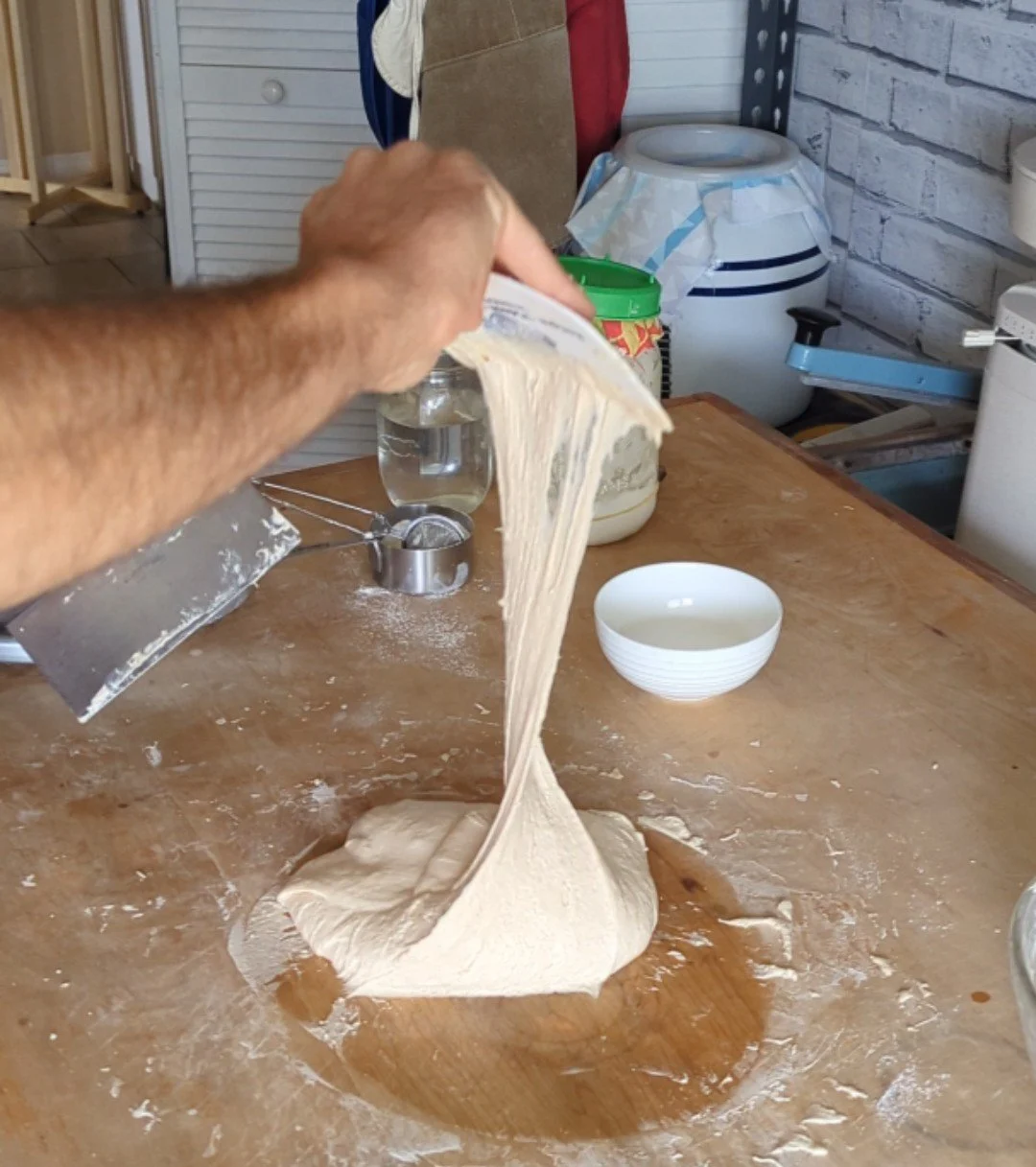
An unexpected setback in the meticulous world of sourdough baking recently led to a creative culinary pivot, transforming what was intended to be a risen loaf into a substantial batch of sourdough pancakes. Austin Durant, the esteemed founder of Fermenters Club and author of "Fearless Fermenting," encountered an issue with his "Lazy Loaf Sourdough bread technique," which resulted in an over-proofed, unmanageable dough. Rather than discarding the effort, Durant adeptly repurposed the fermented mixture into approximately two dozen pancakes, offering a valuable lesson in adaptability for home bakers.
The Unforeseen Challenge in Sourdough Proofing
The incident occurred during an overnight proofing cycle of Durant’s sourdough dough. The "Lazy Loaf" technique, designed perhaps for convenience or a longer, slower fermentation, was subjected to an unseasonably warm indoor environment. Durant estimated the ambient temperature within his home reached approximately 80 degrees Fahrenheit (26.7 degrees Celsius). This elevated temperature, significantly higher than the typical ideal range for sourdough bulk fermentation (often cited between 70-78°F or 21-25.5°C) and particularly for an extended proofing period, is believed to be the primary factor contributing to the dough’s failure to maintain its structure.
Sourdough fermentation relies on a delicate balance between wild yeasts and lactic acid bacteria (LAB) present in the sourdough starter. These microorganisms are highly sensitive to temperature fluctuations. Warmer temperatures accelerate their metabolic activity, leading to faster gas production and acid development. While a certain degree of warmth can speed up bulk fermentation, excessive heat over an extended period, especially during an overnight proof, can lead to over-proofing. Over-proofing occurs when the yeast consumes most of the available sugars and produces an abundance of carbon dioxide, but the gluten network, which is responsible for trapping these gases and giving bread its structure, begins to degrade under prolonged acidic conditions and excessive stretching. This degradation results in a weakened, "soupy" dough that cannot hold its shape, making it impossible to bake into a well-risen loaf. Durant’s observation of the dough becoming a "soupy mess" after being poured onto the bench, despite attempts to incorporate additional flour, perfectly illustrates the symptoms of an over-proofed dough where the gluten structure has collapsed.
The Genesis of the "Lazy Loaf" Technique
Durant’s "Lazy Loaf Sourdough bread technique," while not explicitly detailed in its full methodology, suggests an approach that might prioritize minimal intervention or extended fermentation times, common characteristics of many contemporary sourdough recipes designed for busy home bakers. These techniques often rely on longer, cooler bulk fermentations or extended proofing at ambient temperatures, aiming to develop complex flavors with less hands-on time. However, as this incident highlights, even "lazy" techniques demand an understanding of the underlying science and an awareness of environmental variables. The beauty of such methods lies in their simplicity, but their vulnerability surfaces when external conditions, such as an unusually warm night, deviate from the assumed norm, thus altering the delicate microbial activity within the dough. This particular batch, intended for a standard sourdough bread, was clearly past its prime for shaping and baking into a conventional loaf, necessitating a creative alternative.
The Strategic Culinary Pivot: From Loaf to Pancakes
Faced with a dough that "just was never going to shape properly," Durant made the pragmatic decision to transform the failed bread dough into sourdough pancakes. This choice exemplifies a core principle of resourceful cooking and fermentation: minimizing waste and maximizing utility. Repurposing over-proofed sourdough for pancakes or other flatbreads is a well-known strategy among experienced bakers. The characteristics of an over-proofed dough – its increased acidity and loose texture – are often advantageous for pancakes, contributing to flavor and a tender crumb, even if the rise is compromised.
The original dough, intended for a single loaf, was effectively a "triple batch" by pancake standards, indicating a substantial quantity of fermented flour. Durant adjusted the recipe for sourdough pancakes, which typically incorporate additional ingredients like eggs, milk, and fat to create a pourable batter. A crucial decision in this transformation was the omission of baking soda from the pancake recipe. Baking soda (sodium bicarbonate) is an alkaline compound often used in sourdough pancake recipes to neutralize some of the acidity produced during fermentation, thereby reducing the sourness and, more importantly, reacting with the acid to produce carbon dioxide gas, which contributes to a fluffy rise. In hindsight, Durant acknowledged that he "should have added it anyway." This omission likely contributed to the "unabashedly sour" flavor and the "a bit flat" texture of the resulting pancakes, as the dough, despite its initial fermentation, lacked the additional chemical leavening needed to achieve a significant lift during cooking.
An Analysis of the Outcome: Flavor, Texture, and Nutritional Value
The resulting pancakes, numbering around two dozen, were described as "unabashedly sour" and "a bit flat," yet "otherwise delicious." The pronounced sourness is a direct consequence of the prolonged fermentation at a high temperature, which would have favored the production of lactic and acetic acids by the sourdough’s lactobacilli. The flatness can be attributed to the compromised gluten structure of the over-proofed dough and the absence of baking soda, which would have provided an additional boost of leavening. Despite these textural and flavor characteristics, the "delicious" verdict underscores the inherent appeal of well-fermented sourdough products. The complex flavors developed during fermentation, even in an over-proofed state, often translate into a rich, tangy profile that many find appealing.
Furthermore, the nutritional benefits associated with sourdough fermentation would largely be retained in the pancakes. The fermentation process predigests starches and gluten, potentially making the flour more digestible and increasing the bioavailability of certain nutrients. The organic acids produced also contribute to the unique flavor profile. This culinary recovery not only prevented waste but also yielded a meal rich in the distinctive qualities of fermented grains.
A Wholesome Accompaniment: Strawberry Sauerkraut
The pancakes were served with a thoughtful array of accompaniments: strawberry sauerkraut, grass-fed butter, and maple syrup. The inclusion of strawberry sauerkraut is particularly noteworthy, aligning with Fermenters Club’s emphasis on fermented foods. Sauerkraut, a fermented cabbage dish, is rich in probiotics and offers a tangy counterpoint to the sweetness of maple syrup and the richness of butter. The "strawberry" variation introduces a fruity sweetness and perhaps a different acid profile, creating a complex flavor dynamic when paired with the sour pancakes. This pairing demonstrates Durant’s holistic approach to food, integrating fermented elements not just as a primary ingredient but also as a complementary side dish, enhancing both flavor and nutritional value.
Expert Insights and the Ethos of Fermenters Club
Austin Durant, with 14 years of experience in fermenting food and as the author of "Fearless Fermenting," embodies a philosophy of embracing the learning process and finding creative solutions in the kitchen. His decision to share this "failure" transparently, complete with visual evidence of the "messy dough," reinforces the approachable and educational mission of Fermenters Club. It demystifies the art of fermentation, demonstrating that even seasoned experts encounter challenges and that these challenges often lead to innovative solutions.
It can be inferred that Durant would emphasize that setbacks are an intrinsic part of the culinary journey, particularly in complex processes like sourdough baking. His work, including "Fearless Fermenting," likely advocates for experimentation, resilience, and a deep understanding of ingredients and processes rather than rigid adherence to recipes. This incident serves as a practical illustration of the book’s title, encouraging individuals to be "fearless" in their fermentation endeavors, understanding that not every attempt will yield the initially intended result, but almost every attempt can yield something delicious and worthwhile.
Broader Implications for Home Bakers: Lessons in Adaptability
This incident provides several valuable takeaways for the burgeoning community of home sourdough bakers:
- Temperature Control is Paramount: Sourdough is a living system highly sensitive to temperature. Home bakers must be acutely aware of their ambient kitchen temperature, especially during extended proofing periods. Using a dough thermometer or adjusting proofing times based on room temperature is crucial. Cooler temperatures slow fermentation, allowing for longer proofing windows, while warmer temperatures necessitate shorter proofing times to prevent over-proofing. Techniques like cold proofing in the refrigerator are often employed to manage fermentation and develop flavor over longer periods.
- Recognizing Over-Proofing: Learning to identify the signs of an over-proofed dough – excessive spread, lack of elasticity, a very sticky or soupy texture – is essential. Early recognition allows for corrective action, such as shaping and baking quickly before total collapse, or, as Durant demonstrated, repurposing the dough.
- The Art of Repurposing: Sourdough discard or failed sourdough loaves are highly versatile. They can be transformed into a myriad of dishes, including pancakes, waffles, crackers, flatbreads, muffins, and even fried chicken batter. This not only prevents food waste but also opens up new culinary possibilities.
- Embracing Imperfection: The experience underscores that baking, especially with wild yeast, is not always predictable. Embracing the occasional "failure" as a learning opportunity and a chance for creative problem-solving can reduce frustration and enhance the overall baking experience.
- The Role of Leavening Agents: While sourdough provides natural leavening, supplemental leavening agents like baking soda or baking powder can significantly improve the texture and rise of baked goods made from highly acidic or over-proofed sourdough, particularly in recipes like pancakes where a fluffy texture is desired. Understanding their chemical interactions with the sourdough’s acidity is key.
In conclusion, Austin Durant’s recent sourdough mishap, which saw a potential loaf transform into a delightful stack of pancakes, stands as a testament to the dynamic nature of fermentation and the boundless opportunities for culinary creativity. It serves as a practical, real-world lesson for both novice and experienced bakers, reinforcing the importance of understanding the science behind sourdough, adapting to unforeseen circumstances, and embracing the philosophy of "fearless fermenting." The incident not only yielded a delicious meal but also provided invaluable insights into troubleshooting and resourcefulness in the home kitchen, further solidifying Fermenters Club’s role as a leading voice in the fermentation community.


