
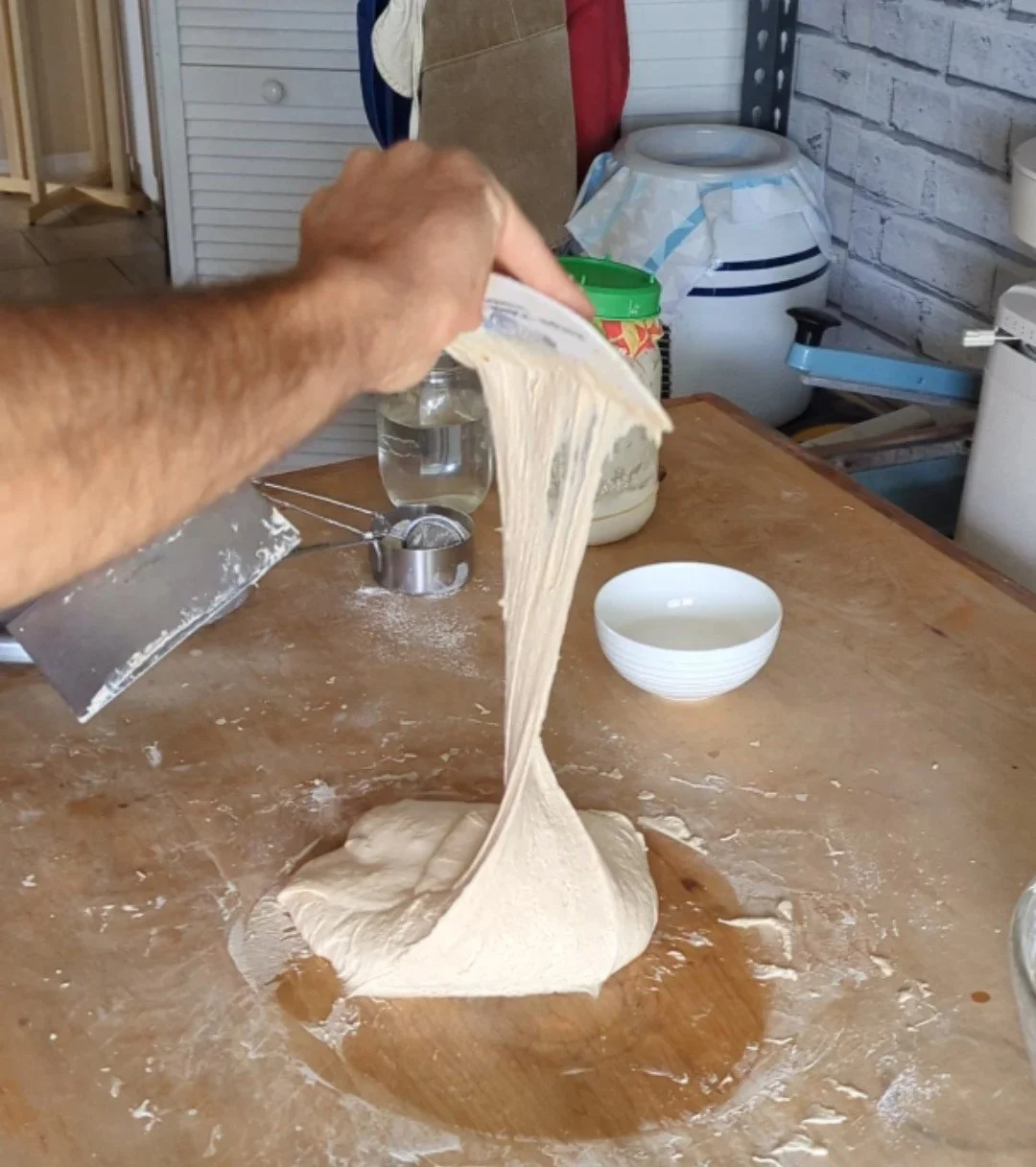
In a compelling demonstration of culinary adaptability and resourcefulness, a recent sourdough baking endeavor by Austin Durant, founder of the renowned Fermenters Club, veered unexpectedly from its intended path, culminating not in a rustic loaf of bread but in a bountiful batch of sourdough pancakes. This incident, occurring around May 2025, serves as a poignant reminder that even seasoned fermentation experts encounter challenges, and that creative problem-solving can often yield delicious and unexpected results. What began as an attempt to perfect a new "Lazy Loaf Sourdough bread technique" evolved into a practical lesson in managing fermentation variables, particularly ambient temperature and proofing duration.
The narrative began with Durant initiating a sourdough bread recipe, intending to produce a classic loaf using his newly developed "Lazy Loaf" method, designed for streamlined preparation. The initial stages of dough mixing proceeded as planned. However, the subsequent overnight proofing period proved to be the critical juncture. Durant attributed the eventual failure of the dough to rise properly to two primary factors: an unusually warm ambient temperature in his home, estimated at approximately 80 degrees Fahrenheit (26.7 degrees Celsius), and potentially an extended proofing duration. These conditions, while seemingly minor, can drastically accelerate the metabolic activity of wild yeasts and lactic acid bacteria within the sourdough starter, leading to over-fermentation and structural degradation of the dough.
The following morning, the evidence of the mishap was undeniable. Upon attempting to transfer the dough to a workbench for shaping, it became apparent that the mixture was excessively wet and lacked the structural integrity necessary for a successful loaf. Despite an attempt to incorporate additional flour, the dough remained a "soupy mess," resisting any efforts to form it into a cohesive shape suitable for a proofing basket or direct transfer to an oven. This moment of realization presented a clear choice: persist with a likely futile attempt to bake a compromised loaf, or pivot to an alternative culinary application that could salvage the ingredients and effort. Durant, embodying the spirit of resourceful cooking, opted for the latter, deciding to transform the uncooperative dough into sourdough pancakes.
The Anatomy of a Sourdough Setback: Understanding Fermentation Dynamics
The incident highlights several fundamental principles of sourdough baking, particularly the delicate balance required for optimal fermentation. Sourdough relies on a symbiotic culture of wild yeasts and lactic acid bacteria (LAB) present in the starter. These microorganisms consume sugars in the flour, producing carbon dioxide gas (which creates the characteristic airy structure of bread) and various organic acids (which contribute to the distinctive sour flavor). The rate of these metabolic processes is highly sensitive to environmental factors, most notably temperature.
Temperature as a Critical Variable:
Optimal bulk fermentation temperatures for sourdough typically range between 70-78 degrees Fahrenheit (21-25.5 degrees Celsius). While warmer temperatures can indeed accelerate fermentation, pushing the process too quickly can lead to undesirable outcomes. At 80 degrees Fahrenheit (26.7 degrees Celsius), as experienced by Durant, yeast activity can become hyperactive, rapidly consuming available sugars and producing gas. If this rapid gas production is not accompanied by sufficient gluten development and dough strength to trap the gas, the dough can over-proof. Over-proofing results in the yeast exhausting its food supply, the gluten structure weakening, and the dough collapsing, becoming loose and unmanageable—precisely the "soupy mess" described.
The Role of Proofing Duration:
Closely intertwined with temperature is the duration of proofing. In a warmer environment, the dough reaches its peak fermentation much faster. If a baker follows a standard timeline developed for cooler conditions, or simply misjudges the dough’s progression, over-proofing is an almost inevitable outcome. An over-proofed dough often feels sticky, lacks elasticity, and struggles to hold its shape, making traditional shaping techniques impossible. The "Lazy Loaf" technique, while aiming for simplicity, may rely on specific environmental conditions or a precise timing window that, when exceeded or altered by external factors like elevated room temperature, can lead to such failures.
Hydration Levels and Dough Structure:
While Durant did not explicitly state the hydration level of his "Lazy Loaf" dough, a higher hydration percentage (more water relative to flour) generally results in a stickier, looser dough that is harder to handle. When combined with over-proofing, which further degrades gluten structure, a high-hydration dough can quickly become unworkable for bread, exacerbating the problem of a "soupy mess." The addition of flour on the workbench was a common attempt to rectify this, but once the gluten network is significantly compromised by over-fermentation, it’s often beyond simple repair.
A Culinary Pivot: The Birth of Sourdough Pancakes
Faced with a dough unsuitable for bread, Durant’s decision to transform it into pancakes exemplifies a core tenet of fermentation culture: adaptability and waste reduction. Instead of discarding the failed dough, he repurposed it, leveraging its inherent sour flavor and partial leavening capabilities. This pivot involved a significant adjustment to a standard sourdough pancake recipe. Given that the original bread dough was a "triple batch" of his standard recipe, Durant scaled the pancake ingredients accordingly, ultimately yielding an impressive two dozen pancakes.
One notable modification in his pancake preparation was the omission of baking soda. Sourdough pancake recipes often call for baking soda to react with the acidic sourdough discard, producing additional carbon dioxide gas and thus contributing to a lighter, fluffier texture. Durant’s rationale for omitting it was the belief that the over-proofed dough still possessed "a little lift" from the initial fermentation. However, in hindsight, he acknowledged that adding baking soda would likely have improved the texture, suggesting a lesson learned even in successful adaptation. Baking soda (sodium bicarbonate) reacts with the lactic and acetic acids in sourdough to produce CO2, providing a secondary leavening boost, which is particularly beneficial for over-proofed doughs where much of the yeast’s gas production has already occurred or escaped. Without it, the pancakes were described as "unabashedly sour, and perhaps a bit flat," yet "otherwise delicious." This indicates that while the flavor profile was robust, the texture might have lacked the desired lightness.
The finished pancakes were served with a delightful array of accompaniments: a side of strawberry sauerkraut, grass-fed butter, and maple syrup. The inclusion of strawberry sauerkraut is particularly noteworthy, aligning with Fermenters Club’s broader mission to explore and promote diverse fermented foods. This pairing likely offered a unique blend of sweet, savory, and tangy notes, complementing the sourness of the pancakes and showcasing the versatility of fermented ingredients in a complete meal.
Expert Insights and Community Resilience
Austin Durant’s candid sharing of his sourdough mishap and subsequent culinary save resonates deeply within the home baking community. His statement, "It happens to the best of us," underscores the universality of baking challenges and normalizes the learning process. As the founder of Fermenters Club and author of "Fearless Fermenting," Durant’s experience serves as a practical example for his audience, demonstrating that even experts encounter setbacks and that resilience and creativity are key ingredients in the kitchen.
This incident also highlights the growing popularity of sourdough baking, which experienced a significant resurgence during the global pandemic and continues to captivate home cooks. The allure of sourdough lies in its natural leavening, complex flavors, and perceived health benefits. However, it also presents a learning curve, with temperature control, starter maintenance, and proofing judgment being common hurdles. Durant’s story provides actionable advice without explicitly stating it: when a loaf fails, consider its potential for other applications rather than discarding it. This aligns with a broader movement towards sustainable cooking and minimizing food waste.
Durant’s background as an advocate for fermentation, permaculture gardening, and holistic living provides context for his approach. His willingness to experiment and adapt is a hallmark of the permaculture ethos, which emphasizes working with natural systems and finding creative solutions. His "Fearless Fermenting" philosophy encourages individuals to embrace the process, learn from mistakes, and enjoy the journey of creating fermented foods. This particular incident perfectly encapsulates that philosophy.
Broader Implications for Home Bakers and Sustainable Practices
The transformation of a failed sourdough loaf into delicious pancakes carries several important implications for the wider home baking and culinary community:
-
Reduced Food Waste: This is perhaps the most significant implication. In an era of increasing awareness about food waste, repurposing ingredients that would otherwise be discarded is a commendable practice. Sourdough discard, whether from routine starter feedings or, as in this case, from a failed dough, is a valuable ingredient that can be incorporated into numerous recipes, including pancakes, waffles, crackers, muffins, and even savory dishes. Durant’s triple batch of dough, if discarded, would have represented a considerable waste of flour, water, and energy.
-
Encouragement of Culinary Creativity: The incident inspires home bakers to think beyond the conventional and to view "failures" not as endpoints but as opportunities for innovation. It fosters a mindset of experimentation and problem-solving, encouraging individuals to adapt recipes and techniques based on the ingredients at hand and unexpected outcomes.
-
Educational Value: Durant’s open sharing of his experience, including his retrospective realization about the baking soda, provides valuable educational content. It teaches aspiring sourdough bakers about the critical impact of temperature and timing, and offers a practical salvage strategy for common mishaps. Such transparency builds trust and community among learners.
-
Promoting "Real" Baking Experiences: In a world often curated for perfection on social media, stories of baking challenges offer a refreshing dose of reality. They demystify the process, making it less intimidating for beginners and reminding experienced bakers that mishaps are part of the journey.
-
Understanding Sourdough Science: The explanation of why the dough failed (high temperature, over-proofing) and why baking soda would have been beneficial for the pancakes reinforces the scientific principles underlying sourdough fermentation. This deeper understanding empowers bakers to better control their process in the future.
Learning from Fermentation: Austin Durant’s Enduring Message
Looking ahead, this experience provides concrete lessons for future sourdough endeavors. To mitigate similar issues, bakers, including Durant, might consider:
- Temperature Monitoring: More rigorous monitoring of ambient proofing temperatures, perhaps using a probe thermometer or moving the dough to a cooler location during warm spells.
- Cold Proofing: Utilizing refrigerator proofing (cold proofing) for extended periods, which slows down fermentation significantly, allowing for greater flexibility in timing and minimizing the risk of over-proofing.
- Adjusting Timing: Adapting proofing schedules based on observed dough activity rather than strict adherence to time, especially when environmental conditions change.
- Starter Management: Ensuring the starter is robust and active but not overly acidic, which can sometimes contribute to faster gluten degradation.
Austin Durant’s willingness to share his "soupy mess" and its delicious transformation into pancakes serves as a powerful testament to the resilient and creative spirit of home fermentation. It underscores that even when the primary goal isn’t achieved, the journey of culinary exploration often leads to equally satisfying, albeit different, destinations. His work with Fermenters Club and his book, "Fearless Fermenting," continue to empower individuals to embrace the unpredictable yet rewarding world of fermented foods, turning potential setbacks into triumphs of taste and ingenuity. This incident reinforces that in baking, as in life, adaptability is a key ingredient for success, and sometimes, the best bread isn’t bread at all, but a stack of perfectly sour, homemade pancakes.


