The distinctive tang of sourdough bread, a hallmark of artisan baking, is not a monolithic characteristic but rather a complex interplay of microbial activity, time, and temperature, all meticulously controlled by the baker. As sourdough baking continues its surge in popularity, both among home enthusiasts and commercial operations, understanding how to modulate this acidity has become a critical skill, allowing for the creation of loaves that range from assertively sour to subtly nuanced. This guide delves into the scientific principles and practical adjustments that empower bakers to fine-tune the sourness of their bread, transforming an often-instinctive process into a precise craft.
Understanding Sourdough’s Signature Tang: The Science of Fermentation
The characteristic sourness in sourdough bread originates primarily from two organic acids produced during fermentation by lactic acid bacteria (LAB) within the starter culture: lactic acid and acetic acid. These microorganisms, alongside yeasts, metabolize sugars in the flour, releasing a variety of byproducts that contribute to the bread’s flavor, aroma, and texture.
- Lactic Acid: This acid imparts a smooth, mild, and often creamy or yogurt-like tang. It is generally considered the gentler of the two primary acids and contributes to the overall "roundness" of sourdough flavor.
- Acetic Acid: In contrast, acetic acid is sharper, more pungent, and reminiscent of vinegar. It is responsible for the more assertive, mouth-puckering bite often associated with traditional sourdough. A notable characteristic of acetic acid is its higher vapor pressure compared to lactic acid, making it the primary acid detectable by smell in fermenting dough or a ripe starter. A strong, vinegary aroma is a clear indicator of significant acetic acid production.
The ratio and total quantity of these acids are not fixed but are profoundly influenced by environmental conditions. Lactic acid bacteria, which are integral to sourdough starters, produce these acids in varying proportions depending on factors such as temperature, hydration, and the available substrate (flour type). The internal pH of the dough plays a crucial role; as bacteria produce acids, the pH drops, eventually reaching a point where bacterial activity significantly slows or ceases. This self-limiting process underscores why external controls are so effective in shaping the final flavor profile.
Strategies for Enhancing Sourdough’s Sourness
For bakers aiming to achieve a more pronounced, assertive tang in their loaves, several key adjustments can be made throughout the bread-making process. These methods leverage the metabolic preferences of sourdough microorganisms to favor increased acid production, particularly acetic acid.
-
Optimizing Starter Ripeness: One of the most direct methods to increase sourness is to utilize a starter that has fermented past its peak ripeness. A starter beyond its peak will typically exhibit a collapsed structure, a loose, watery consistency, abundant bubbles (both surface and internal), and a distinctly pungent, vinegary aroma. At this stage, the microorganisms have consumed most of the available simple sugars and have accumulated a higher concentration of both lactic and acetic acids. Incorporating such an acidic starter directly into the dough or using it to build a levain will carry this elevated acidity into the final product. Experienced bakers note a significant difference in flavor between a loaf made with a starter at its absolute peak (often milder) and one made with a starter that has aged a few extra hours, allowing acidity to further develop.
-
Extended Cold Proofing (Retardation): This technique is widely regarded as one of the most reliable ways to intensify sourdough’s sourness. When dough is subjected to cold temperatures (typically 38-45°F / 3-7°C) in a refrigerator for an extended period, the metabolic activity of both yeast and bacteria is significantly slowed but not halted. Crucially, yeast activity is often attenuated less drastically than bacterial activity at these cooler temperatures. This differential slowing creates an environment where yeasts continue to produce sugars, which are then available for bacteria to metabolize. Cold conditions, combined with the continuous supply of sugars, tend to favor the production of acetic acid over lactic acid. Consequently, a prolonged cold proof (e.g., 24-48 hours, or even up to 72 hours as some specialized recipes recommend) allows for a greater accumulation of total acids, with a higher proportion of sharp, vinegary acetic acid. A potential trade-off with excessively long cold proofs is the enzymatic degradation of gluten structure, which can lead to reduced oven spring and a denser crumb.
-
Manipulating Levain Hydration: The hydration level of the levain (the pre-ferment built from a small portion of starter) also plays a critical role in acid development. Lower hydration levels, typically ranging from 50-65% (known as a stiff levain), create conditions that slow bacterial activity more than yeast activity. Similar to cold proofing, this imbalance encourages the production of acetic acid. For instance, a stiff levain given sufficient time to ripen will generally yield a sharper tang. Conversely, a liquid levain (100% hydration or higher) tends to promote lactic acid production, resulting in a smoother, less aggressive sourness. The application of stiff levains, such as those used in traditional Italian panettone (lievito madre), highlights that stiffness alone doesn’t guarantee sourness; frequent feeding and a tight schedule can keep acidity low. However, when combined with a longer ripening period, stiff levains are effective in enhancing acetic acid.
-
The Influence of Flour Type: The choice of flour significantly impacts the ultimate sourness of the bread, primarily due to its ash content. Ash content refers to the mineral content of the flour. Whole-grain flours, particularly rye, possess a higher ash content than refined white flours. These minerals act as natural buffering agents within the dough. A higher buffering capacity means the dough can absorb more acid before its pH drops to a level that inhibits bacterial activity. This allows bacteria to produce a greater total quantity of acids before their own metabolic output shuts them down. Rye flour is particularly potent in this regard; even small percentages can dramatically increase the perceived tang. Bakers incorporating 100% whole wheat or significant proportions of rye often report a much more pronounced sourness compared to loaves made predominantly with white flour, even under identical fermentation timelines.
-
Temperature Control during Fermentation: Temperature is a pivotal factor affecting both the quantity and type of acid produced.
- Warmer Dough Temperatures (e.g., 78-82°F / 25-28°C) generally encourage greater overall bacterial activity. Most sourdough bacteria thrive in a range around 89-91°F (32-33°C), so maintaining a moderately warm dough temperature keeps them in their optimal zone, leading to increased total acid production, often with a greater proportion of lactic acid.
- Cooler Dough Temperatures (e.g., below 70°F / 21°C) tend to shift the balance toward acetic acid. While cooler conditions slow down overall fermentation and thus total acid production, they disproportionately slow lactic acid bacteria more than yeasts, creating an environment where acetic acid becomes more dominant, imparting a sharper, vinegar-like flavor.
In practice, many artisan bakers find that a moderately warm bulk fermentation followed by an extended cold proof offers a balanced approach, allowing for both robust total acid development and the nuanced acetic tang from the cold phase. It is crucial to remember that adjusting fermentation temperature necessitates corresponding adjustments to levain percentage or fermentation time to prevent under- or over-proofing.
-
The Nuance of Levain Percentage: Counterintuitively, using a smaller levain percentage (e.g., 10-15% of total flour as pre-fermented flour) can actually lead to a more sour loaf. A larger, highly ripened levain introduces a significant amount of acid into the dough from the outset, causing a rapid drop in pH. Since bacteria are sensitive to low pH, their activity quickly decelerates. A dough that starts more acidic effectively gives the bacteria less "runway" to produce additional acids. A smaller levain, by contrast, starts the dough at a higher pH, allowing the bacteria a longer period of sustained activity to gradually accumulate more acid. While this approach requires longer fermentation times, it can result in a greater total acid production and a more pronounced sour flavor.
Achieving a Milder Sourdough Flavor Profile
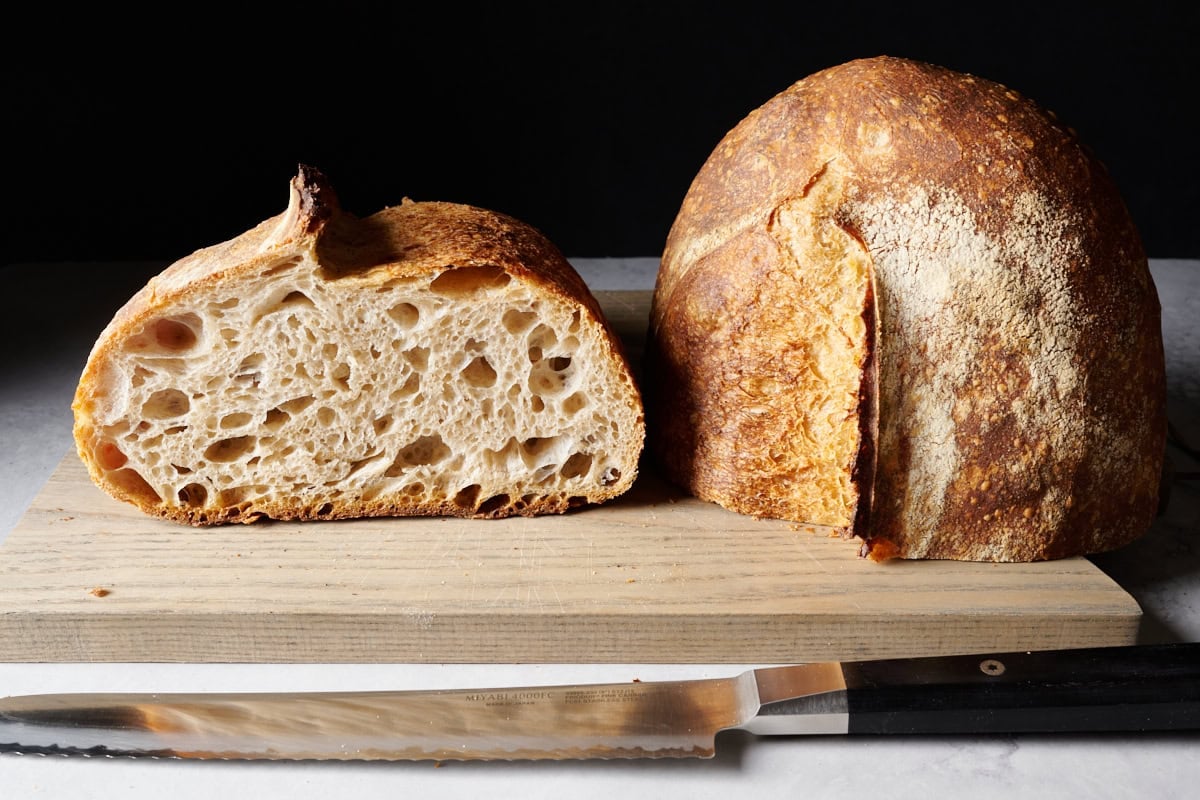
For those who prefer a more subtle, background acidity in their sourdough, allowing the grain flavors to shine, there are equally effective strategies to dial back the tang.
-
Maintaining a Vigorous, Well-Fed Starter: The most effective way to reduce sourness is through consistent and frequent feeding of the starter. Regular feeding dilutes the accumulated acids and provides fresh nutrients for the yeasts and bacteria, preventing excessive acid buildup. A starter that is fed before it becomes overly acidic, characterized by a pleasant, mildly sweet aroma and a bubbly, dome-shaped peak, will contribute less acidity to the final dough.
-
Utilizing a Young Levain: Timing the use of the levain is critical for mildness. A "young" levain is one that has risen significantly but has not yet reached its absolute peak ripeness or begun to collapse. At this stage, yeast activity is high, but there hasn’t been sufficient time for a substantial accumulation of acids. Bakers might use a 1:1:1 ratio (flour:starter:water) and ferment it at a moderately warm temperature (e.g., 78-80°F / 25-27°C) for 3-4 hours. The resulting levain will be active, bubbly, with a gentle sweet-sour aroma and cohesive texture, ideal for breads where minimal tang is desired, such as sourdough pizza.
-
Shortening or Eliminating Cold Proof: Directly opposing the strategy for increasing sourness, reducing or entirely skipping the cold proof dramatically lessens acid development. Instead of an overnight refrigeration period, shaped loaves can be proofed at room temperature for 2-4 hours, depending on ambient conditions, until they pass the "poke test" for readiness. This curtailed fermentation time limits the opportunity for acids, particularly acetic acid, to accumulate, yielding a bread with a much milder, more grain-forward flavor profile.
-
Higher Hydration Levains: As previously noted, higher hydration levains (e.g., 100% hydration) favor lactic acid production over acetic acid. This results in a smoother, less aggressive sourness. Many bakers seeking a balanced, subtle tang opt for 100% hydration levains in their standard recipes.
-
Cooler, Shorter Fermentation (for Less Total Acid): While cooler temperatures can favor acetic acid proportionally, they also significantly slow total bacterial activity. A cooler, shorter bulk fermentation, followed by a shorter final proof, will produce less overall acid. This approach yields a milder loaf, though care must be taken to avoid under-proofing.
-
Using a Larger Levain Percentage: Paradoxically, a larger levain percentage (e.g., 25-35% pre-fermented flour) can lead to a less sour bread. A larger quantity of pre-fermented, already acidic flour quickly drops the dough’s pH at the start of mixing. As bacteria are sensitive to low pH, their growth and acid production are inhibited more rapidly. Additionally, a larger levain accelerates overall fermentation, leading to shorter bulk fermentation times, further limiting the window for new acid development. While introducing more acid upfront, the reduced subsequent acid production often results in a milder final product. Many professional bakers find maintaining a consistent levain percentage (e.g., 15-22%) and adjusting other variables offers more predictable flavor control.
Addressing Common Baking Challenges: "Why Does My Bread Have No Tang At All?"
This is a frequent lament among new sourdough bakers. The absence of the expected sour flavor can stem from several factors:
- Immature Starter: A newly established starter (less than 2-3 weeks old) often lacks the robust, diverse bacterial population necessary for significant acid production. Flavor complexity develops over time as the starter matures and its microbial ecosystem stabilizes. Patience and consistent feeding are key.
- Premature Levain Use: Using a levain before it has fully ripened means insufficient time for acid accumulation. A mature levain should at least double in volume, show ample internal bubbles, and possess a distinct, sweet-tangy aroma.
- Insufficient Fermentation Time: Both bulk fermentation and final proofing contribute substantially to flavor development. Rushing these stages, or fermenting in an overly warm environment where processes accelerate too quickly, can prevent adequate acid formation. Extending bulk fermentation or incorporating an overnight cold proof can rectify this.
- Excessively Warm Kitchen: High ambient temperatures (above 80°F / 27°C) can cause fermentation to proceed so rapidly that the dough reaches full proof before sufficient acids have developed. The bread may be perfectly leavened but lack flavor depth. Solutions include using cooler mixing water to lower the dough’s target temperature (DDT) or shortening bulk fermentation and relying on an extended cold proof.
- Predominantly Refined White Flour: As discussed, low-ash refined flours have limited buffering capacity, meaning the pH drops quickly, inhibiting bacterial activity and total acid production. Incorporating even a small percentage of whole wheat or rye flour can significantly boost tang.
Expert Perspectives and Industry Implications
Food science experts and seasoned artisan bakers consistently emphasize that the control of sourdough acidity is a nuanced art backed by robust scientific principles. Dr. Michael Gänzle, a leading researcher in food microbiology, highlights the intricate balance of microbial activity and substrate availability that dictates acid production. "The beauty of sourdough," Gänzle notes, "lies in its dynamic ecosystem. Every parameter, from flour choice to temperature, shifts the equilibrium, offering the baker unparalleled control over the final sensory experience."
The implications of mastering sourdough acidity extend beyond the home kitchen. Commercial bakeries, striving for consistency and differentiation in a competitive market, meticulously apply these principles. Bakeries aiming for a signature "assertive sourdough" often employ strategies like long, cold fermentation and high percentages of whole grains, while those catering to a broader audience might opt for milder profiles achieved through young levains and shorter proofs. This granular control allows bakeries to carve out distinct niches, from the famously tangy Tartine Bread in San Francisco to European-style loaves known for their subtle, earthy notes. The trend toward both hyper-local, unique flavor profiles and consistent, approachable mildness underscores the commercial value of this deep understanding.
Conclusion
Sourdough baking offers a remarkable degree of control over flavor, far exceeding that of commercial yeast breads. The journey to mastering sourdough acidity is one of deliberate experimentation and keen observation. By systematically adjusting variables such as starter ripeness, fermentation temperatures, levain hydration, flour composition, and proofing times, bakers can precisely sculpt the flavor profile of their loaves. There is no singular "correct" level of sourness; the ideal tang is ultimately a matter of personal preference and culinary intent. Through careful practice and a foundational understanding of the microbial processes at play, every baker can develop the intuition necessary to consistently produce bread that perfectly aligns with their desired taste.