
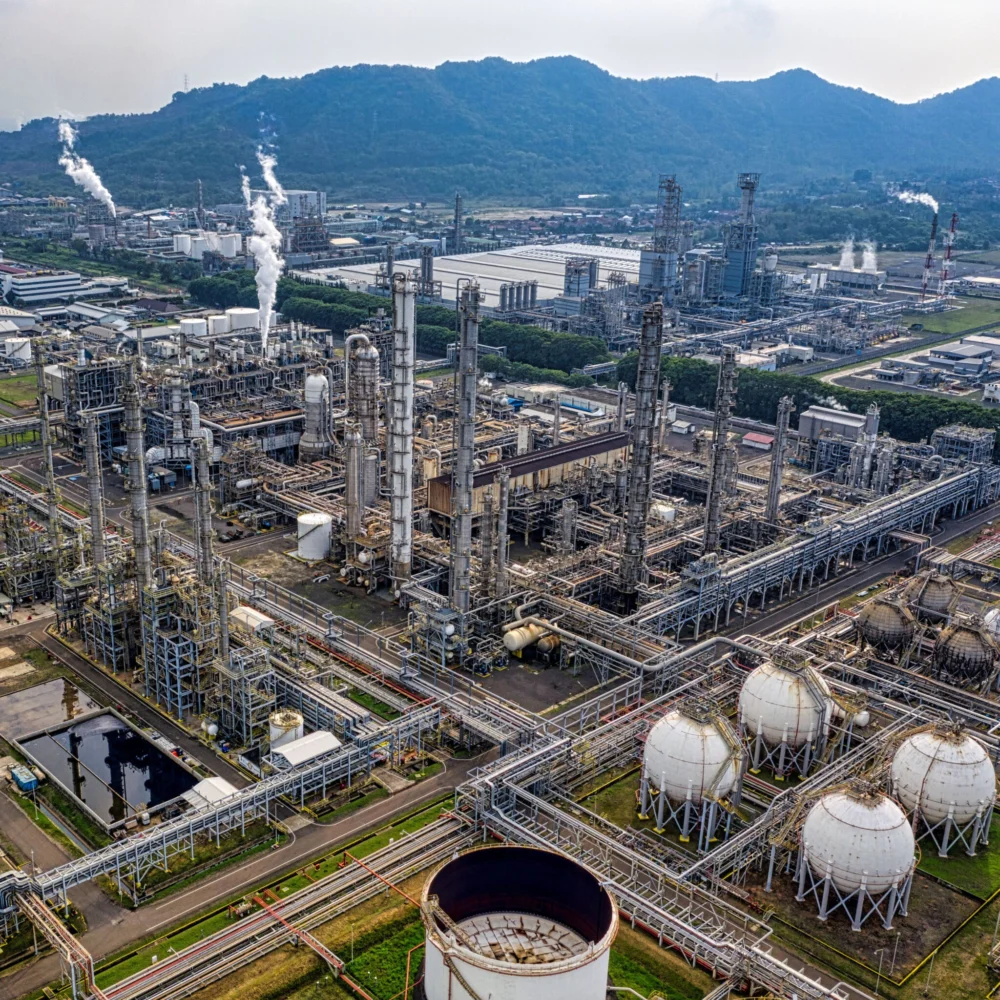
The 85-mile industrial corridor stretching along the Mississippi River between New Orleans and Baton Rouge, Louisiana, has become the global epicenter for a intensifying debate over the future of the petrochemical industry and the human cost of industrial expansion. Known colloquially as Cancer Alley, this region is home to more than 200 fossil fuel and petrochemical operations, creating a landscape where residential fences often stand just feet away from towering flare stacks and cooling towers. Recent data from Human Rights Watch and the Environmental Integrity Project (EIP) suggests that residents in these communities face a health risk from hazardous air pollutants that is more than ten times higher than the average resident in the rest of the state. As the global economy begins a slow transition away from fossil fuels for transportation, the petrochemical sector has emerged as a primary growth engine for the oil and gas industry, raising urgent questions about environmental justice, regulatory oversight, and the long-term viability of what critics call "sacrifice zones."
The Science and Scale of Petrochemical Production
Petrochemicals are chemical products derived from refined petroleum and natural gas. They serve as the foundational building blocks for a vast array of modern commodities, including plastics, fertilizers, synthetic fibers, detergents, and pharmaceuticals. The production process typically begins at a refinery or a specialized petrochemical plant where raw hydrocarbons—crude oil and fracked gas—are processed through high-heat methods such as steam cracking.
The most prevalent petrochemical in the world is ethylene. Produced in massive facilities known as "cracker plants," ethylene is the precursor to various types of polyethylene, the world’s most common plastic. This includes High-Density Polyethylene (HDPE), used for durable goods like milk jugs and detergent bottles, and Low-Density Polyethylene (LDPE), frequently used in plastic films and grocery bags. The energy required to operate these crackers is immense; the steam cracking process is cited by industrial analysts as one of the most energy-intensive processes in the entire chemical industry, contributing significantly to global carbon emissions.
Beyond ethylene, the industry relies on "aromatics" and "syngas." Aromatic plants produce benzene, toluene, and xylene, which are essential for manufacturing dyes, synthetic rubbers, and high-performance plastics. Syngas plants utilize natural gas or coal to create ammonia and methanol, which are critical for the global agricultural sector’s fertilizer needs. While these products are integral to the global economy, their manufacture releases a cocktail of Volatile Organic Compounds (VOCs), sulfur dioxide, and nitrogen oxides into the atmosphere.
A History of Industrial Concentrating: The Evolution of Cancer Alley
The concentration of industry along the Mississippi River is not accidental but is rooted in a complex history of geography and economics. Following the Civil War, the large plantations that lined the river provided vast tracts of flat land with direct access to deep-water shipping lanes and a massive freshwater source for industrial cooling. Throughout the mid-20th century, as the United States surged into a period of rapid industrialization, these former plantations were sold to chemical companies.
By the 1980s, the density of these facilities began to correlate with alarming health trends in the surrounding communities. Many of these neighborhoods are predominantly Black and low-income, a demographic reality that has led the United Nations and various human rights organizations to label the situation a "textbook case of environmental racism." The residents of these areas are often the descendants of enslaved people who worked the same land when it was a plantation, creating a generational cycle of displacement and exposure.
Over the last four decades, the corridor has seen a steady increase in the number of permitted facilities. Despite growing local opposition, state and local authorities have historically favored industrial expansion due to the tax revenue and perceived job creation provided by multi-billion-dollar investments. However, local activists argue that the economic benefits rarely trickle down to the most impacted residents, who instead bear the brunt of the environmental externalities.
Health Implications and the Burden of Proof
The health crisis in petrochemical corridors is supported by a growing body of peer-reviewed literature. A 2024 analysis published in the New England Journal of Medicine highlighted the direct link between proximity to petrochemical facilities and increased rates of chronic illness. The primary concern revolves around the release of "forever chemicals" and known carcinogens such as chloroprene and ethylene oxide.
In St. John the Baptist Parish, a key hotspot within Cancer Alley, the Environmental Protection Agency (EPA) previously found that the risk of developing cancer from air pollution was the highest in the nation. This risk is attributed largely to the emission of chloroprene, a chemical used in the production of Neoprene. Furthermore, water quality reports have indicated that Per- and Polyfluoroalkyl Substances (PFAS) are present in local drinking water at levels hundreds of times higher than the safety thresholds recommended by health experts.
The human impact is documented in the 2024 Human Rights Watch report, "We’re Dying Here," which includes interviews with 70 residents. The testimony reveals a harrowing pattern of reproductive health issues, including high-risk pregnancies, miscarriages, and neonatal complications. Residents describe "cancer clusters" where nearly every household on a single street has lost a family member to the disease. These health outcomes are compounded by "accidental" release events—unplanned leaks or explosions that occur with enough frequency to keep local populations in a state of perpetual medical anxiety.
Regulatory Landscape and Recent Legal Developments
The regulation of the petrochemical industry is a contentious political battlefield, involving the EPA at the federal level and agencies like the Louisiana Department of Environmental Quality (LDEQ) at the state level. Critics argue that "weak or nonexistent" regulations allow companies to discharge millions of pounds of pollutants into waterways and the air with minimal consequence.
During the Biden administration, the Justice Department and the EPA launched several civil rights investigations into Louisiana’s permitting processes, specifically looking at whether the state’s actions disproportionately harmed Black residents. However, these efforts faced significant legal pushback from state officials. In a notable shift, several of these federal lawsuits and investigations were recently dropped or stalled following changes in administration and judicial rulings that limited the EPA’s authority to use Title VI of the Civil Rights Act to address environmental disparities.
In Texas, a similar trend is emerging. The state recently cleared the way for significant petrochemical expansion in the Gulf Coast region, despite warnings from health experts regarding the cumulative impact of air toxins. Industry proponents argue that these plants are necessary to meet global demand and that they operate within the "allowable limits" set by current permits. However, environmental groups point out that these limits often fail to account for the "cocktail effect"—the combined impact of multiple chemicals from dozens of different plants hitting a single community simultaneously.
The Global Pivot: From Fuel to Plastic
The expansion of the petrochemical sector is inextricably linked to the global climate crisis. As the automotive industry shifts toward electric vehicles, the demand for gasoline is projected to peak and eventually decline. In response, integrated oil companies are pivoting their business models toward petrochemicals to ensure a continued market for their crude oil and natural gas reserves.
This "plastic pivot" means that even as the world attempts to decarbonize the energy sector, the production of synthetic materials is poised to increase. Petrochemical plants are becoming a "lifeline" for Big Oil, ensuring that fossil fuel extraction remains profitable for decades to come. This transition has significant implications for global carbon targets; if the petrochemical industry continues to grow at its current trajectory, it could account for a significant portion of the remaining global carbon budget, undermining the goals of the Paris Agreement.
Analysis of Implications and Future Outlook
The situation in America’s petrochemical corridors represents a fundamental tension between industrial economic growth and the basic human right to a healthy environment. The designation of certain regions as "sacrifice zones"—areas where the health of the population and the environment are deemed an acceptable price for industrial output—is increasingly being challenged in both domestic courts and international forums.
The emergence of grassroots organizations like Rise St. James, founded by retired teacher Sharon Lavigne, has shifted the narrative. By centering the voices of those living on the front lines, these movements have successfully delayed or blocked multi-billion-dollar projects, such as the proposed Formosa Plastics complex. These victories suggest that the era of uncontested industrial expansion may be coming to an end, as communities demand "environmental reparations" and a transition toward a circular economy that reduces reliance on virgin plastic production.
However, the path forward remains uncertain. Without robust federal oversight and a fundamental restructuring of how industrial permits are granted, the disparity between "clean" and "polluted" zip codes is likely to widen. The future of the petrochemical industry will depend on whether technological innovations, such as carbon capture and advanced recycling, can truly mitigate its environmental footprint, or if the industry must face a managed decline to protect public health and the global climate.
As the debate continues, the residents of Cancer Alley and similar corridors in Texas and the Ohio River Valley remain in a precarious position. Their struggle is a reminder that the convenience of modern plastic products often carries a hidden, localized cost—one measured not in dollars, but in the health and longevity of the communities living in the shadow of the plants.


