

The global personal care industry is currently undergoing a significant shift as consumers increasingly scrutinize the complex chemical compositions of everyday products. While conventional lotions have long relied on synthetic stabilizers and artificial fragrances to maintain shelf life and sensory appeal, a growing body of dermatological research suggests that the skin, the human body’s largest organ, requires a more cautious approach to topical applications. As the primary barrier against environmental pathogens and hazardous materials, the skin’s high permeability means that many synthetic compounds found in traditional skincare can be absorbed into the bloodstream. This realization has catalyzed a market-wide transition toward non-toxic, plant-based formulations and sustainable packaging solutions.
The Regulatory Landscape and the Rise of Consumer Awareness
For decades, the regulation of cosmetic ingredients in the United States remained largely unchanged under the Federal Food, Drug, and Cosmetic Act of 1938. However, the disparity between international standards—specifically the European Union, which has banned or restricted over 1,300 chemicals in cosmetics—and domestic regulations has led to increased public pressure for transparency. In response, the Modernization of Cosmetics Regulation Act of 2022 (MoCRA) was enacted, representing the first major expansion of the FDA’s authority over cosmetics since the 1930s. This legislative shift reflects a broader societal demand for "clean beauty," a sector that is no longer niche but a driving force in the multi-billion dollar global skincare market.
Market data indicates that the organic and natural personal care market is projected to reach approximately $32 billion by 2030, growing at a compound annual growth rate (CAGR) of nearly 9%. This growth is fueled by data-driven consumers who utilize resources like the Environmental Working Group’s (EWG) Skin Deep database. The database assigns hazard scores to products based on their ingredient lists, with a score of 10 indicating the highest risk. By prioritizing products with lower scores, consumers are effectively voting for a higher standard of safety in the manufacturing process.
Critical Ingredients Under Scientific Scrutiny
To understand the necessity of non-toxic alternatives, one must examine the specific chemical groups that have raised concerns among toxicologists and environmental scientists. The following ingredients are frequently identified as high-priority substances to avoid:
- Parabens (Methyl-, Ethyl-, Propyl-, Butyl-): Often used as preservatives to prevent the growth of mold and bacteria, parabens have been identified as endocrine disruptors. They can mimic estrogen in the body, which has led to ongoing research regarding their potential links to reproductive issues and certain types of cancer.
- Phthalates: These chemicals are primarily used to make plastics more flexible, but in cosmetics, they are often used to help fragrances adhere to the skin. Phthalates are also classified as endocrine disruptors and have been linked to developmental and reproductive toxicity.
- Synthetic Fragrance: Under current labeling laws, companies are often permitted to list "fragrance" or "parfum" as a single entry, which may actually consist of a proprietary blend of dozens of undisclosed chemicals. These "hidden" ingredients are a leading cause of allergic contact dermatitis and respiratory irritation.
- Mineral Oil: A byproduct of petroleum refining, mineral oil creates a film on the skin that can clog pores and interfere with the skin’s natural ability to eliminate toxins. Furthermore, if not properly refined, mineral oil can be contaminated with polycyclic aromatic hydrocarbons (PAHs), which are known carcinogens.
In contrast, non-toxic formulations prioritize biocompatible ingredients such as aloe vera for hydration, jojoba oil for its similarity to human sebum, and cocoa butter for deep emollient properties.

The Intersection of Human Health and Environmental Sustainability
The evolution of non-toxic skincare is intrinsically linked to environmental conservation. The beauty industry is a significant contributor to the global plastic crisis, producing an estimated 120 billion units of packaging annually, much of which is non-recyclable. Beyond the visible waste, the presence of Endocrine Disrupting Chemicals (EDCs) in plastic containers can leach into the products themselves, creating a dual-threat to the consumer and the ecosystem.
Recent studies have highlighted the pervasive nature of microplastics, which have been detected in human blood, lung tissue, and even placentas. Consequently, the leading non-toxic lotion brands are moving toward "circular beauty" models. This involves the use of infinitely recyclable materials like glass and aluminum, as well as refillable systems that significantly reduce the carbon footprint associated with manufacturing and logistics.
Analysis of Leading Non-Toxic Lotion Brands
The following eight brands represent the current gold standard in the non-toxic skincare market, evaluated based on ingredient safety, third-party certifications, and packaging innovation.
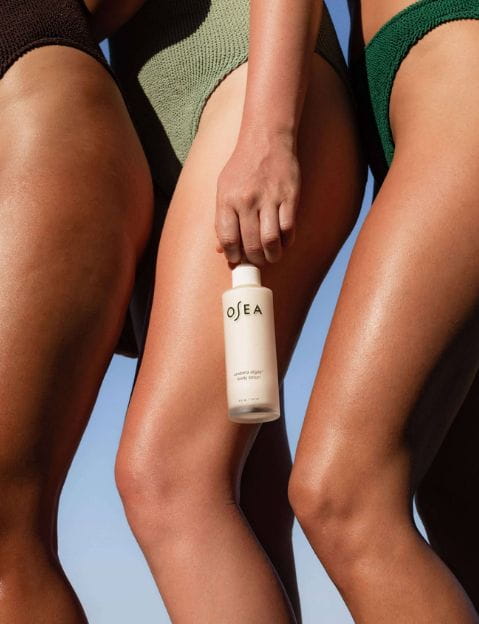
1. Osea
Founded on the principles of marine-based science, Osea utilizes bioavailable seaweed as a primary ingredient. Their formulations are designed to provide high-performance hydration without the use of synthetic binders. Osea has achieved several high-level certifications, including being a Climate Neutral Certified brand and a member of the 1% for the Planet initiative. Their use of glass packaging further emphasizes their commitment to reducing plastic dependency.
2. Attitude
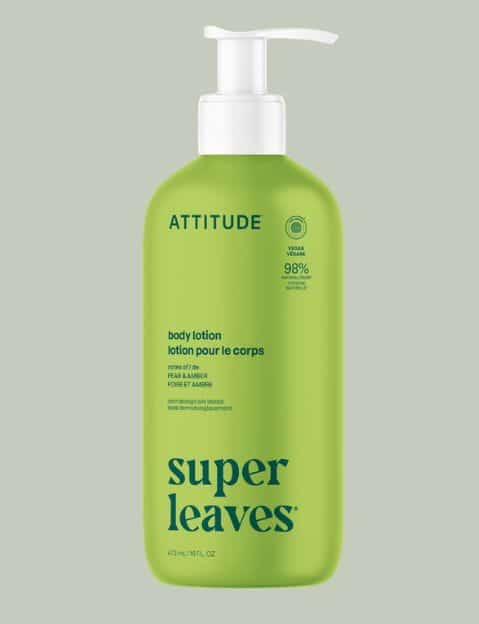
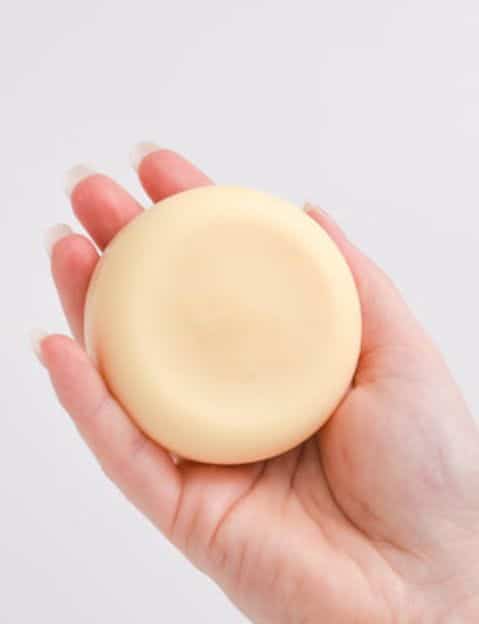
Based in Canada, Attitude has become a leader in accessible, EWG Verified skincare. The brand is notable for its "plastic-free" line, which utilizes biodegradable cardboard tubing for its solid lotions and creams. This innovation addresses the logistical challenge of shipping heavy, water-based products while maintaining a zero-waste profile.
3. Ecoroots
Ecoroots focuses on small-batch production and minimalist ingredient lists. By avoiding synthetic preservatives and focusing on organic oils and butters, the brand appeals to consumers with highly sensitive skin. Their packaging is entirely plastic-free, utilizing glass jars and metal lids that are easily repurposed or recycled.
4. Public Goods
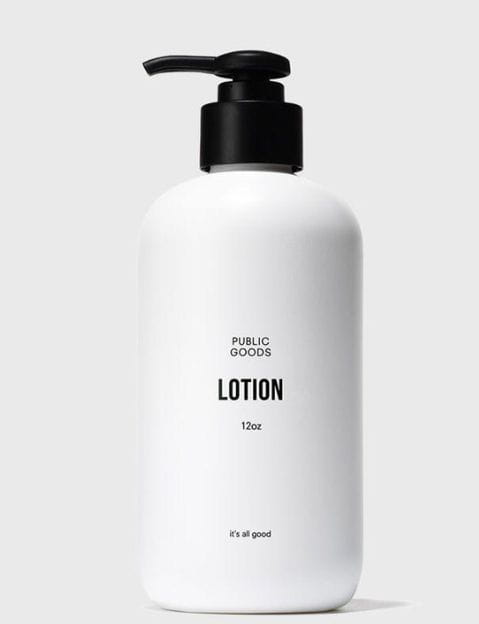
Public Goods operates on a membership model designed to provide high-quality, non-toxic essentials at a lower price point. Their lotion formulations are characterized by their simplicity and the absence of "fragrance" loopholes. The brand prioritizes biodegradable materials and offers refill pouches to minimize the use of virgin plastic.
5. Plaine Products
Plaine Products is a pioneer in the refillable beauty space. Utilizing a "closed-loop" system, customers receive their lotion in aluminum bottles. Once empty, the bottles are returned to the company, washed, refilled, and sent back out. This model virtually eliminates packaging waste and has been cited as a blueprint for the future of sustainable retail.
6. The Good Fill
Operating as a specialized refillery, The Good Fill provides unscented face and body lotions that allow consumers to customize their experience without the risk of hidden toxins. Their business model encourages the reuse of existing containers, directly tackling the "single-use" culture of the personal care industry.
7. Meow Meow Tweet
This brand is recognized for its ethical transparency and vegan formulations. Meow Meow Tweet utilizes organic, fair-trade ingredients and is known for its creative, compostable packaging. Their aloe-rose lotion is frequently cited by dermatologists as an effective option for those requiring soothing, non-comedogenic hydration.
8. Upcircle
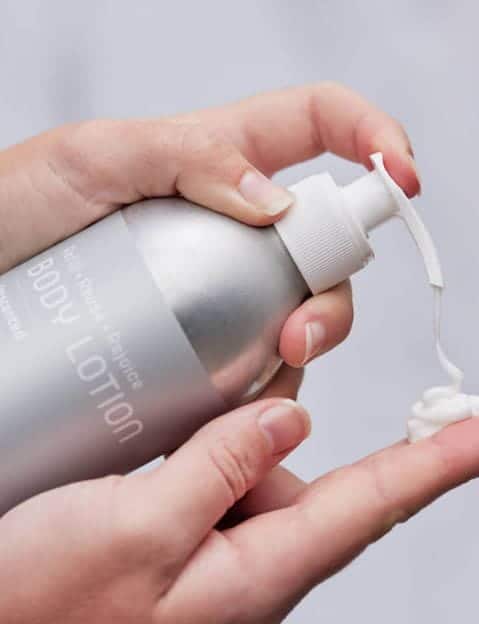
Upcircle represents the "upcycled" movement in skincare. The brand sources residual ingredients from other industries—such as discarded coffee grounds and fruit stones—and transforms them into high-quality topical treatments. This circular economy approach reduces food waste while providing nutrient-dense formulations for the skin.
Chronology of Modern Skincare Evolution
- 1938: The Federal Food, Drug, and Cosmetic Act is passed in the U.S., establishing basic safety standards.
- 2004: The Environmental Working Group launches the Skin Deep database, providing the first major public tool for ingredient transparency.
- 2009: The EU passes Regulation (EC) No 1223/2009, significantly tightening the restrictions on cosmetic chemicals.
- 2015-2018: The "Clean Beauty" movement gains mainstream traction, with major retailers like Sephora and Target launching "Clean" labeling programs.
- 2022: The Modernization of Cosmetics Regulation Act (MoCRA) is signed into law, marking the most significant update to U.S. cosmetic law in 84 years.
- 2024: The industry sees a surge in "Refillable" and "Waterless" beauty technologies as brands race to meet 2030 sustainability goals.
Broader Impact and Future Implications
The shift toward non-toxic lotions is indicative of a broader trend in public health where prevention is prioritized over treatment. By reducing the cumulative "body burden" of synthetic chemicals, consumers may be mitigating long-term risks associated with hormonal imbalance and skin sensitivities. Furthermore, the success of these eight brands demonstrates that profitability and ethical manufacturing are not mutually exclusive.

Industry analysts suggest that the next phase of the non-toxic movement will focus on "Blue Beauty"—skincare that is not only safe for humans but also reef-safe and non-toxic to aquatic life. As the scientific community continues to uncover the effects of microplastics and chemical runoff on marine ecosystems, the demand for biodegradable and bio-based ingredients will likely become the new baseline for the industry.
For the consumer, the transition to non-toxic lotion requires a fundamental change in habits: reading labels with the same scrutiny as food packaging and prioritizing quality over convenience. While the initial cost of premium, non-toxic products may be higher, the long-term benefits to individual health and environmental stability present a compelling value proposition. The move toward transparency, safety, and sustainability in skincare is no longer a temporary trend; it is a permanent restructuring of the global beauty paradigm.


