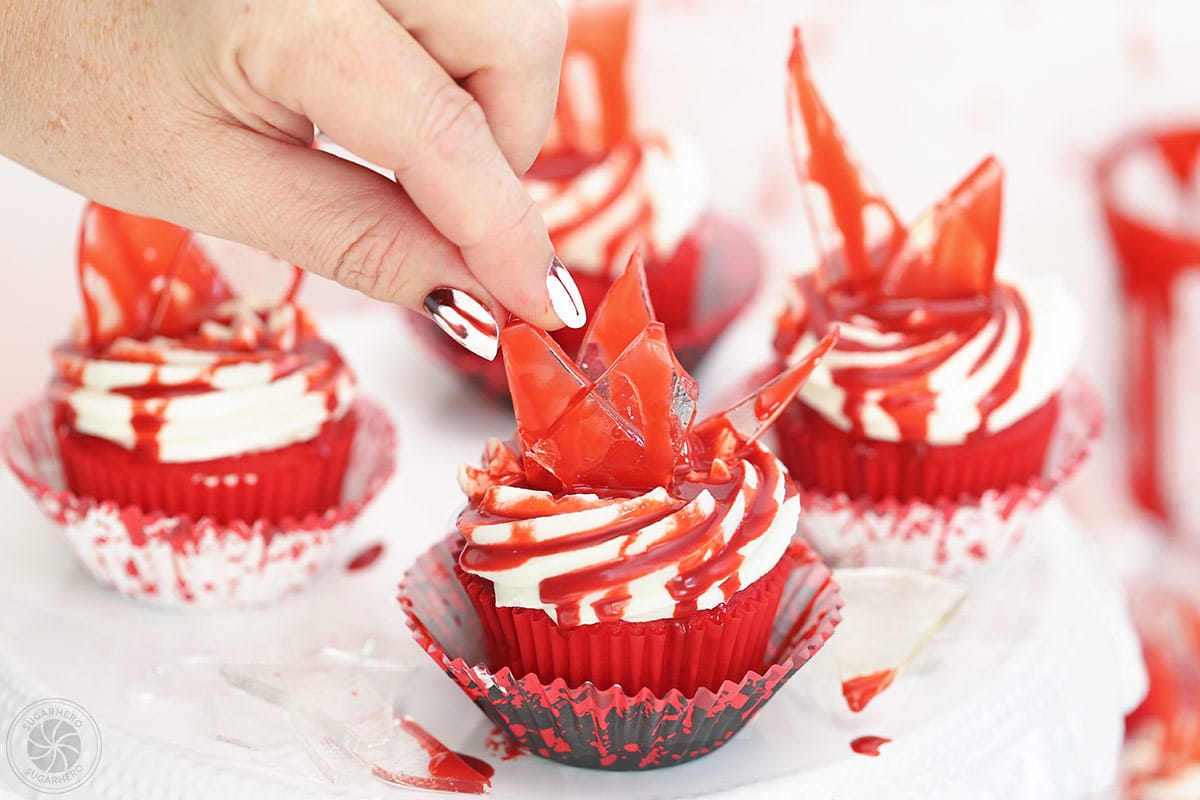
The culinary landscape of Halloween is often a delicate balance between charmingly spooky and outright terrifying. For those who lean towards the latter, a new confection has emerged, promising a "heavenly" taste with a decidedly macabre aesthetic: the Bloody Glass Cupcake. These treats, designed to evoke a sense of horror, combine the comforting familiarity of red velvet cake with the visual shock of shattered candy glass and a "blood" drizzle.
At their core, the Bloody Glass Cupcakes are built upon a foundation of moist red velvet cake, a flavor profile that has become synonymous with festive occasions and, particularly, autumnal celebrations. This is complemented by a smooth vanilla buttercream frosting, providing a classic sweet counterpoint to the visual drama. The true Halloween impact, however, comes from the innovative addition of homemade candy glass shards. These translucent, jagged pieces are designed to mimic broken glass, adding a dangerous allure to the otherwise innocent cupcake. A final flourish of vibrant red edible "blood" completes the gruesome presentation, transforming a simple dessert into a centerpiece for any horror-themed gathering.
While the visual presentation might be unsettling, the creators emphasize that the taste remains decidedly delightful. The contrast between the rich, tender red velvet cake and the sweet, creamy vanilla frosting is designed to be a crowd-pleaser. The edible candy glass, typically made from sugar, corn syrup, and water, offers a brittle crunch that adds textural interest. The "blood" topping, often a simple mixture of corn syrup and red food coloring, provides a visually striking, albeit unsettling, finishing touch.
The appeal of such a dessert lies in its ability to cater to a specific niche within the Halloween celebration spectrum. Unlike overtly cute or whimsical treats, the Bloody Glass Cupcake embraces the darker, more theatrical aspects of the holiday. This makes them particularly well-suited for adult gatherings, horror movie marathons, or parties that aim for a more sophisticated, albeit chilling, atmosphere. The recipe’s originators note that these are likely "not appropriate for kid’s parties," reinforcing their intended audience.
The enduring popularity of red velvet as a flavor for spooky occasions is further highlighted, with suggestions for pairing these cupcakes with other red velvet-themed Halloween desserts. This includes a "Red Velvet Marshmallow Spiderweb Cake" and "Red Velvet Hot Chocolate," suggesting a cohesive theme for a particularly daring Halloween spread. The use of red velvet as a mood-setter underscores its adaptability to seasonal themes, its deep color lending itself naturally to both festive and frightful aesthetics.
Behind the Creation: The Art of Edible Glass
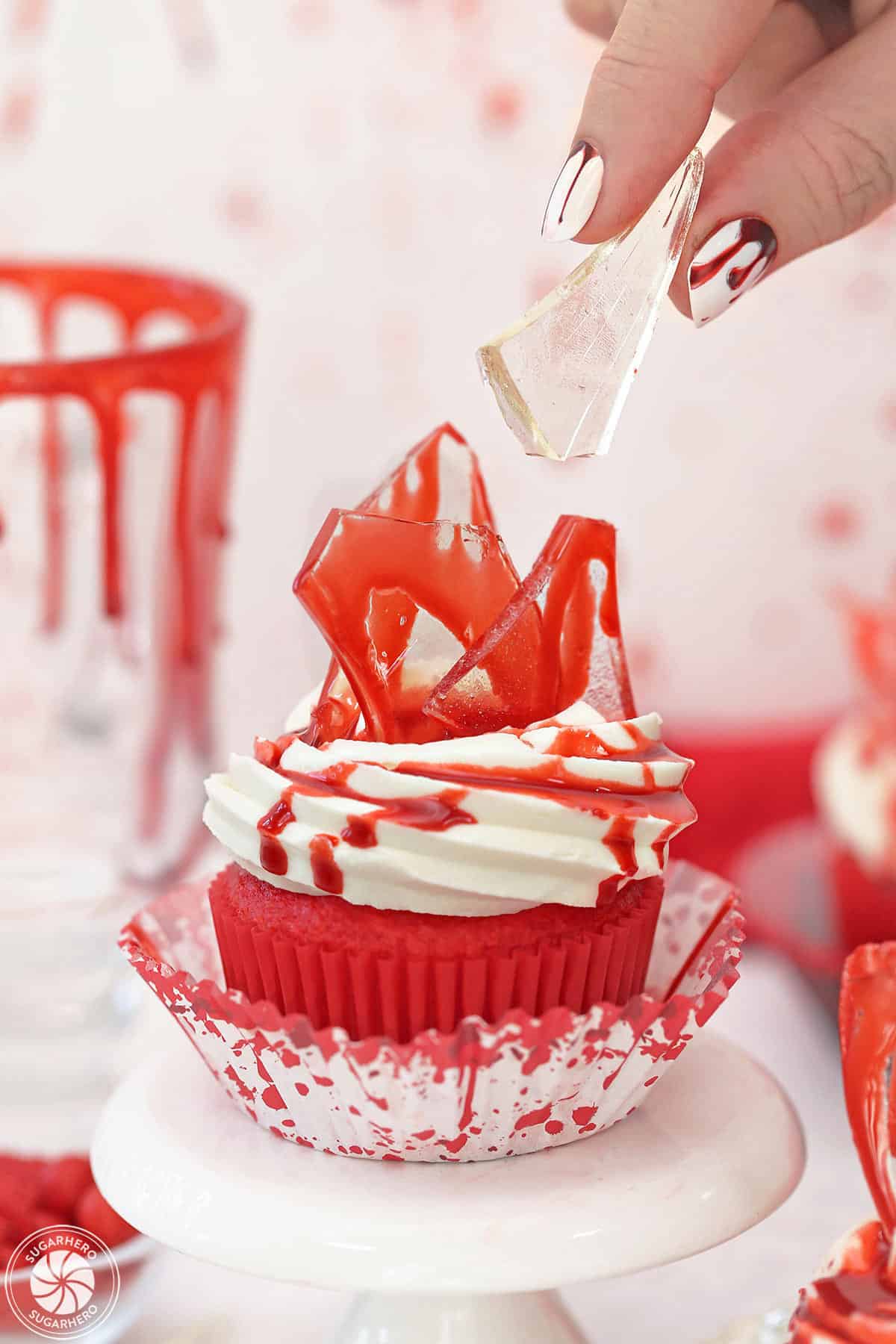
The creation of the edible candy glass is a key component that elevates these cupcakes from standard Halloween fare to something more striking. This process typically involves carefully heating sugar, corn syrup, and water to precise temperatures, often reaching the hard-crack stage (around 300-310°F or 149-154°C). This temperature is crucial for achieving a brittle, glass-like consistency. Once the mixture reaches the desired temperature, it is poured onto a prepared surface, such as a silicone baking mat or parchment paper, and allowed to cool and harden. After cooling, the hardened sugar is broken into irregular shards, mimicking the appearance of shattered glass.
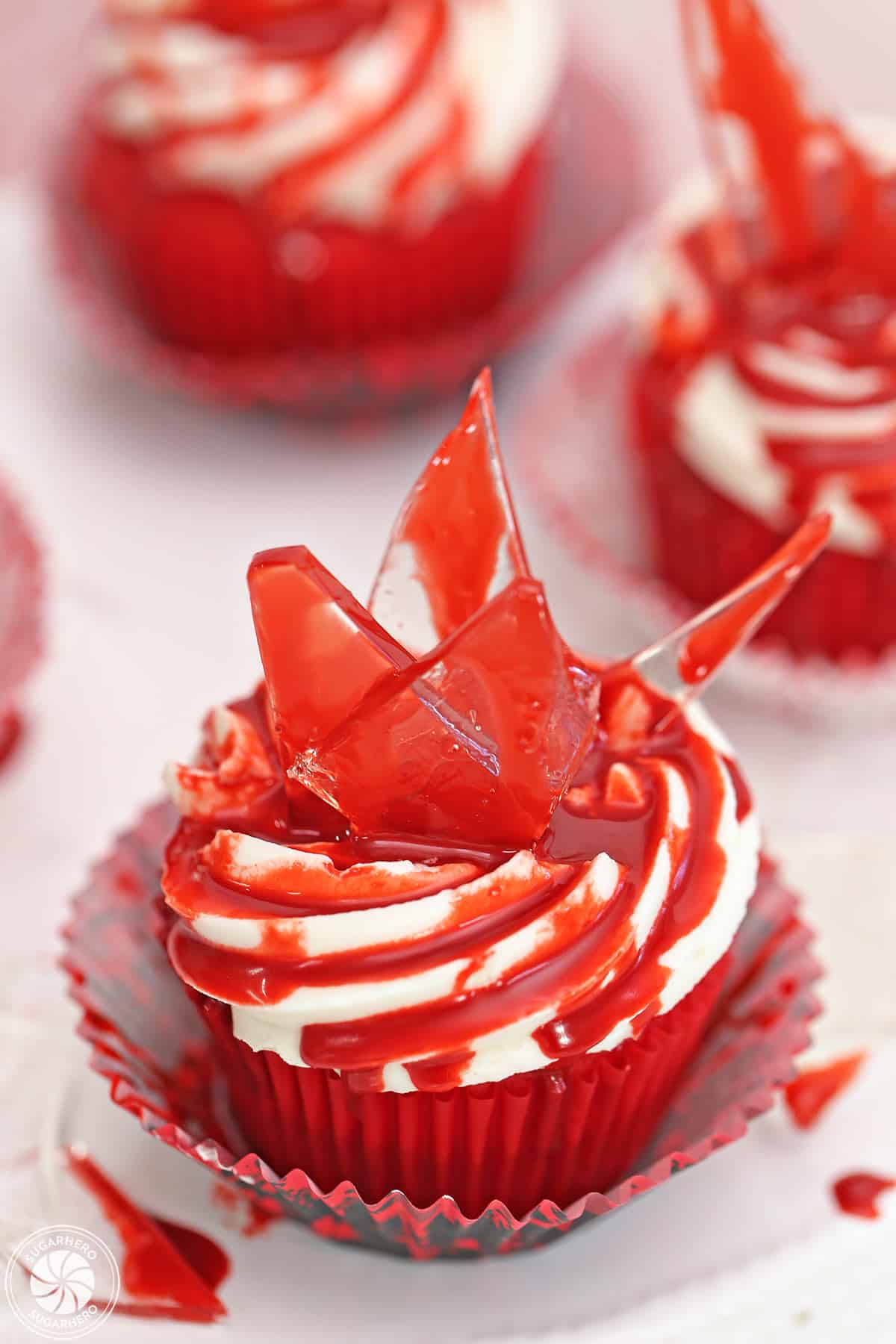
This technique requires precision and attention to detail. Factors such as humidity can significantly impact the outcome, potentially leading to sticky or cloudy candy. Professional bakers often recommend making edible glass on dry days or employing techniques to mitigate moisture, such as using silica gel packets when storing the finished product. The ability to create such a visually impactful element from simple ingredients speaks to the ingenuity within modern dessert artistry.
Ingredients and Equipment: A Culinary Checklist
To recreate the Bloody Glass Cupcakes, a specific set of ingredients and equipment are required. For the cupcakes themselves, standard baking staples like flour, sugar, cocoa powder, eggs, and oil form the base. The vibrant red color is typically achieved through red food coloring, and a touch of vinegar and baking soda contributes to the characteristic tang and tender crumb of red velvet.
The vanilla buttercream frosting is a classic combination of butter, powdered sugar, and vanilla extract, often enriched with a touch of milk or cream to achieve the desired consistency.
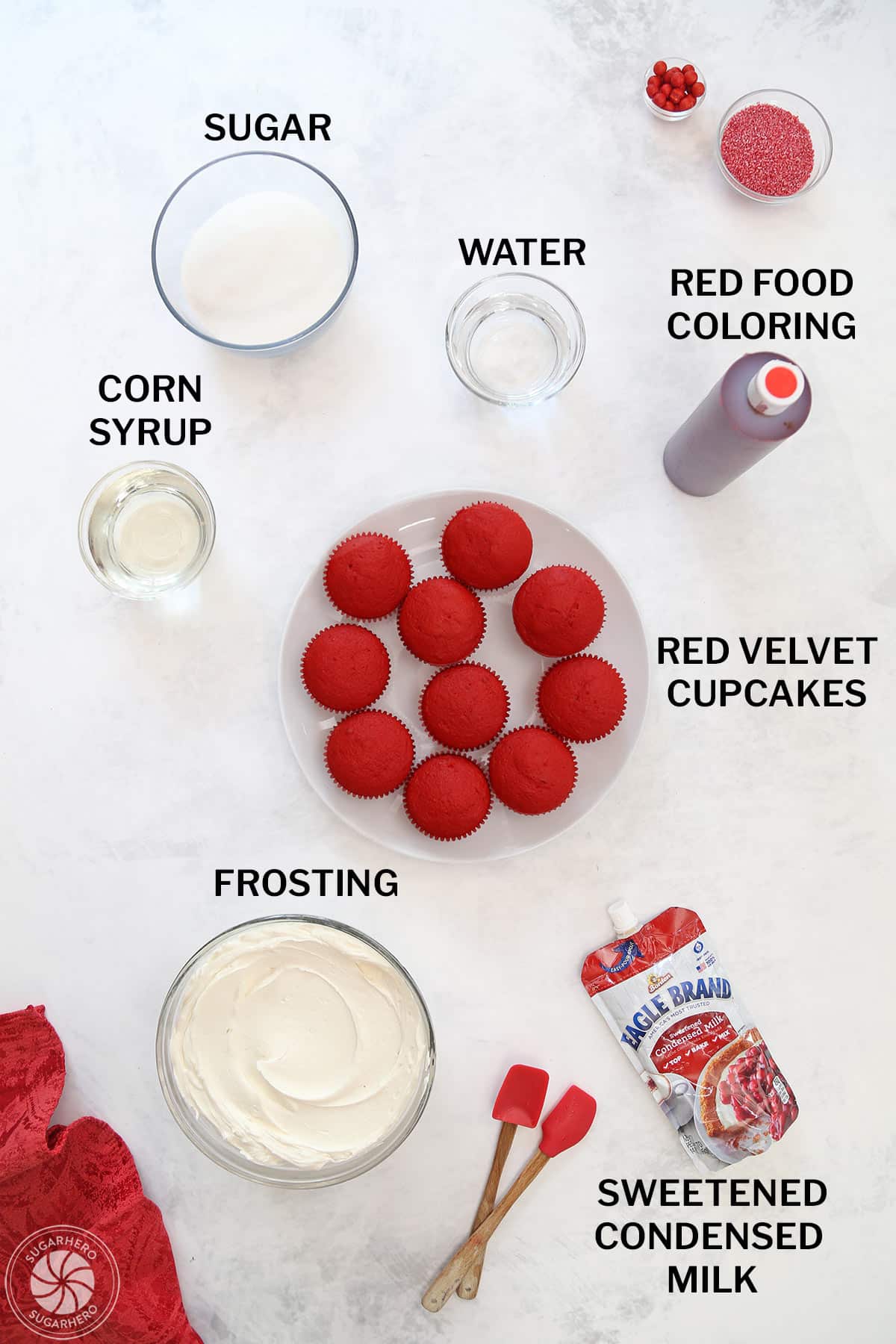
The most specialized components involve the edible glass and the "blood" topping. For the glass, the primary ingredients are granulated sugar, light corn syrup, and water. Cream of tartar is sometimes added to prevent sugar crystallization and ensure a smoother texture. For the blood effect, corn syrup is again a common base, mixed with red food coloring, and sometimes a touch of clear piping gel or cornstarch to achieve a thicker, more viscous consistency.
Essential equipment for this recipe includes standard baking tools like mixing bowls, whisks, and measuring cups and spoons. However, for the candy-making aspect, a reliable candy thermometer is crucial for achieving the correct sugar temperature. A heavy-bottomed saucepan is recommended for even heating of the sugar mixture. Additionally, silicone baking mats or parchment paper are necessary for pouring and cooling the candy. For the frosting, piping bags and tips are useful for achieving decorative swirls, though the article notes alternative methods for those without specialized equipment.
Timeline and Preparation: A Strategic Approach to Halloween Baking
The creation of Bloody Glass Cupcakes can be approached with a strategic timeline, allowing for advance preparation of certain elements. The edible glass shards can be made up to a week in advance and stored in an airtight container in a dry environment. This is a significant advantage for busy hosts, as the most time-consuming and temperature-sensitive part of the recipe can be completed well before the event. However, it is crucial to note that in humid climates, the candy’s shelf life may be reduced to two to three days.
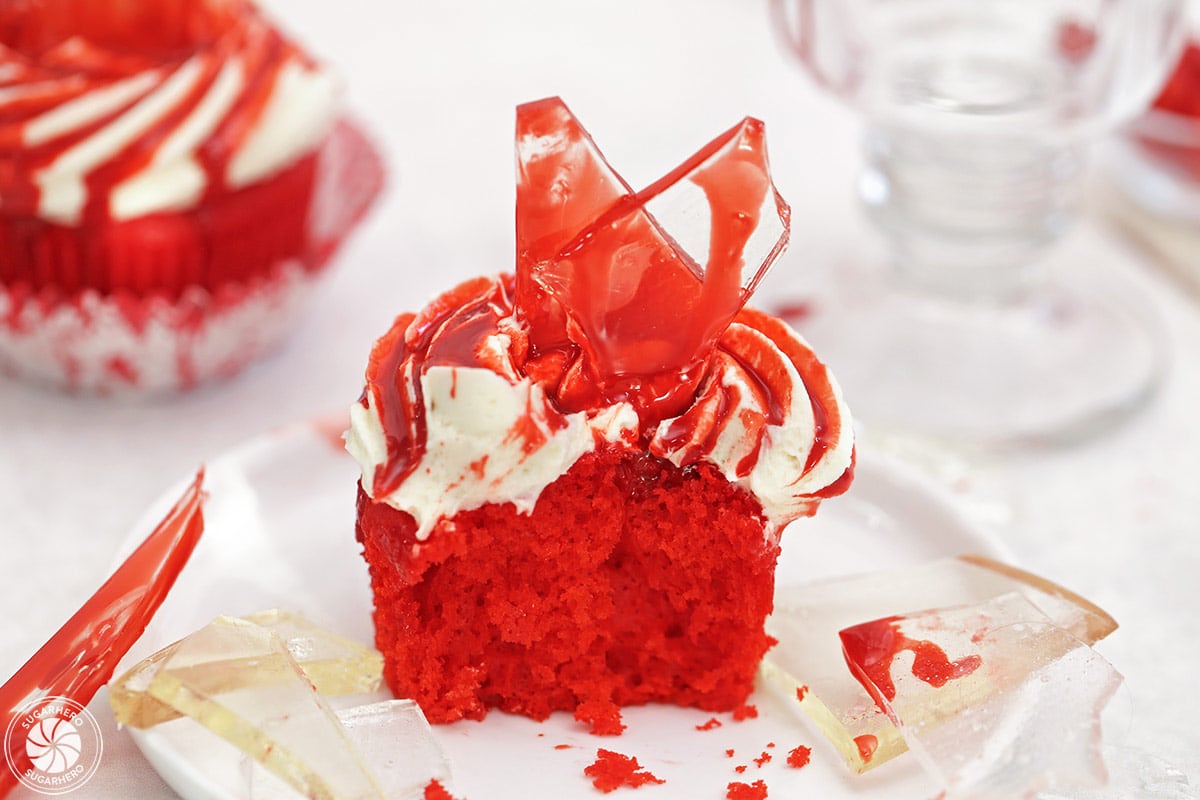
Similarly, the red velvet cupcakes and the vanilla buttercream frosting can also be prepared in advance. Cupcakes can be baked and frosted, then stored in an airtight container in the refrigerator for up to a week. It is recommended to bring them to room temperature before serving to ensure optimal taste and texture. The frosting, if made separately, can also be stored and then re-whipped to its original consistency.
The final assembly, involving the placement of the glass shards and the drizzling of the "blood" topping, is best done shortly before serving. This ensures that the candy glass remains crisp and the "blood" topping retains its visual impact without becoming overly saturated by the frosting or the ambient humidity. This phased approach allows for a more manageable and less stressful baking process, particularly for larger gatherings.
Broader Implications: The Evolving Landscape of Holiday Confections
The emergence and popularity of desserts like the Bloody Glass Cupcake reflect a broader trend in holiday baking and confectionery. Consumers, particularly younger generations, are increasingly seeking out unique, visually striking, and shareable food experiences. Social media platforms like Instagram and Pinterest have become powerful drivers of culinary trends, where eye-catching desserts can gain viral traction.
This trend also highlights a growing interest in incorporating more sophisticated or "adult" themes into traditional holiday celebrations. While Halloween has always had its macabre elements, the current culinary landscape allows for a more nuanced and artistic expression of these themes. The Bloody Glass Cupcake is an example of how simple ingredients can be transformed through technique and presentation to create a memorable and thematic dessert that caters to a specific taste for the darker side of celebration. The success of such recipes underscores the culinary industry’s ability to adapt to evolving consumer preferences and tap into niche markets within the vast and varied world of food.