Dough hydration, a seemingly straightforward metric, stands as one of the most critical and complex variables in the craft of sourdough bread baking, profoundly influencing the final texture, structure, and flavor of a loaf. Far from being a mere number in a recipe, hydration represents a dynamic interplay between flour characteristics, environmental conditions, and the baker’s skillful manipulation, demanding a deep understanding to consistently achieve exceptional results. This guide delves into the scientific principles and practical considerations of dough hydration, offering a comprehensive perspective gleaned from extensive baking experience and industry best practices.
Understanding Dough Hydration: A Fundamental Metric
At its core, dough hydration quantifies the total amount of water present in a bread recipe, expressed as a percentage of the total flour weight. This calculation is a cornerstone of baker’s percentages, providing a standardized method for recipe formulation and analysis across the baking world. The formula is elegantly simple: divide the weight of the water by the total weight of the flour, then multiply by 100. For instance, a recipe incorporating 1,000 grams of flour and 700 grams of water yields a 70% hydration dough (700 ÷ 1,000 × 100 = 70%). This percentage serves as an initial blueprint, guiding bakers on the expected consistency and handling properties of their dough even before mixing commences.
However, professional bakers universally acknowledge that this percentage is a guideline, not an immutable law. Flour, the primary structural component of bread, is an inherently variable ingredient. Its properties can differ significantly between types (e.g., all-purpose, bread, whole wheat, rye), across different mills, and even between batches from the same supplier, largely due to variations in protein content, extraction rate, and freshness. Environmental factors, while often less impactful than flour quality, also play a role; a sudden shift in ambient humidity, for example, can subtly alter a flour’s water absorption capacity, necessitating minor adjustments to maintain optimal dough consistency.
The Indispensable Role of Water in Dough Development
Water’s importance in bread making extends far beyond simply binding dry ingredients. It is the solvent that activates yeast and bacteria in sourdough starters, enabling fermentation. More crucially, water facilitates the formation of gluten, the protein network responsible for the dough’s elasticity and extensibility. When water is added to flour, the gluten-forming proteins, gliadin and glutenin, absorb moisture and, through mechanical action (mixing or kneading), link together to create a viscoelastic matrix. This network traps the carbon dioxide produced during fermentation, allowing the dough to rise and develop an open, airy crumb structure.
Insufficient water results in a tight, stiff dough that is difficult to work with, resistant to expansion, and prone to producing a dense, crumbly loaf. Conversely, excessive water can lead to a soupy, unmanageable mass that struggles to hold its shape, resulting in a flat loaf with a gummy interior. The precise balance of hydration, therefore, is paramount to achieving the desired physical characteristics and eating quality of the final bread.
Exploring the Hydration Spectrum: From Stiff to Slack Doughs
The baking world utilizes a wide spectrum of hydration levels, each yielding distinct bread styles and characteristics.
-
Lower-Hydration Breads (60-68%): Doughs in this range are typically firm and easy to handle, making them ideal for beginners or for specific bread types. They generally produce loaves with a substantial, often thicker, crust and a chewier, tighter crumb. Examples include bagels, pretzels, certain pan loaves, and traditional European hearth breads like some French baguettes. The reduced water content often contributes to a longer shelf life and a more robust structure, making them suitable for shaping into intricate forms.
-
Moderately Hydrated Breads (68-75%): This range represents a balanced approach, offering a manageable dough with good structural integrity. Loaves typically feature a moderately open crumb and a well-developed, crisp crust. This category encompasses many classic country loaves and is often recommended for those new to sourdough baking, providing a forgiving yet rewarding experience.
-
Higher-Hydration Breads (75-85%+): Pushing hydration to these levels results in a significantly softer, slacker, and often stickier dough. While more challenging to handle, these doughs are prized for their ability to produce loaves with a very open, airy crumb, a thin and brittle crust, and a tender, custardy interior. Examples include ciabatta, focaccia, and many contemporary artisanal sourdoughs. The increased water content requires more advanced handling techniques and often longer mixing times to adequately develop gluten strength.
It is crucial to note that while high hydration can contribute to a desirable open crumb and tender texture, indiscriminately increasing water content does not inherently equate to "better" bread. Over-hydrating a dough can lead to a weak gluten structure that collapses, a gummy crumb, and compromised shelf stability, particularly if the flour used lacks the protein content or quality to absorb and retain the excess water effectively. The goal is always to find the optimal hydration level that maximizes the flour’s potential while delivering the desired textural and structural attributes.
Factors Influencing Optimal Dough Hydration
Several key factors dictate how much water a particular dough truly needs, transcending the initial recipe percentage:
- Flour Type and Protein Content: This is arguably the most significant variable. Higher-protein flours (e.g., American bread flour, typically 12-14% protein) possess a greater capacity to absorb water due to their abundant gluten-forming proteins. These flours often require higher hydration to prevent a dense, gummy texture. Conversely, lower-protein or "softer" flours (common in many parts of Europe, South America, and the UK) absorb less water and necessitate reduced hydration to avoid an overly sticky, unmanageable dough.
- Whole Grain Flours: Flours containing significant percentages of bran and germ (e.g., whole wheat, rye, spelt) inherently demand more water. The fibrous bran and germ particles act like tiny sponges, absorbing a considerable amount of moisture that would otherwise contribute to gluten development. Consequently, recipes with substantial whole-grain content often feature hydration percentages in the high 70s or even 80s to achieve a workable dough and desirable crumb.
- Freshly Milled Flour: Flour that has been recently milled tends to require more hydration compared to aged flour. This is attributed to the immediate availability of enzymes and starches that are more reactive with water, as well as potential differences in particle size and starch damage.
- Climate and Environment: Environmental conditions play a subtle yet impactful role. In arid, high-altitude climates, flour tends to be drier and the ambient air causes faster evaporation, often necessitating higher hydration percentages. Conversely, in humid environments, flour may absorb some moisture from the air, and doughs may feel slacker, sometimes requiring a slight reduction in water or a more watchful eye during mixing. The ambient temperature also influences water absorption and dough activity.
Bassinage: The Art of Phased Hydration
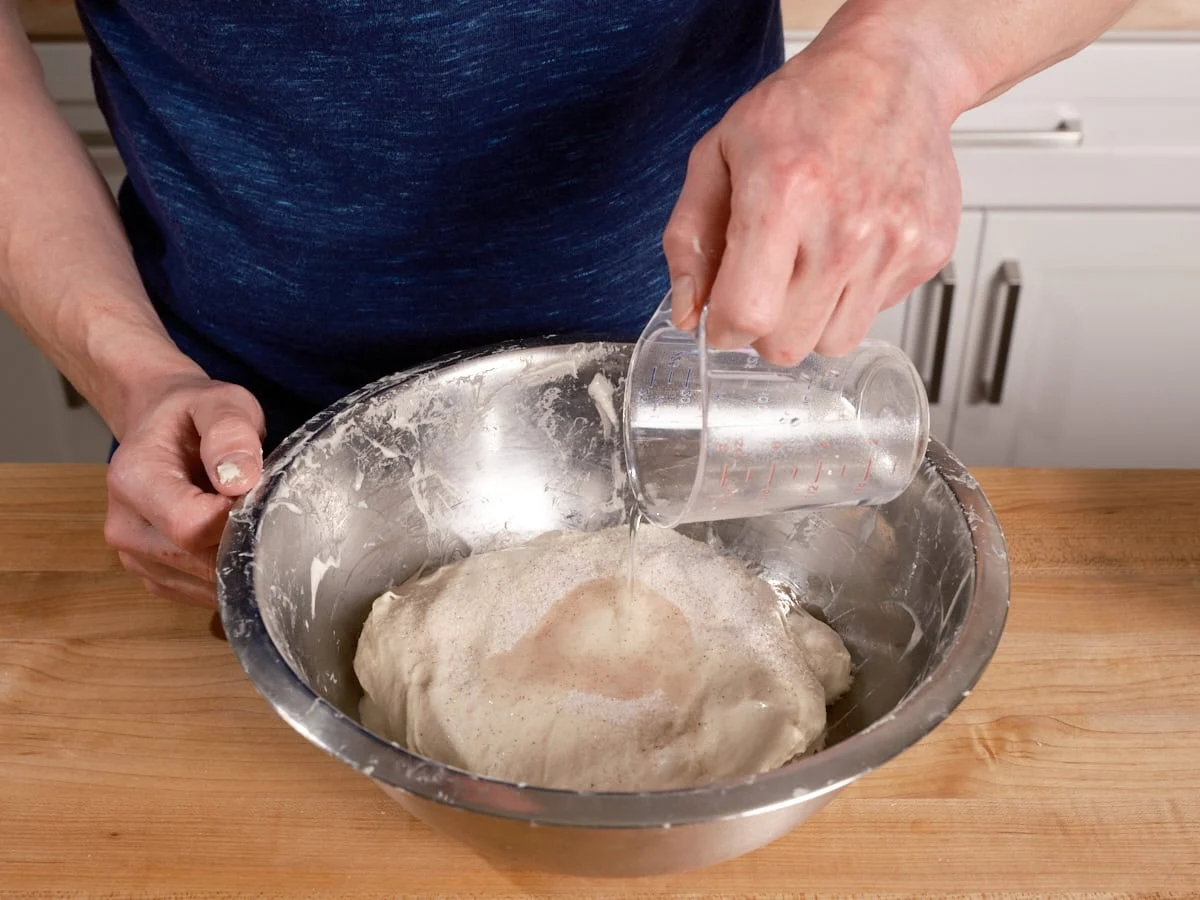
One technique that has revolutionized hydration management for many artisan bakers is bassinage, also known as "double hydration" or "staged hydration." Instead of incorporating all the mixing water at the outset, a portion is reserved and gradually added later in the mixing process, after the flour’s starches have begun to hydrate and the gluten matrix has started to develop.
The benefits of bassinage are manifold:
- Enhanced Gluten Development: Starting with a slightly stiffer dough allows for more efficient and robust gluten development through mechanical mixing. Once a foundational gluten network is established, the remaining water can be incorporated, allowing the dough to reach higher hydration levels without compromising strength or requiring excessively long mixing times.
- Precise Hydration Control: Bassinage provides the baker with a critical opportunity to assess the dough’s strength and consistency before committing to the full water content. If the dough feels overly wet or weak after the initial water addition, the reserved portion can be reduced or omitted. Conversely, if the dough is strong and tight, the full amount of reserved water can be slowly incorporated. This adaptive approach is invaluable for accommodating the inherent variability of flour and environmental conditions.
- Improved Dough Handling: By gradually increasing hydration, the dough transitions more smoothly from a firmer state to a slacker one, allowing the baker to maintain better control throughout the mixing process. This is particularly beneficial when working with very high-hydration doughs, which can be challenging to manage if fully hydrated from the start.
Troubleshooting Sticky Dough: Common Causes and Solutions
Sticky dough is a frequent source of frustration for bakers, often stemming from issues related to hydration, gluten development, or fermentation. The most common culprits include:
- Under-Developed Gluten: If the gluten network has not been adequately formed through mixing or kneading, the dough lacks the structural integrity to hold moisture effectively, resulting in a sticky, slack consistency. Solution: Extend mixing or perform additional stretch-and-folds until the dough exhibits elasticity and strength.
- Excessive Water: Simply adding too much water for the flour’s absorption capacity will inevitably lead to a sticky, unmanageable dough. Solution: Accurately weigh ingredients, adjust hydration based on flour type, and consider using bassinage to fine-tune water addition.
- Weak Flour: Flour with low protein content or poor protein quality will struggle to form a strong gluten network, leading to a dough that feels perpetually sticky even at moderate hydration levels. Solution: Use higher-protein bread flour or a blend of flours, and adjust hydration downwards if necessary.
- Over-Fermentation: A dough that has fermented for too long can become very sticky and lose its structure. The enzymatic activity can degrade the gluten network, causing it to break down. Solution: Monitor fermentation carefully, paying attention to dough volume and texture, and adjust proofing times or temperatures.
- Improper Handling: Even perfectly hydrated dough can feel sticky if handled aggressively or without proper technique (e.g., wet hands, minimal flour dusting on the work surface). Solution: Use wet hands or a dough scraper, and practice gentle handling techniques.
Mastering High-Hydration Doughs: Techniques for Success
Working with high-hydration doughs requires specific techniques to manage their inherent slackness and stickiness while maximizing their potential for open crumb structures:
- Wet Hands and Tools: Keeping hands and tools (like dough scrapers) lightly moistened with water prevents the dough from adhering excessively, allowing for smoother handling during mixing, folding, and shaping.
- Gentle Handling: High-hydration doughs are delicate. Aggressive handling can tear the developing gluten network. Employ gentle stretch-and-fold techniques, allowing gravity and surface tension to do much of the work.
- Developing Strength through Folding: Given their extensibility, high-hydration doughs benefit immensely from a series of stretch-and-folds during bulk fermentation. These actions build strength and structure without intensive kneading.
- Adequate Fermentation: Ensure the dough is fully fermented to develop flavor and sufficient gas production, but avoid over-fermentation, which can lead to gluten degradation and stickiness.
- Cold Proofing: A prolonged cold proof (retardation) in the refrigerator can significantly firm up high-hydration doughs, making them easier to score and handle before baking. The cold also enhances flavor development.
- Minimal Flour Dusting: While some dusting flour is necessary for shaping, excessive use can create dry pockets in the dough and alter the overall hydration, leading to a less desirable crumb.
Implications and Broader Impact
The meticulous understanding and application of dough hydration have significant implications beyond the individual baker’s kitchen. In commercial artisan bakeries, precise hydration control is paramount for product consistency, operational efficiency, and managing costs associated with flour variability. The trend towards higher-hydration, open-crumb sourdoughs, driven by consumer demand for artisanal quality, has necessitated specialized equipment and advanced training for bakers. Furthermore, research into flour science continues to refine our understanding of water absorption dynamics, influencing milling practices and agricultural development of wheat varieties optimized for specific baking applications.
Common Questions and Expert Perspectives
- Why can’t I just add more flour if my dough is too wet? While tempting, adding flour disrupts the carefully calculated baker’s percentages for all other ingredients (salt, levain, etc.). These ratios are crucial for flavor balance and fermentation kinetics. Adjusting water primarily affects hydration in isolation. Only as a last resort, if a dough is completely unworkable after full hydration, should a small amount of flour be added, with careful notation for future adjustments.
- Does higher hydration always guarantee a more open crumb? Not necessarily. Hydration is a crucial factor, but it interacts with many others, including proper gluten development, effective fermentation, skilled shaping, and optimal baking conditions. A well-fermented and shaped dough at 68% hydration can yield a beautifully open crumb, while an over-fermented or poorly shaped 80% hydration dough might result in a dense, tight crumb. Focus on mastering all fundamental techniques.
- What hydration should a beginner start with? For those new to sourdough, a starting hydration of 68-70% with a good quality bread flour is highly recommended. This range offers a forgiving, manageable dough that allows for successful gluten development and shaping, building confidence before venturing into slacker, higher-hydration doughs.
- What is the "ideal" hydration for bread dough? There is no universal "ideal" hydration. The optimal level is entirely dependent on the specific flour being used, the desired characteristics of the final loaf (e.g., crust thickness, crumb texture), and the baker’s skill level. Most bread doughs fall within the 60-85% range, but specialized applications can exist outside these parameters.
Conclusion: Cultivating Baker’s Intuition
Ultimately, mastering dough hydration transcends rigid adherence to numbers; it is about developing what experienced bakers refer to as "baker’s intuition." This involves learning to visually and tactilely interpret what the dough is communicating, recognizing its needs in real-time. Every bag of flour, every kitchen environment, and every day presents subtle variations. The most successful bakers are those who treat recipes as starting points for an ongoing conversation with their ingredients, adapting and responding to the dough’s evolving state.
Maintaining detailed baking notes—recording hydration levels, flour characteristics, environmental conditions, dough feel, and final loaf outcomes—is an invaluable practice. Over time, this meticulous record-keeping fosters an intuitive understanding of hydration that no theoretical guide alone can fully impart. It transforms baking from a rote execution of steps into a responsive, adaptive art, paving the way for consistent success and truly exceptional bread.